
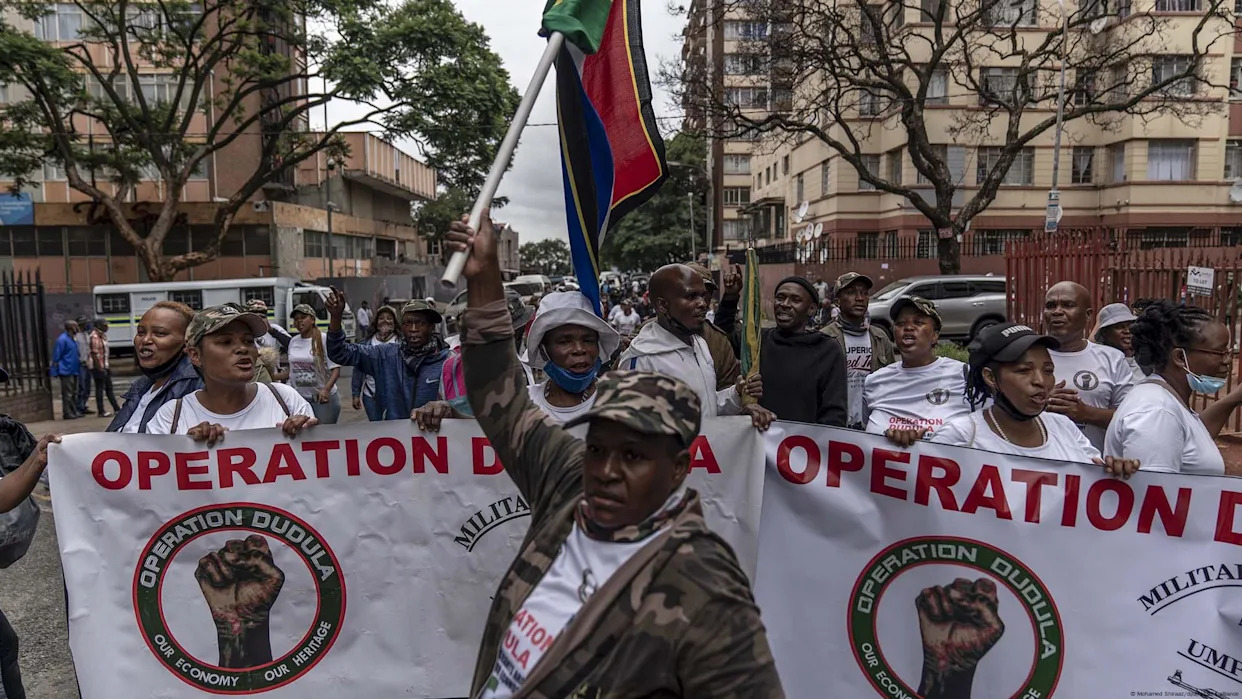
The nationalist group Operation Dudula South Africa has once again made headlines for its campaign against migrants. The group recently launched a new effort targeting migrant children, claiming that there are not enough school placements for South African children. It has called for the exclusion of migrant children from public schools, a move that many see as discriminatory and xenophobic.
Founded in 2021, Operation Dudula began as a vigilante movement in Soweto, just outside Johannesburg. It claims to fight crime and drug trafficking, but has become known for its anti-immigration stance. The group’s motto, “South Africans First,” continues to attract supporters who believe foreigners take jobs and public resources meant for citizens.
In the past, the group has organized protests that blocked foreigners from entering public hospitals, arguing that taxpayers should not fund medical care for non-citizens. These actions have drawn widespread criticism from rights groups and international observers, including the United Nations High Commissioner for Refugees (UNHCR) and the International Organization for Migration (IOM).
According to Fredson Guilengue of the Rosa Luxemburg Foundation in Johannesburg, xenophobia in South Africa has deep historical roots. He explained to DW that many South Africans still blame foreigners for issues such as unemployment, poor healthcare, and crime. Guilengue said, “Apartheid created two societies: one privileged and one struggling. That legacy continues, and foreigners have become the new scapegoats.”
Are migrants really the cause of South Africa’s unemployment?
Not entirely. Experts point out that the South African economy relies heavily on foreign labor, especially in agriculture, construction, and domestic work. The Institute for Security Studies (ISS) reported that migrants make up only about 6.5% of the population — around 3.95 million people. Research also shows that only 2.3% of prisoners in the country are foreigners, proving that crime rates among migrants are often exaggerated.
Despite these facts, Operation Dudula South Africa continues to spread the narrative that foreigners are the main cause of joblessness and social problems. Supporters of the group are known for aggressive actions, including entering buildings to check people’s identity cards and blocking migrants from accessing public services.
The group’s leader, Zandile Dabula, insists that their campaign is not about hatred but about “protecting South Africans.” She said, “We are all Africans, but we cannot allow lawlessness. We only act against those here illegally.” However, rights advocates say such actions create fear among migrants, many of whom already face harassment and violence.
Tragically, in July, a Malawian mother and her one-year-old child were denied access to a health clinic by Dudula supporters in Alexandra because she could not produce a South African ID card. The child later died. The Economic Freedom Fighters (EFF) filed murder charges, and police have opened an investigation.
According to ISS researcher Lizette Lancaster, Operation Dudula’s claims are based on “false statistics and political manipulation.” She said politicians use anti-migrant rhetoric to distract from corruption and government failure. Lancaster added that despite the attention the group receives, most South Africans — over 90% — do not support violence against migrants.
Although Operation Dudula South Africa has registered as a political party, it remains a fringe movement with limited national support. Analysts believe it thrives in poor urban areas where unemployment and frustration are high. Still, the group’s growing visibility highlights the challenges South Africa faces in managing inequality, poverty, and migration fairly.
Operation Dudula South Africa reflects the growing frustration among citizens who feel left behind, but its actions risk deepening division and violence. Experts urge the government to address social inequality instead of allowing blame to fall on vulnerable migrant communities.