
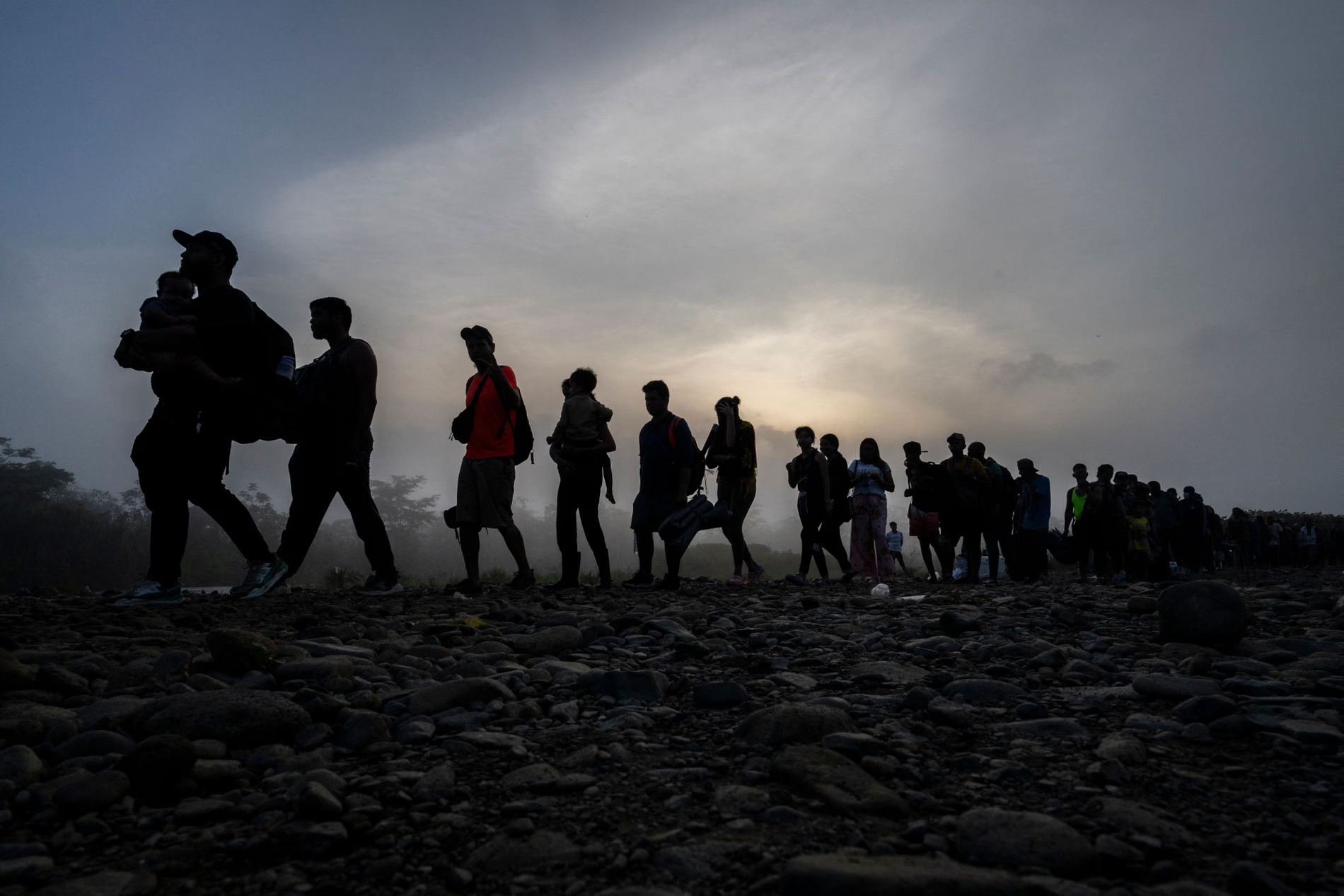
A major shift in United States migration policy has left around 300,000 asylum seekers stranded across Latin America, creating a humanitarian situation that is still unfolding. When Donald Trump returned to office, one of his first actions was to shut down a key asylum pathway, abruptly ending the hopes of thousands who had been waiting for entry into the U.S.
The decision affected migrants using the CBP One system, a mobile application that allowed people in Mexico to schedule asylum appointments. Within minutes of the shutdown, hundreds of thousands of migrants found themselves stuck with no clear path forward. Many had already travelled long and dangerous routes across multiple countries to reach Mexico.
For migrants like Mario Torres, a Venezuelan who crossed nine countries in search of stability, the policy change came too late. After enduring a difficult journey that included crossing the dangerous Darién Gap, he arrived in Mexico only to discover that the opportunity to seek asylum in the U.S. had vanished.
The result has been a growing “reverse migration” trend, with many migrants heading back south through Central America and into countries like Colombia, Peru, and Ecuador. Others remain stranded in countries such as Panama, where they struggle to survive while deciding their next move.
Despite the scale of the crisis, there is limited data on what has happened to these migrants. The UNHCR has acknowledged that it has not been tracking those affected by the shutdown, while aid organisations say funding cuts have reduced their ability to monitor migration patterns.
Research by the Mixed Migration Centre suggests that a large majority of those moving south are Venezuelans, many of whom are not returning home but instead searching for new destinations where they can find stability. Countries such as Colombia and Peru have become key alternatives, though opportunities remain limited.
For many migrants, life has become a daily struggle. Some are forced to work informally, selling goods on the streets to survive. Families are often unable to afford transportation costs, leaving them stuck for months or even years. Others are saving money to pay smugglers for risky journeys, including sea routes between Panama and Colombia.
These alternative routes are often just as dangerous as the journeys north. Migrants attempting to avoid crossing the Darién Gap again have turned to boat crossings along the Caribbean coast, where shipwrecks and abandonment by smugglers have been reported. Some routes through remote areas have even disappeared entirely, raising fears that migrants may have gone missing.
At the same time, migration dynamics across the region continue to shift. While some migrants head south, others are still moving north toward Mexico, driven by economic hardship, violence, and political instability in countries like Venezuela, Haiti, and Cuba.
Many migrants remain stuck in cities such as Tapachula, where overcrowding and limited resources have created difficult living conditions. Others are taking alternative routes controlled by smuggling networks, which often charge higher fees for faster or “premium” travel options.
The situation is further complicated by changing political attitudes across Latin America. Several countries are adopting stricter migration policies, while others have agreed to accept deported migrants from the United States, including individuals sent to countries that are not their own.
In countries like Chile and Argentina, new policies aimed at tightening border control and reducing migration are being introduced. These developments reflect a broader shift, where migration is increasingly viewed as a security issue rather than a humanitarian one.
Experts warn that these policies are trapping migrants in a difficult position. Many cannot safely return to their home countries due to economic collapse or political instability, yet they also face growing barriers to settling in new countries.
As a result, hundreds of thousands of migrants are now caught in what experts describe as “two dead ends” — unable to move forward and unable to go back. This has created a cycle of instability, where people continue to move in search of safety but struggle to find a place where they can rebuild their lives.
The long-term impact of this policy shift remains uncertain. What is clear, however, is that the closure of one migration pathway has reshaped movement across an entire region, leaving many migrants in prolonged uncertainty and hardship.