Close Menu
Migrant Affairs
    Trending News

    EU Opens Contact with Taliban Over Migrant Returns

    October 20, 2025

    EU Strengthens Europol Role to Fight Migrant Smuggling and Trafficking

    September 26, 2025

    EU Border Policies Under Scrutiny After Deadly Migrant Shipwreck

    March 1, 2024

    EU Records Highest-Ever Number of Asylum Applications in 2023

    February 28, 2024

    Doctors Without Borders Condemn European Union Migration Policies

    February 24, 2024

    UK gets EU intelligence on human trafficking

    February 23, 2024
    Facebook X (Twitter) Instagram
    Facebook X (Twitter) Instagram
    Migrant Affairs
    Subscribe
    • Home
    • About
    • News
    • Features
    • Contact
    • Privacy Policy
    • Terms and Conditions
    • Imprint
    Migrant Affairs
    Home » Non-EU Workers Remain More Likely to Hold Temporary Contracts Across EU
    Top Posts

    Non-EU Workers Remain More Likely to Hold Temporary Contracts Across EU

    July 22, 2026Updated:July 22, 20264 Mins Read
    Facebook Twitter LinkedIn Copy Link WhatsApp
    Non-EU migrants temporary employment Europe
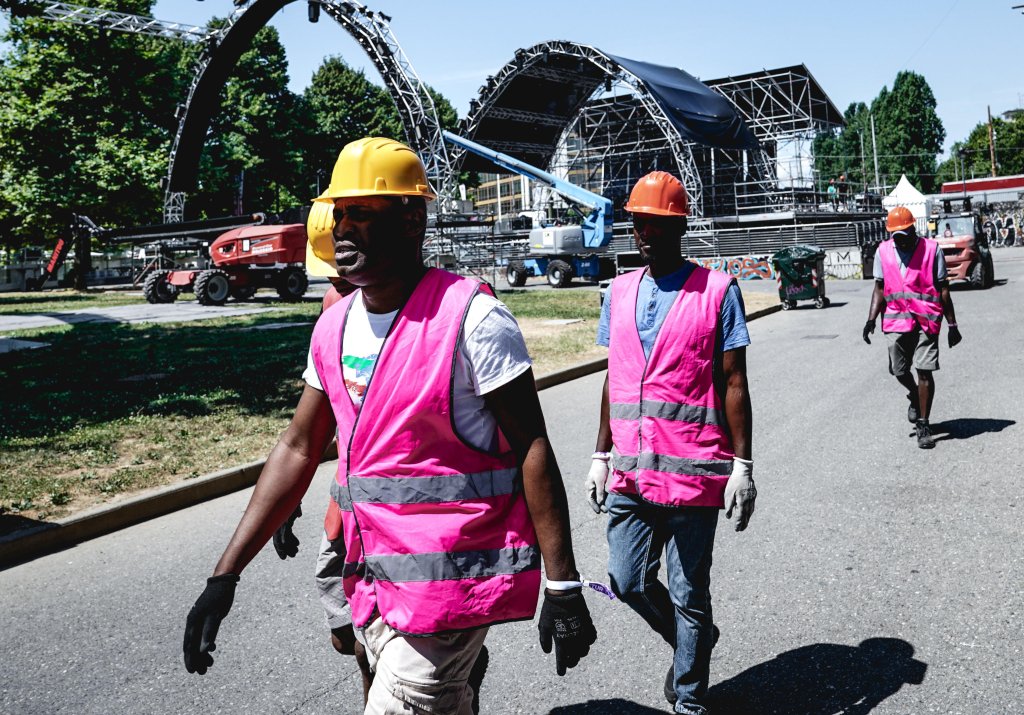
    Workers in Italy wearing safety helmets | Photo: Tino Romano / ANSA. Source: InfoMigrants.
    Share
    Facebook Twitter LinkedIn Copy Link WhatsApp

    Non-EU migrants working across the European Union remain significantly more likely than nationals to hold temporary contracts or work part-time, although the employment gap has narrowed over the past decade, according to recent Eurostat data.

    The findings show that citizenship and immigration status continue to influence the type and stability of employment available to migrants across Europe.

    Between 2015 and 2025, non-EU citizens aged 20 to 64 consistently recorded the highest rate of temporary employment compared with nationals and citizens from other EU countries.

    In 2025, approximately 22.1% of non-EU citizens in employment held temporary contracts, compared with 12.4% of citizens from other EU countries and 10.7% of nationals.

    The figures are based on the European Union Labour Force Survey, a large household survey that collects information on employment and demographic characteristics among people aged 15 and above.

    The Eurostat analysis examined three main forms of employment: self-employment, temporary employment and part-time work. It then compared employment patterns based on workers’ citizenship and migration status.

    Overall, non-EU citizens were found to have lower rates of self-employment but higher rates of temporary and part-time employment than nationals.

    Researchers linked these differences to several factors, including citizenship, the integration process, language barriers and mismatches between migrants’ qualifications and the jobs available to them.

    These challenges can push migrants into seasonal, agency-based and other forms of flexible employment, particularly in industries that rely heavily on temporary labour.

    However, employment arrangements are not always driven by disadvantage. Some migrants may deliberately choose seasonal jobs because they allow them to return to their countries of origin, while others may prefer part-time work because it provides greater flexibility around family or personal responsibilities.

    The quality of employment remains an important factor in migrant integration. An OECD report published in 2023 described employment as one of the most important indicators of integration, while stressing that the quality and security of jobs are also critical.

    Education and skills recognition can play a significant role in improving migrants’ employment prospects. Although immigrant skill levels have increased over the past decade, many highly educated migrants remain either unemployed or overqualified for the jobs they hold.

    According to the OECD, 47% of tertiary-educated immigrants are either overqualified for their jobs or not employed, compared with 30% of native-born workers. Obtaining a degree in the host country can significantly reduce the risk of overqualification among migrants.

    Migrants are also heavily represented in lower-skilled occupations. Approximately 30% of elementary jobs in the EU are held by migrants, with the proportion exceeding 50% in some German-speaking countries, Cyprus, Norway and Sweden.

    Gender is another factor influencing employment patterns.

    Eurostat data indicates that women have lower overall employment rates than men, with approximately 71% of women employed compared with 81% of men. Women also recorded higher rates of temporary employment across all three citizenship categories.

    The gender gap is particularly pronounced in countries including Italy, Spain and Portugal.

    Part-time employment is also significantly more common among women. Around 28% of employed women work part-time, compared with 8% of men. Women also record higher rates of temporary employment and underemployment.

    Care responsibilities are considered one possible explanation. Women are more likely to combine paid work with childcare or caring for relatives, making flexible but less secure employment more attractive in some circumstances.

    Occupational segregation also contributes to the disparity. Migrant women are frequently concentrated in sectors such as health and social care, hospitality, cleaning, domestic work and other occupations where temporary or variable working arrangements are common.

    The Eurostat findings suggest that while employment conditions for migrants have improved in some respects, citizenship and immigration status continue to shape access to secure and stable work.

    Temporary employment, however, is not necessarily a disadvantage in every case. For some migrants, it can provide an entry point into the labour market or offer flexibility that suits their circumstances.

    The key issue, according to the broader findings, is whether temporary or part-time employment is freely chosen, provides adequate wages and labour protections, and offers workers a realistic pathway towards more stable and secure employment.

    employment rights employment statistics EU labour market European Union Eurostat Immigration job insecurity labour market integration migrant employment migrant women migrant workers non-EU migrants part-time jobs temporary contracts temporary employment
    Share. Facebook Twitter LinkedIn Copy Link WhatsApp

    Related Posts

    Farage and Bardella Strike Migration Pact as Channel Crossings Remain a Political Flashpoint

    September 4, 2026

    Five EU Countries Target 2027 for Launch of Migrant Return Hubs

    September 4, 2026

    Italy and Egypt Set to Sign Labor Agreement to Promote Legal Migration

    September 3, 2026
    Top Posts

    Organizations Supporting Migrants and Refugees Worldwide

    Germany’s National Election 2025: Political Party Ideologies on Migration and Migrants

    The Impact of Social Media on Migrant Advocacy and Awareness

    Top Scholarships and Educational Opportunities for Migrants and Refugees in 2026

    Don't Miss

    Migrants fear AfD gains in Saxony-Anhalt as immigrant voters lose trust in German parties

    August 31, 20268 Mins ReadBy RACHAEL ADEEGBE

    Migrants living in the eastern German state of Saxony-Anhalt say they are increasingly worried about…

    Read More

    Migrant-Owned Shops Close in Eastern Germany to Protest Far-Right AfD

    August 26, 2026

    Germany Opens Opportunity Center to Help Migrants in Legal Limbo Access Jobs and Training

    August 25, 2026

    Germany Suspends Nearly 9,000 Deportations After Migrants Go Missing

    August 19, 2026

    Germany Seeks Resumption of Migrant Transfers to Italy and Greece Under New EU Asylum Rules

    August 10, 2026

    Germany’s Top Court Orders Review of Afghan Visa Cases

    July 27, 2026
    RSS News Around
    Stay In Touch
    • Facebook
    • Twitter
    • LinkedIn
    • WhatsApp
    RSS More News
    • Saxony-Anhalt's state election will have a nationwide impact
    • German company successfully launches rocket to space
    • Croatia: Toxic waste protest draws tens of thousands
    • Fact check: Germany's postal voting system isn't rigged
    • Germany: From emigration to immigration destination
    Recent posts
    • Farage and Bardella Strike Migration Pact as Channel Crossings Remain a Political Flashpoint
    • Five EU Countries Target 2027 for Launch of Migrant Return Hubs
    • African Migrants Trapped in Yemen as Humanitarian Conditions Worsen
    • Denmark Targets 2027 Launch for Overseas Return Hubs for Rejected Asylum Seekers
    • Spain’s Sanchez Says No Proof Morocco Orchestrated Ceuta Migrant Surge
    About Us

    A news and information site documenting and sharing relevant and helpful stories and resources for and about Migrants.

    Email Us: info@migrantaffairs.info

    Facebook X (Twitter) WhatsApp
    Top Stories

    Farage and Bardella Strike Migration Pact as Channel Crossings Remain a Political Flashpoint

    September 4, 2026

    UK-France Cooperation Intensifies as Authorities Target English Channel Smuggling

    September 3, 2026

    Uzbekistan Moves to Toughen Penalties for Illegal Migration Organisers

    September 1, 2026
    RSS Business News
    • Germany: Is Saxony-Anhalt's economy really struggling?
    • How Volkswagen's huge workforce became a costly burden
    • Is Germany's economic slump finally over?
    • Can new Apple CEO John Ternus fix the tech giant's AI woes?
    • Canada's Carney holds firm against Trump tariffs
    RSS Expat Jobs
    Migrant Affairs
    • Home
    • About
    • News
    • Features
    • Contact
    • Privacy Policy
    • Terms and Conditions
    • Imprint
    © 2026 Migrant Affairs

    Type above and press Enter to search. Press Esc to cancel.