
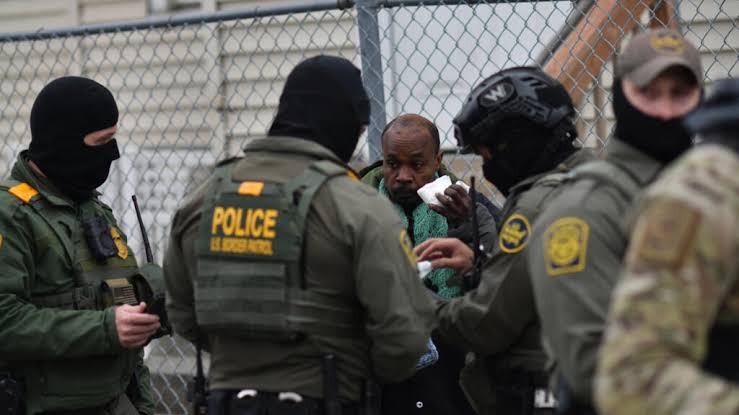
The first group of 20 migrants deported from the United States has arrived in Liberia under a new agreement allowing the West African country to receive third-country nationals removed as part of President Donald Trump’s immigration enforcement campaign.
The migrants arrived at Liberia’s international airport shortly before 1 p.m. local time on Thursday, August 20. They were subsequently transferred onto a bus and taken away from the airport near the capital, Monrovia.
Officials from Liberia’s Commission on Repatriation, Resettlement and Reintegration were present to receive the group and oversee their arrival. Journalists were kept at a distance and were unable to speak with the deportees.
Liberia announced earlier this week that it had agreed to accept up to 1,200 foreign nationals from the United States over 12 months.
The arrangement makes Liberia the latest African country to cooperate with Washington on the reception of migrants deported from the US who are not being returned directly to their countries of origin.
Liberian authorities said the migrants would have the option of leaving the country if they wished or applying for asylum in Liberia.
The government has described the arrangement as “entirely humanitarian”, while insisting that it did not demand or receive financial compensation or other rewards in exchange for accepting the deportees.
Liberia said it would receive assistance to manage the programme and strengthen its wider migration-management system.
The agreement comes as the Trump administration continues to expand its immigration enforcement policies. During his second term, Trump has pursued the removal of migrants who previously benefited from legal protections that allowed them to remain and work in the United States because of security or persecution concerns in their countries of origin.
US authorities have argued that restrictions under US law prevent them from directly returning some migrants to countries where they could face persecution or other serious risks. Agreements with third countries have therefore emerged as an alternative means of carrying out deportations.
Liberia is not the first African country to participate in such arrangements. The United States has also reached agreements with countries including Sierra Leone, Equatorial Guinea, Ghana, Rwanda, South Sudan, Cameroon, Eswatini and the Democratic Republic of Congo to receive deported third-country nationals.
The arrival of the first 20 migrants marks the beginning of Liberia’s participation in the programme and is likely to draw further attention to the growing use of third-country arrangements in US immigration enforcement.