
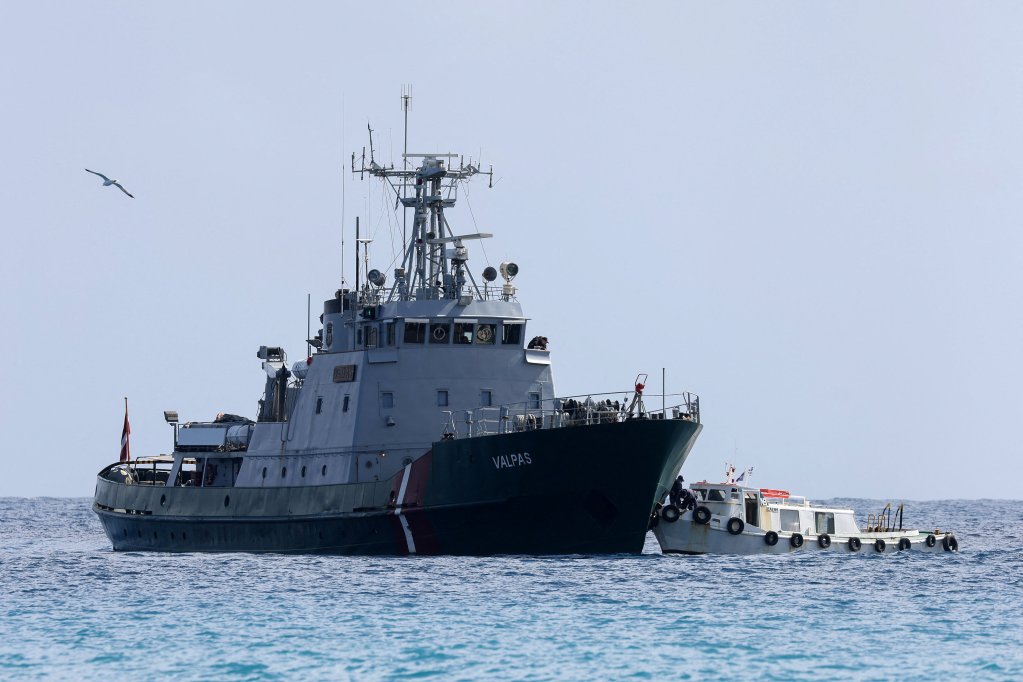
More than 200 migrants arrived in or were rescued from waters around Greece within a 24-hour period, as Crete continues to emerge as a major destination for people attempting to reach Europe from North Africa.
Greek authorities reported several separate arrivals and rescue operations around Crete and nearby islands on August 20 and 21. Estimates suggest that the total number of migrants involved was more than 200, with some reports putting the figure closer to 300.
On Thursday, August 20, 55 migrants reached the southern coast of Crete by boat, landing in a rocky and difficult-to-access area near the tourist town of Goudouras.
Residents who spotted the group alerted authorities, prompting the Greek coast guard to respond and bring the migrants to safety. They were subsequently transferred to a registration and reception facility on the island.
The latest arrivals come as Crete faces sustained pressure from irregular migration along the eastern Mediterranean route, with many boats departing from the Tobruk area of eastern Libya.
Greek authorities also arrested two South Sudanese teenagers accused of steering migrant boats from Libya to Crete on behalf of alleged smuggling networks.
The two boys, aged 15 and 17, allegedly piloted two vessels that arrived on the island on Wednesday carrying a combined 80 migrants.
Greek authorities accuse the teenagers of facilitating irregular entry into the country and endangering the lives of passengers on board. They are now facing legal proceedings.
The arrests follow several recent cases in which minors have been accused of navigating migrant boats travelling from eastern Libya to Greece.
The arrivals continued on Friday, when Greek authorities rescued approximately 50 migrants from another small boat south of Crete.
According to Greek media reports, the vessel was first detected by a Frontex surveillance drone about 70 kilometres from the island’s southern coast.
The migrants were taken to Kali Limenes, where they underwent medical examinations and other procedures.
Another rescue took place on August 19, when 34 migrants were rescued approximately 45 kilometres southwest of Gavdos, a smaller island near Crete.
A Frontex aircraft detected the vessel before a Frontex ship intervened. The migrants were subsequently transported to the port of Paleochora in western Crete.
The repeated arrivals highlight the growing importance of the maritime route connecting eastern Libya with Crete.
Greek authorities say most migrants arriving on the island now depart from the Tobruk region, with journeys across more than 300 kilometres of open sea often taking up to two days.
Migrants are frequently transported in overcrowded and poorly equipped vessels, increasing the risk of accidents and deaths during the crossing.
According to UNHCR figures cited in the report, more than 11,500 migrants have reached Crete since the beginning of 2026, accounting for slightly more than half of all irregular arrivals recorded in Greece.
The sustained movement has prompted Greece to strengthen maritime patrols and surveillance operations while working with European authorities to monitor vessels departing from Libya.
Migration-related incidents were also reported elsewhere in the Aegean Sea.
Three migrants reportedly reached Chios after travelling from Turkey on a jet ski. Greek authorities said the suspected smuggler abandoned them in the water wearing life jackets before returning to Turkey.
In a separate incident, authorities rescued 21 migrants who had reached an uninhabited islet near Rhodes.
Four others were found on the small island of Pserimos, near the Turkish coast. According to statements given to Greek authorities, the group had reportedly paid a smuggler €34,000 for the journey aboard a small inflatable boat.
The series of incidents highlights the continuing risks faced by migrants using increasingly dangerous routes to reach Greece.
With Crete recording a significant share of Greece’s irregular arrivals this year, Greek authorities are expected to maintain heightened surveillance of the southern maritime route, particularly around vessels departing from eastern Libya.