
Poland has withdrawn a proposal that would have made it a criminal offence to help migrants staying in the country illegally, following strong criticism from human rights organizations, legal experts and members of the ruling coalition.
The proposed amendment, introduced by the Interior Ministry, would have allowed people to face up to three years in prison for knowingly enabling or facilitating an undocumented migrant’s stay in Poland, even when no financial or personal benefit was involved.
The ministry said the measure was intended to combat migrant smuggling. However, aid organisations warned that its broad wording could criminalise humanitarian assistance provided by volunteers, medical workers, lawyers and residents living near the Belarusian border.
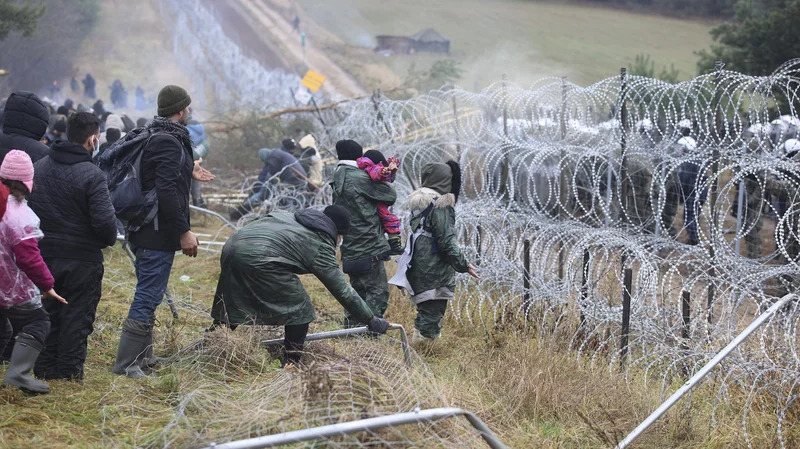
Since 2021, tens of thousands of people, mainly from Asia and Africa, have attempted to cross from Belarus into Poland. Polish and European Union authorities have accused Belarus of encouraging irregular migration as part of a broader campaign against European countries.
Poland has introduced strict border controls and measures to prevent crossings. However, humanitarian organisations argue that migrants caught in the border crisis often face dangerous conditions and need access to food, water, medical care, clothing and shelter.
More than 100 people have died in the border region since 2021, according to reports cited by human rights organisations.
The proposed amendment drew opposition from 61 organisations, including Amnesty International, the Helsinki Foundation for Human Rights and the Auschwitz-Birkenau Foundation. They warned that the legislation could expose people providing essential assistance to criminal prosecution and conflict with international standards binding Poland.
Lawyer Radosław Baszuk said the proposal appeared more likely to affect humanitarian workers and border residents than organised smuggling networks. He previously represented five Polish activists who were prosecuted for giving food, clothing and shelter to migrants who entered the country from Belarus in 2022. The activists were acquitted, with the ruling becoming final in March 2026.
Poland’s human rights commissioner, Sylwia Gregorczyk-Abram, also raised concerns with the Justice Ministry, warning that the proposed changes could expose charitable and humanitarian activities to criminal liability when the recipients’ immigration status had not been resolved.
The plans faced opposition within the government as well. Agnieszka Dziemianowicz-Bąk, the minister for family, labour and social policy and a member of the Left party, publicly expressed strong opposition to the proposal.
On Friday, October 16, the Interior Ministry announced that it was withdrawing the amendment to eliminate doubts and prevent the regulations from being misinterpreted.
The ministry maintained that its intention had always been to target those organising migrant smuggling, rather than people providing humanitarian assistance. It said border protection and the fight against organised crime must go hand in hand with the protection of humanitarian values and life-saving activities.
The dispute comes amid continuing criticism of Poland’s migration policies, including restrictions on access to asylum introduced at the Belarusian border in March 2025. Human rights advocates have questioned the legality and humanitarian consequences of those measures.
The government, meanwhile, says its border enforcement policies have reduced irregular crossings. Official figures cited by the authorities show that attempted crossings from Belarus fell from approximately 15,500 in the first half of 2025 to fewer than 250 during the same period in 2026, a decline of more than 98%.
Polish authorities also claim that all migrants who successfully cross the border illegally are now apprehended.
The withdrawal of the proposed amendment removes the immediate threat posed by that specific legislation, but concerns over Poland’s treatment of migrants and access to humanitarian assistance along the Belarusian border remain.