
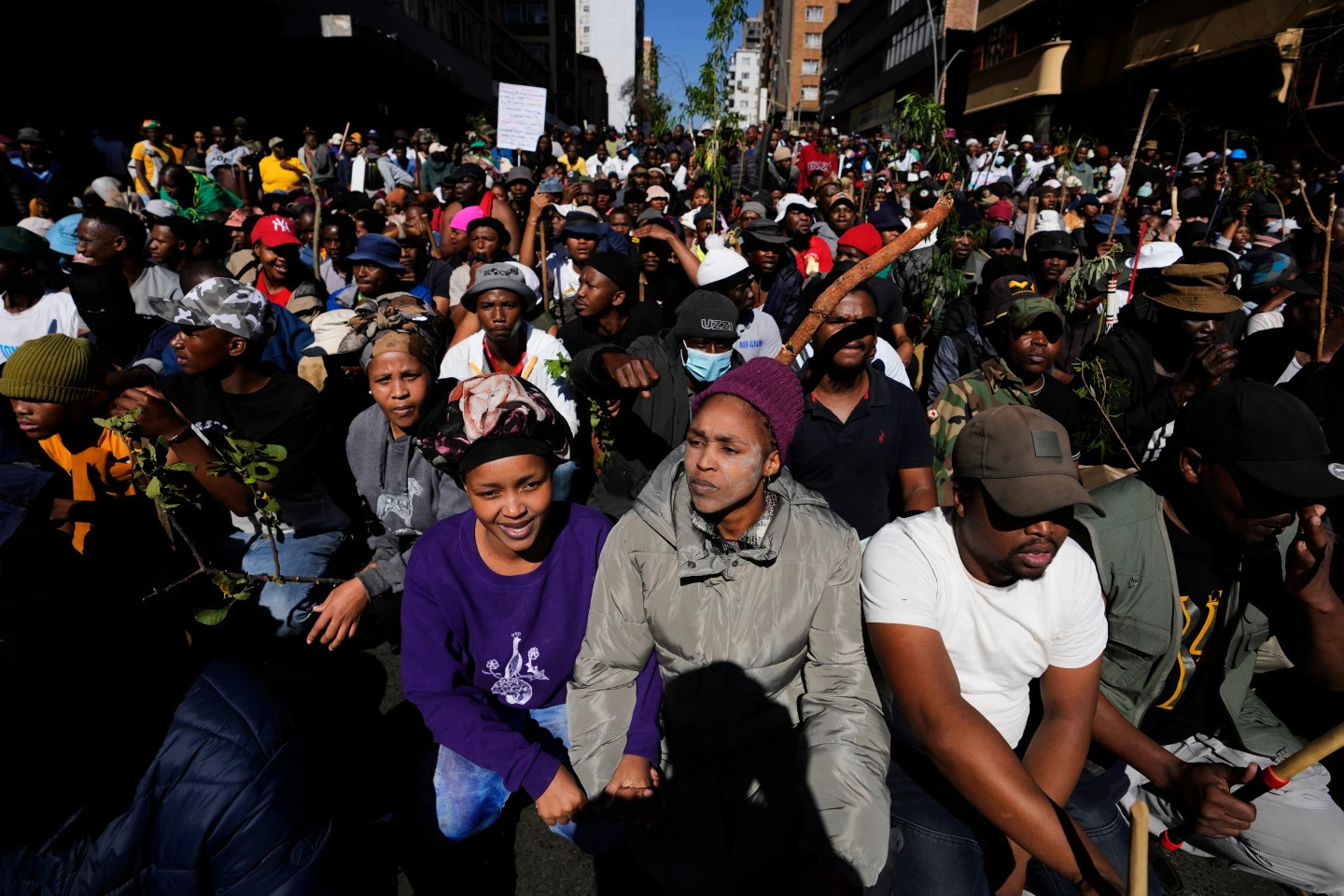
A South African anti-migrant movement has issued a new September 30 deadline for undocumented foreign nationals to leave the country, escalating tensions over irregular migration just weeks after nationwide protests targeting migrants.
The March and March movement announced the new deadline during a demonstration in Johannesburg under the theme “It’s time to fetch your people.” The group called on leaders of Southern African countries to prepare for the possible mass deportation of their citizens who are living in South Africa without valid documentation.
The announcement coincides with the Southern African Development Community (SADC) summit being held in South Africa, where regional leaders are meeting to discuss issues affecting the bloc.
March and March spokesperson Sandile Dube said the movement planned to demonstrate outside the summit and accuse regional governments of failing to address the presence of undocumented migrants in South Africa.
The organisation has also criticised President Cyril Ramaphosa, arguing that his government has not done enough to respond to concerns raised by communities opposed to irregular immigration.
Dube said the group was calling for a second nationwide mobilisation following the June 30 demonstrations and described the planned September action as a significantly larger protest.
He urged South Africans to report suspected criminal activity to the South African Police Service and other law enforcement authorities rather than taking matters into their own hands.
The latest warning comes after months of heightened tension surrounding migration in South Africa.
On June 30, thousands of people participated in demonstrations organised by a collection of anti-migrant groups and political movements. The protests were accompanied by warnings that undocumented foreigners should leave the country.
The demonstrations raised concerns about potential xenophobic violence, with authorities deploying large numbers of police officers to prevent attacks, looting and other unrest.
The latest September deadline has renewed concerns that similar tensions could return if the planned mobilisation attracts large numbers of protesters.
March and March has framed its campaign around undocumented migration, claiming that foreign nationals without valid papers contribute to crime, unemployment and pressure on public services.
The movement’s demands come as South African authorities continue a separate government-led crackdown on irregular migration.
Officials have reported large-scale arrests and deportations in recent months, while several African governments have organised the return of their citizens from South Africa.
Nigeria is among the countries that have repatriated nationals from the country. Other governments in the region have also become involved as concerns grow over the treatment and safety of their citizens.
South African authorities have previously reported that more than 100,000 foreign nationals have been deported during the intensified enforcement campaign and that the government has spent about $35 million on the associated security operation.
The figures have contributed to growing diplomatic concerns between South Africa and other African states.
While anti-migrant groups are demanding tougher enforcement, President Ramaphosa has taken a stronger position against discrimination and violence directed at foreign nationals.
Speaking at the University of KwaZulu-Natal in Durban on Friday, Ramaphosa said South Africans should be “deeply ashamed” when nationals of neighbouring countries are subjected to discrimination, intimidation or violence.
He argued that South Africa could not simultaneously promote deeper regional cooperation while allowing people from other African countries to be mistreated.
His comments come as he prepares to assume the chairmanship of SADC for the 2026-27 term, giving the migration dispute an additional regional dimension.
The timing of the March and March announcement is particularly significant because many of the countries represented at the SADC summit have nationals living and working in South Africa.
Angola, Botswana, Comoros, the Democratic Republic of Congo, Eswatini, Lesotho, Madagascar, Malawi, Mauritius, Mozambique, Namibia, Seychelles, Tanzania, Zambia and Zimbabwe are among the countries involved in the regional bloc.
Some of these countries have already been affected by the recent migration tensions, with governments arranging for citizens to return home from South Africa.
The new September 30 deadline is not a government deportation order. It is a demand issued by a citizen-led movement and does not itself create a legal requirement for undocumented migrants to leave the country.
Any formal deportation must be carried out under South African immigration law and through the relevant government authorities.
Nevertheless, the announcement could increase pressure on the government as authorities attempt to balance demands for stricter immigration enforcement with their responsibility to prevent xenophobic attacks and protect foreign nationals.
The situation also presents a challenge for neighbouring governments, which may face renewed pressure to assist citizens who choose or are forced to return from South Africa.
With immigration enforcement already intensified and anti-migrant groups threatening another major mobilisation, September 30 could become a new flashpoint in South Africa’s increasingly tense migration debate.