
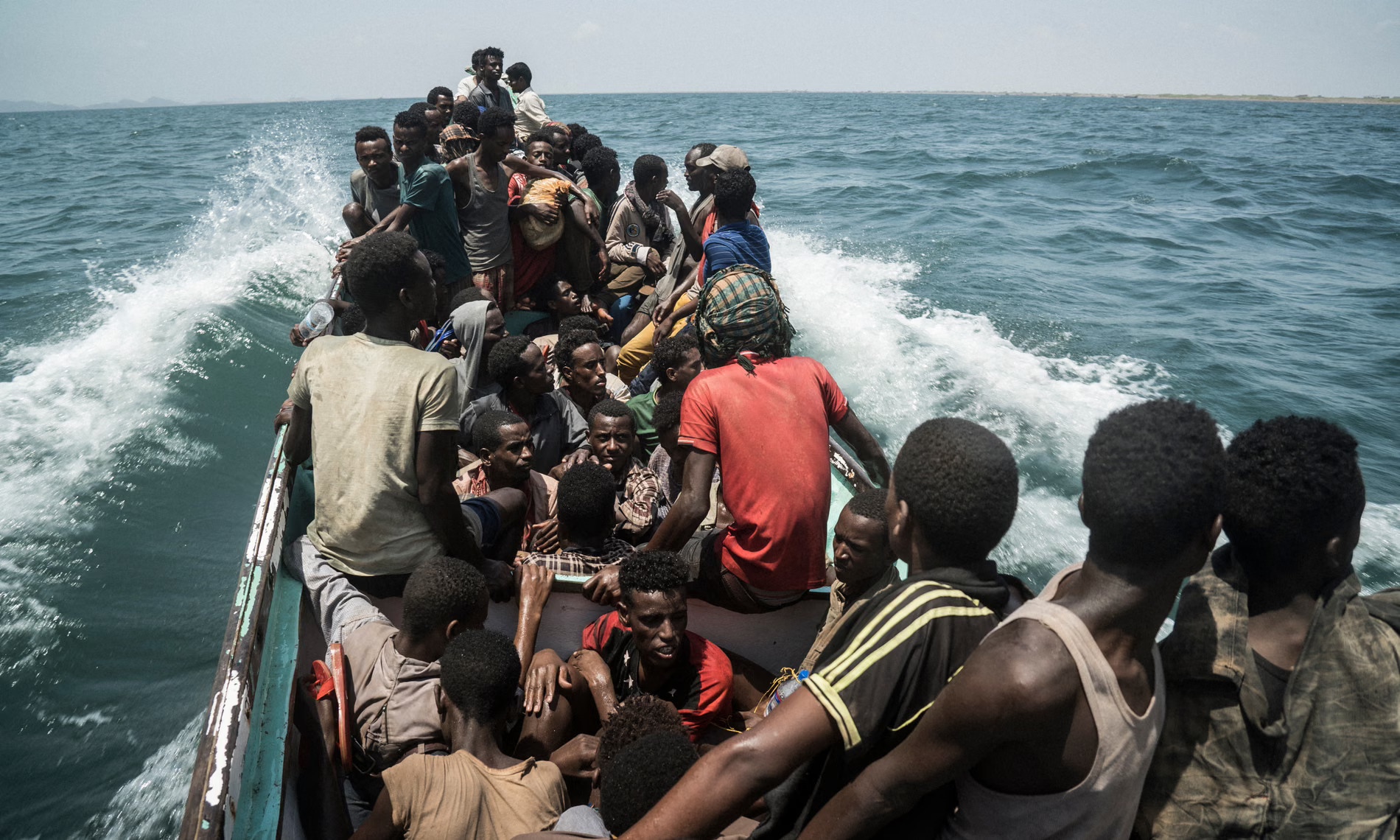
Thousands of African migrants stranded in Yemen are facing increasingly difficult conditions as conflict, tighter border controls and declining humanitarian assistance leave many unable to continue their journeys or return home.
The International Organization for Migration (IOM) has warned that migrants arriving from the Horn of Africa are particularly vulnerable as they attempt to cross the Gulf of Aden in search of opportunities in the Gulf countries.
Many make the dangerous journey to Yemen hoping eventually to reach Saudi Arabia and other Gulf states. However, tighter security along the Saudi border has left some migrants stranded inside Yemen with little access to shelter, food or other necessities.
Ethiopian migrant Abdulaziz Mohammed said the increased military presence along the border had prevented him from continuing his journey. He described relying on food found on the streets and sleeping outdoors because he had nowhere else to go.
Yemen itself has been experiencing a severe humanitarian crisis for more than a decade as a result of prolonged conflict and economic instability. The situation has made conditions particularly difficult for migrants who lack reliable sources of income or support.
The IOM says migrants in the country are exposed to numerous dangers, including trafficking, exploitation, arbitrary detention, violence and other forms of abuse. Those who depend on smugglers to move through Yemen can face additional risks throughout their journey.
Mohamad Hatoum, an IOM protection programme manager, said migrants often remain vulnerable long after crossing an international border because of the networks and individuals involved in facilitating their movement.
Between 100,000 and 200,000 migrants are estimated to arrive in Yemen each year. Their presence adds pressure to a country where a large proportion of the population already depends on humanitarian assistance.
Humanitarian activist Mansour Al-Jaradi said the combination of war, economic hardship and limited international support has made it increasingly difficult for Yemen to respond to the needs of both its own population and newly arriving migrants.
For migrants unable to reach Saudi Arabia or other Gulf destinations, the options are limited. Returning to their countries of origin can also be difficult, particularly when they lack money, documentation or access to assistance.
As humanitarian resources continue to diminish, migrants stranded in Yemen face the prospect of prolonged displacement, inadequate shelter and limited access to food and essential services.