
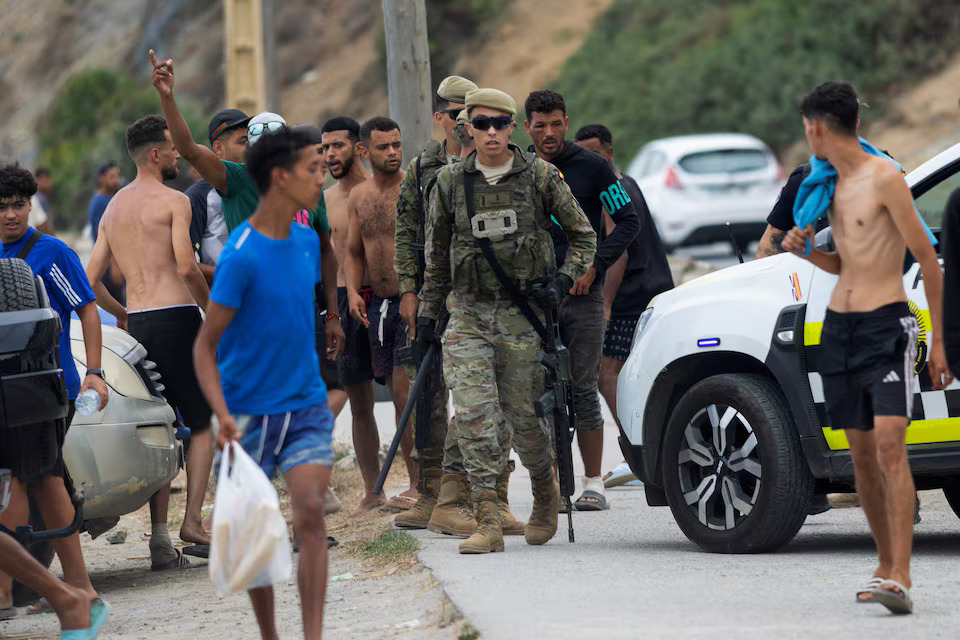
Spanish intelligence services warned Morocco and officials in Ceuta about plans for a large-scale attempt to enter the Spanish enclave one day before more than 70,000 migrants crossed from Morocco, according to documents released by the Spanish government.
The National Intelligence Centre, known as the CNI, issued a warning on July 29 to Morocco’s intelligence agencies about plans circulating on social media to enter Ceuta by climbing border fences or swimming around them. The planned crossing was expected to take advantage of Morocco’s Throne Day celebrations.
The CNI also alerted Spain’s representative in Ceuta on the same day, according to declassified messages released by the government.
In one communication, Spanish intelligence referred to two social media groups with a combined following of about 180,000 people, highlighting the scale of the online mobilisation surrounding the planned entry.
The Moroccan government had not immediately responded to requests for comment.
The documents were released several weeks after the mass crossing, which local authorities and humanitarian organisations say left more than 10,000 migrants, including unaccompanied children, still in Ceuta. Many are reportedly staying in temporary camps or on streets and beaches, while tensions with local residents have led to repeated protests over the government’s handling of the situation.
The publication of the intelligence material is expected to increase pressure on Spanish authorities over how they responded to warnings before the July 30 surge and whether enough measures were taken to prevent or contain the crossing.
Spanish Foreign Minister José Manuel Albares, however, said the information available to the government did not indicate that the influx would reach the scale that eventually occurred.
Albares said he had no information on July 30 that pointed to the magnitude of the movement into Ceuta.
Prime Minister Pedro Sánchez has also rejected claims that the Moroccan government organised the mass entry. He previously said Spain had found no evidence that Moroccan authorities had orchestrated the crossing.
That position has been challenged by allegations contained in a Spanish police report, while Spain’s Interior Ministry separately reported that Moroccan border forces appeared passive during the incident.
According to the Interior Ministry’s July 30 report, Morocco had planned to reinforce the border with around 1,000 additional police officers and soldiers, despite the day being a national holiday.
The Spanish government released 40 intelligence reports, warnings and other communications covering the period from July 1 to July 31. Sánchez had previously promised to make the material public amid growing political pressure over the crisis.
The documents indicate that concerns about a potential surge had been building for several days before the mass crossing.
A Spanish Defence Ministry presentation dated July 30 said a migration crisis had been developing in Ceuta since July 25, when around 1,700 people had arrived by sea from Morocco. The document warned that further attempts to enter the enclave were expected in the immediate future and described conditions along the Moroccan coast near Ceuta as chaotic.
The latest disclosures are likely to keep attention focused on what Spanish and Moroccan authorities knew before the crossing, how they responded to the warnings and whether the available information should have prompted stronger preparations.
The crisis has also intensified wider political tensions between Spain and Morocco and raised questions about border security, migration management and the treatment of migrants who remain in the enclave.