
Police in Guinea-Bissau have rescued 71 people from a suspected human smuggling and trafficking network, highlighting growing concerns as irregular migration routes from West Africa shift further south towards Europe.
The operation, conducted by the country’s Judicial Police on Wednesday, October 21, resulted in the arrest of four suspects following weeks of investigation. The alleged leader of the network remains at large, according to Agence France-Presse (AFP).
The victims included nationals of Mali, Guinea and Sierra Leone, while investigators believe the wider network also involved people from Burkina Faso, Togo and Senegal.
The suspects allegedly targeted people hoping to migrate by promising to arrange travel and employment in Europe, Canada and the United States. Investigators said victims were deceived through fraudulent offers and subsequently subjected to coercion and exploitation.
Among those rescued was a Sierra Leonean woman who told AFP she had experienced attempted rape and other abuse while in the network’s hands.
Fanta Makalou, a 32-year-old mother of three from Mali, said she had been promised a job in France. She allegedly paid the network 1.5 million CFA francs, approximately €2,300, to arrange her journey, including an advance payment before leaving Mali. She was reportedly held against her will in Guinea-Bissau for three months.
Investigators said the victims experienced physical and psychological coercion, including threats that prevented them from escaping. Some were allegedly forced to participate in pyramid schemes and recruit other people through social media.
A 23-year-old man from Guinea’s capital, Conakry, told AFP that he had paid a smuggler 10 million Guinean francs, approximately €1,000, but was subsequently instructed to recruit another person. When he wanted to withdraw, he said he was threatened with death if he disclosed the scheme.
The network reportedly used false contact details for supposed offices in Portugal, Canada and the United States to make its operations appear legitimate. Intelligence from Interpol also helped investigators dismantle the suspected cross-border operation.
Judicial Police communications officer Braima Cisse said the rescued individuals would be transferred to their respective embassies. Those whose countries lack diplomatic representation in Bissau would have to make their own arrangements.
The arrests come as Guinea-Bissau increasingly features in shifting migration routes across West Africa. According to the International Organization for Migration (IOM), stronger border controls and maritime patrols along the coasts of Morocco, Mauritania and Senegal have encouraged some migrants and smugglers to seek departure points farther south.
In an October 13 statement, the United Nations warned that restrictions at traditional departure points had not eliminated the pressures driving migration. Instead, routes have increasingly shifted towards countries including Guinea-Bissau, The Gambia and Guinea.
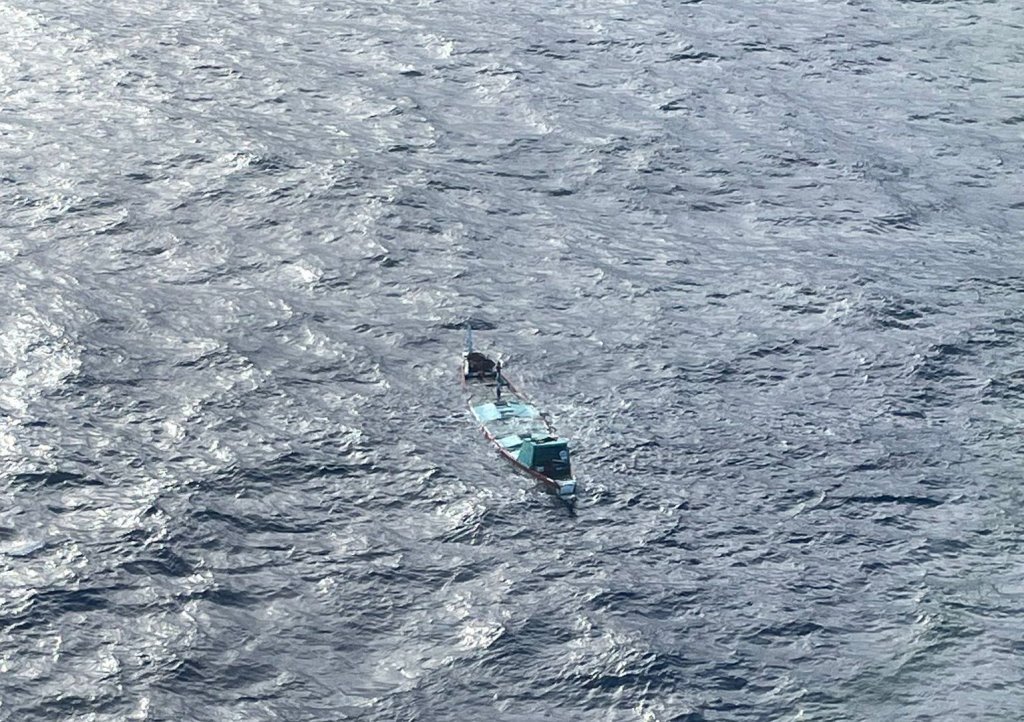
From these locations, migrants may attempt to cross the Atlantic in small, overcrowded fishing boats in the hope of reaching Spain’s Canary Islands. The journey from Guinea-Bissau can cover approximately 2,200 kilometres, exposing passengers to dangerous ocean conditions and prolonged periods without adequate food or water.
The IOM has warned that longer crossings and departures from more remote locations can make rescue operations more difficult and increase the risks of shipwreck, dehydration, death and disappearance.
Although arrivals from four major West African countries of origin fell by 59 per cent in the first half of 2026 compared with the same period in 2025, the decline does not necessarily mean migration pressures have eased. Economic hardship, insecurity and limited employment opportunities continue to drive people to seek better prospects abroad.
With legal migration pathways often difficult to access, some people turn to smugglers who exploit their hopes of finding work and a better future. The Guinea-Bissau case illustrates how promises of overseas employment can expose prospective migrants to trafficking, abuse, financial losses and forced confinement.
The shifting routes also present challenges for authorities seeking to identify criminal networks and protect vulnerable people across national borders.
The IOM has called for longer-term investment in employment opportunities for young people, peace-building and support for communities in countries of origin and transit. Such measures, alongside regional cooperation against trafficking, could help reduce the pressures pushing people towards dangerous journeys.
The rescue of the 71 people highlights the need to distinguish between migrants seeking opportunities abroad and criminal networks exploiting their aspirations, particularly as increasingly dangerous routes emerge across West Africa.