
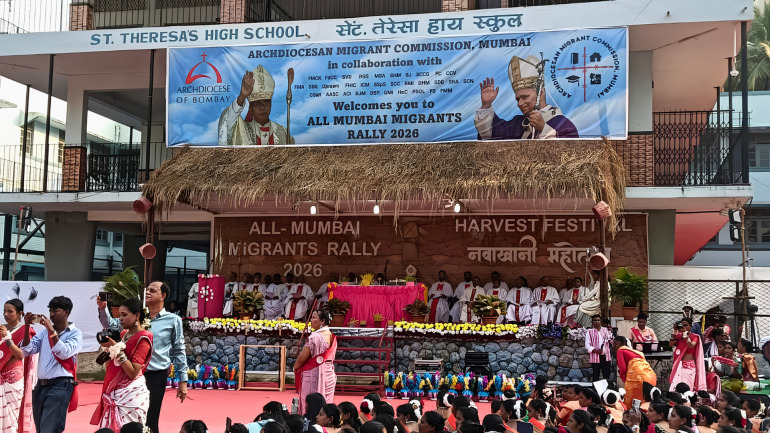
More than 6,000 migrants gathered in Mumbai, western India, on November 1 for an annual harvest festival celebrating faith, cultural heritage and community belonging.
The event, known as Navakhani Mahotsav, was organised by the Archdiocesan Migrants Commission (AMC) of Mumbai in collaboration with several religious congregations. It took place at St. Theresa’s School Ground in Bandra.
The gathering brought together migrants, particularly those from Hindi-speaking regions of northern India, who had moved to Mumbai in search of employment and better living conditions. Many have settled in the city, working in sectors such as domestic services while raising families and building new lives.
The celebration began with a Catholic Mass led by Archbishop John Rodrigues of Bombay, alongside 25 priests.
In his sermon, Archbishop Rodrigues encouraged migrants to pursue their personal aspirations while remaining guided by their faith. Drawing lessons from the Solemnity of All Saints, also observed on November 1, he explained that holiness could be achieved through everyday actions and commitment to God’s will.
He urged participants to find happiness in serving God and to draw inspiration from the lives of saints. He also described the harvest festival as an opportunity to thank God for the fruits of the earth, blessings and opportunities received.
Following the religious service, leaders of various migrant groups were recognised for their contributions to their communities.
Fr. Gleston, who oversees the Migrants Commission, assured participants that the Church remained available to support migrants experiencing difficulties. He encouraged them to register with their respective migrant groups or maintain contact with priests and religious sisters to ensure they could access assistance when needed.
He also highlighted cases in which the commission had helped young women facing mistreatment and difficult circumstances within their families.
Fr. Cosmos Ekka of the Society of the Divine Word (SVD) said the festival helped migrants maintain a connection with their cultural identities and traditions while building a sense of belonging in Mumbai.
He particularly highlighted the importance of recognising the Adivasi community’s cultural heritage and strengthening its visibility within the Archdiocese of Bombay.
The gathering also addressed practical concerns affecting migrant communities, including personal identification, legal rights and documentation. Participants were encouraged to ensure their documents were in order and remain connected to their cultural roots.
The annual celebration highlighted the role of religious organisations in supporting migrants beyond spiritual activities, particularly through community networks, social assistance and efforts to protect their dignity in their adopted city.