
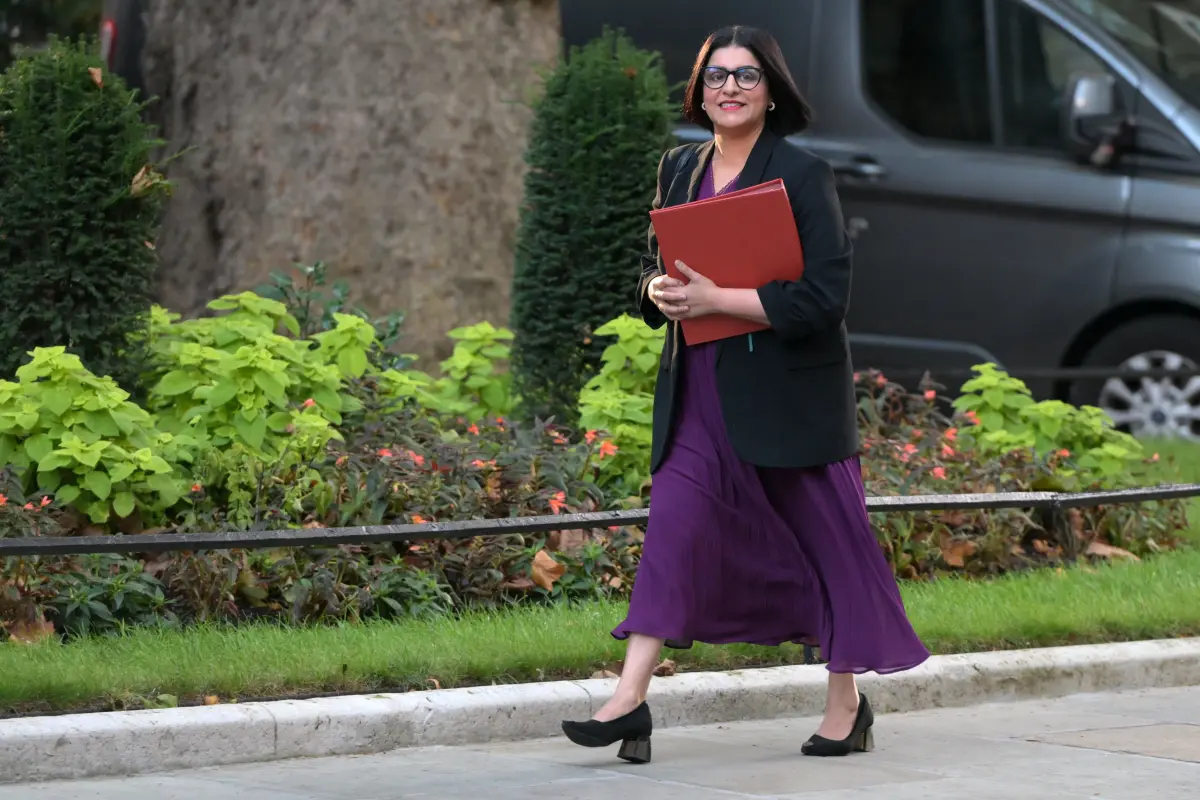
The British government plans to double the standard waiting period for many migrants seeking permanent settlement in the United Kingdom, with higher earners and certain public-sector workers allowed to qualify sooner.
Under the revised proposals announced by Home Secretary Shabana Mahmood on Monday, most people who enter the UK on work visas will have to wait 10 years before they can apply for permanent residency, also known as indefinite leave to remain (ILR).
However, the government has introduced shorter qualifying periods for workers who meet specific income thresholds or work in key public services. Migrants earning at least £50,000 a year will be eligible to apply after five years. Doctors, nurses and teachers working in the public sector will also qualify after five years, while those earning more than £125,000 annually can apply after three years.
Care workers will retain a five-year route to settlement, provided they earn at least £25,000 a year.
The changes are expected to take effect in 2027. Mahmood said the revised system would make permanent settlement dependent on migrants’ contributions to the UK, arguing that those seeking the right to remain indefinitely should demonstrate their economic or social value to the country.
Speaking to lawmakers, she referred to her parents’ migration from Pakistan around 50 years ago, saying they came to Britain because they believed in its principles of fairness. She said it was her responsibility to ensure the immigration system reflected those values.
The announcement represents a relaxation of some of the proposals Mahmood first introduced last year, which attracted criticism from sections of the governing Labour Party and organisations representing migrant workers.
The original proposal would have required some lower-paid migrant workers, including people employed in the care sector, to wait as long as 15 years before qualifying for permanent settlement. The revised plan reduces that period for care workers who meet the new salary requirement.
The UK’s median annual salary is approximately £39,000, meaning many workers earning below £50,000 will still face the longer 10-year qualifying period under the new rules.
The government is also proposing significantly longer settlement periods for refugees and other people who arrive outside approved safe and legal routes. According to Mahmood, refugees who did not enter through an authorised pathway, such as a government-sponsored resettlement programme, could have to wait up to 20 years to obtain permanent residency. Those who arrived by small boat across the English Channel could face a waiting period of up to 30 years.
The proposals come amid continued political pressure over immigration, which has remained one of Britain’s most divisive political issues for decades. It was also a major factor in the 2016 Brexit referendum, when voters supported leaving the European Union and ending the bloc’s freedom-of-movement arrangements.
The arrival of asylum seekers in small boats across the Channel has continued to dominate political debate. Far-right politicians, including Reform UK leader Nigel Farage, have repeatedly described the crossings as a national crisis, while anti-migrant activists have staged protests targeting asylum accommodation, Channel ports and organisations involved in sea rescues.
The Labour government says cooperation between British and French law enforcement agencies has helped reduce Channel crossings by more than 40% so far in 2026 compared with the same period in 2025.
However, small-boat arrivals account for only a fraction of total immigration to Britain. Most people entering the country do so through legal routes, including work and other visa programmes.
The growing support for Reform UK has nevertheless increased pressure on both Labour and the opposition Conservative Party to adopt tougher immigration policies.
The revised settlement proposals have also drawn criticism from opposition lawmakers. Conservative immigration spokesman Chris Philp described the changes as a reversal of the government’s earlier position and claimed they could cost £10 billion because more migrants would become eligible for public benefits than under the original plan.
Liberal Democrat lawmaker Max Wilkinson accused the government of placing greater emphasis on tough political messaging than on creating an effective immigration system.
Critics have also questioned whether the changes are responding to migration pressures that have already eased. Net migration, which measures the difference between the number of people entering and leaving the UK, reached more than 900,000 in the year ending June 2023. The increase was partly driven by people fleeing the war in Ukraine and restrictions in Hong Kong.
Figures from the Office for National Statistics show that net migration subsequently declined to 649,000 in the year ending June 2024 and 204,000 in the year ending June 2025.
The latest available figure stood at 171,000 for the year ending December 2025, marking a further decline.
Despite the reduction, the government is moving ahead with changes that could make permanent settlement more difficult for many migrant workers and people seeking protection in the UK.