
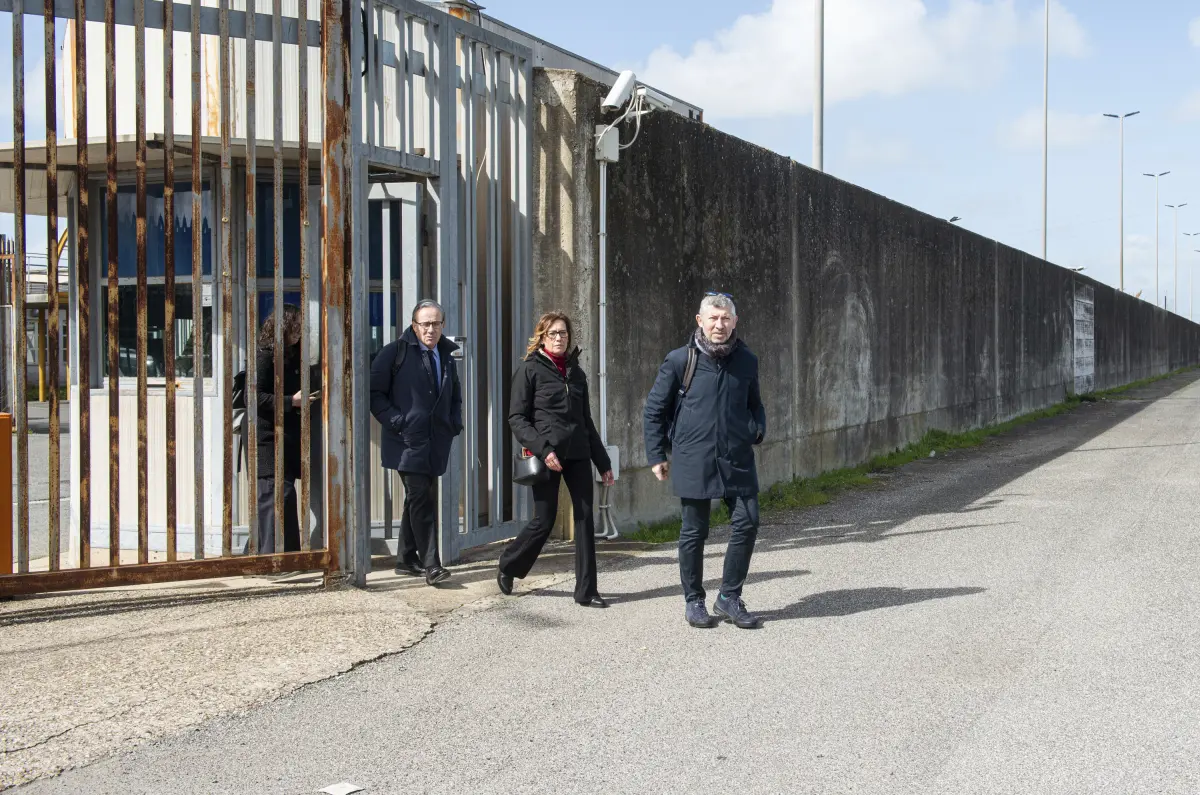
Italy’s migrant detention system is facing renewed scrutiny over concerns that conditions inside its repatriation centres are damaging detainees’ physical and mental health, while limited access to medical records makes independent monitoring difficult.
The concerns have gained attention following a criminal investigation involving 23 doctors in nine Italian cities. Prosecutors in Ravenna allege that medical certificates were falsified to declare some foreign nationals medically unfit for detention in the country’s Repatriation Detention Centres, known as CPRs.
The investigation began in July 2025, became public in February 2026 and was expanded in September. During searches conducted on September 16, authorities investigated only one of the 23 doctors, infectious disease specialist Nicola Cocco, who was accused of conspiring to issue false medical certificates.
Cocco, a member of the Italian Society of Migration Medicine (SIMM), has denied the allegation. He said his work was intended to draw attention to the harmful health consequences of immigration detention.
Italy’s National Federation of the Orders of Physicians, Surgeons and Dentists expressed solidarity with the doctors. Meanwhile, on October 9, the country’s Supreme Court of Cassation overturned the 10-month suspensions imposed on three doctors from Ravenna and sent the matter back for reconsideration. A review court in Bologna must now examine the disciplinary measures again as the wider investigation continues.
Beyond the legal proceedings, medical professionals and migrant rights organisations are questioning whether doctors can reliably certify someone as fit for detention when the conditions inside detention facilities may themselves put that person’s health at risk.
An evidence brief published by the World Health Organization (WHO) in January 2026 concluded that immigration detention exposes people to significant health risks because of harmful social and environmental conditions.
SIMM has also described Italy’s CPRs as environments that can endanger detainees’ health and lives.
However, the extent of the problem in Italy remains difficult to establish because reliable medical information about people held in the centres is largely unavailable.
In 2024, a total of 5,891 people entered Italian CPRs. More than 56,000 people passed through the facilities between 2014 and 2024. In 2025, the centres held approximately 546 people at any given time, despite having 672 available places.
The figure represents less than 0.2 per cent of the estimated number of people living in irregular situations in Italy.
Monitoring organisations say they have struggled to obtain basic information about detainees, including their medical conditions, nationalities and countries of origin. Access to the centres is restricted, with entry generally limited to operators, police, judicial authorities and officially recognised oversight bodies.
Requests by independent organisations to visit are frequently rejected. Even when visits are authorised, monitoring teams may be allowed to speak with management but not with detainees themselves.
A report published in January 2026 by the Asylum and Immigration Committee, an Italian civil society monitoring network that includes SIMM, documented serious gaps during visits to 10 detention centres between September and December 2025.
The organisations managing several facilities provided incomplete records or failed to supply documentation. In five of the 10 centres, monitoring teams were not given access to the contracts governing their operations.
The report also highlighted weaknesses in the recording of serious incidents. In Rome and Milan, records of critical events were reportedly kept in handwritten notebooks. In Rome, the most recent entry was more than a month old at the time of inspection.
As a result, Italy has no reliable official statistics on incidents such as self-harm, suicide attempts and other serious events inside CPRs. Some incidents are reportedly not recorded because they have become so common that they are treated as ordinary occurrences.
The conditions documented in the centres include overcrowding, poor sanitation, inadequate food and water, restricted access to medical treatment, limited recreation and prolonged isolation. Detainees may also experience sleep deprivation, discrimination, violence and difficulties maintaining contact with family members.
The WHO identifies these conditions as important factors that can damage physical and mental health during immigration detention.
Research conducted in detention facilities in California found that each additional adverse condition was associated with a 39 per cent increase in the odds of worsening general health. Sleep deprivation, poor access to medical care and inadequate mental health services were among the factors linked to poorer outcomes.
Similar problems have been reported in Italian facilities. Monitoring teams documented insufficient or monotonous food, difficulties contacting relatives, restricted access to medical and psychological support, and cases of experienced or witnessed violence.
These conditions were associated with skin problems, joint pain, infections and a wider deterioration in detainees’ sense of dignity and control over their bodies.
Medical screening before admission to a CPR is intended to prevent people whose health conditions make detention unsuitable from being held in the facilities. However, monitoring reports suggest that the process does not always identify important medical risks.
Assessments have reportedly focused mainly on infectious diseases considered dangerous to other people, while mental health conditions and chronic illnesses receive less attention.
Some examinations were described as rushed or superficial, with no language or cultural assistance. In certain cases, medical assessments were reportedly conducted in the presence of law enforcement officers. The Trapani centre was also reported to have acknowledged that it did not carry out medical examinations when people entered the facility.
Italian regulations require doctors to consider psychiatric conditions and acute or chronic illnesses that cannot be adequately treated in detention. However, a 2021 report by the National Guarantor for the Rights of Persons Deprived of Personal Liberty found that these requirements were frequently overlooked.
The oversight authority also raised concerns about medical certificates being issued by doctors employed by organisations managing detention facilities rather than by the public health authorities responsible for the assessments.
Later reassessments have highlighted possible weaknesses in the admission process. At the Rome CPR, approximately 30 per cent of detainees are reportedly released after being reassessed on medical grounds. Four or five such reassessments are carried out each week.
At the Gjadër detention centre in Albania, which is linked to Italy’s migration system, people whose medical fitness was reassessed before transfer were reportedly later declared unfit for detention by Italy’s border health authority and returned to Italy.
Access to treatment after admission is another major concern. In Italy, healthcare inside CPRs is generally provided by private organisations managing the facilities rather than directly through the National Health Service.
SIMM has argued that this arrangement creates an exception to the normal public health oversight system and may place greater emphasis on managing detainees’ behaviour than on meeting their medical needs.
The National Guarantor reported in 2021 that agreements intended to coordinate healthcare between local authorities, prefectures and public health services had largely not been implemented.
The 2026 monitoring report also found that medical records were missing, incomplete or inaccessible in the centres visited. In Trapani, access to records was reportedly refused even when detainees had given written permission.
None of the 10 facilities inspected had adequate access to a complete set of medical documents, including admission assessments, treatment records, medication administration records and reports of critical incidents.
Medication provision has also raised concerns. Monitoring at the Gjadër centre found that an asthma inhaler had reportedly been confiscated from a detainee. The facility also lacked specialist services for cardiology, diabetes and dental care.
According to the monitoring network, healthcare in many Italian CPRs consists largely of isolated interventions to deal with immediate medical emergencies, with insufficient follow-up or longer-term treatment planning. Access to dental and psychological services is also limited.
Poor sanitation and overcrowding can further increase the risk of infectious disease outbreaks. Conditions such as inadequate ventilation, dampness, mould, pests and limited access to clean facilities can encourage the spread of illnesses including scabies, tuberculosis, influenza, chickenpox, measles and respiratory infections.
Although Italy’s detention centres were operating below their total capacity in 2025, monitoring teams still documented serious hygiene problems. Reports included persistent dampness and mould, missing mosquito screens and bedbugs in Caltanissetta, poor ventilation in Milan and broken internal windows in Palazzo San Gervasio.
Health experts have also warned against assuming that migrants are naturally more likely to carry infectious diseases. Research has identified what is known as the healthy migrant effect, which suggests that migrants are often as healthy as, or healthier than, the populations in their destination countries.
The European Centre for Disease Prevention and Control has similarly stated that although some migrant groups have higher rates of certain communicable diseases, they generally do not pose a health threat to host populations.
However, conditions inside detention facilities can increase the risk of infection and make existing health problems worse. Limited vaccination, inadequate screening and delays in treatment can also contribute to outbreaks.
Italy currently has no published estimates of the prevalence of infectious diseases among people held in CPRs and no systematic screening programme. SIMM has identified scabies, bronchitis and other respiratory conditions as recurring health concerns.
Mental health is another major issue. International research reviewed by the WHO has found high levels of depression, anxiety and post-traumatic stress disorder among people held in immigration detention.
A 2021 analysis of nine studies estimated that, among detained adults, the average prevalence of depression was 68 per cent, anxiety was 54 per cent and post-traumatic stress disorder was 42 per cent.
Other research has found that detention can increase self-harm and damage social well-being compared with the experiences of migrants and asylum seekers who are not detained. Some studies have also indicated that the psychological effects can continue after release.
Italy does not have reliable official statistics showing how many people in CPRs experience psychiatric disorders. Under a directive issued by former Interior Minister Luciana Lamorgese in May 2022, people with psychiatric disorders should generally not be admitted to the centres.
Nevertheless, monitoring visits in 2025 found that between approximately 25 and 80 per cent of detainees in different facilities were receiving psychotropic medication.
The monitoring teams raised concerns about how some of these drugs were administered. In all the centres visited, they reported cases of psychotropic medication being given without proper prescriptions or documentation in patients’ medical records.
At the Caltanissetta centre, monitoring teams found substantial supplies of sedatives, antipsychotics, anti-anxiety medicines and sleeping medication despite the absence of a psychiatrist. Only three referrals to a mental health centre were reportedly made over a two-month period.
SIMM has questioned whether such medication is sometimes being used to control the effects of confinement rather than to treat underlying psychiatric conditions. Monitoring teams also reported seeing detainees who appeared heavily sedated.
The findings have intensified questions about the medical and ethical responsibilities of doctors working in Italy’s migrant detention system, particularly when they are expected to certify that people can safely remain in facilities where healthcare and living conditions may be inadequate.
The wider investigation into the doctors continues, while the medical evidence and monitoring reports have renewed calls for greater transparency, independent oversight and better access to healthcare for people held in immigration detention.