
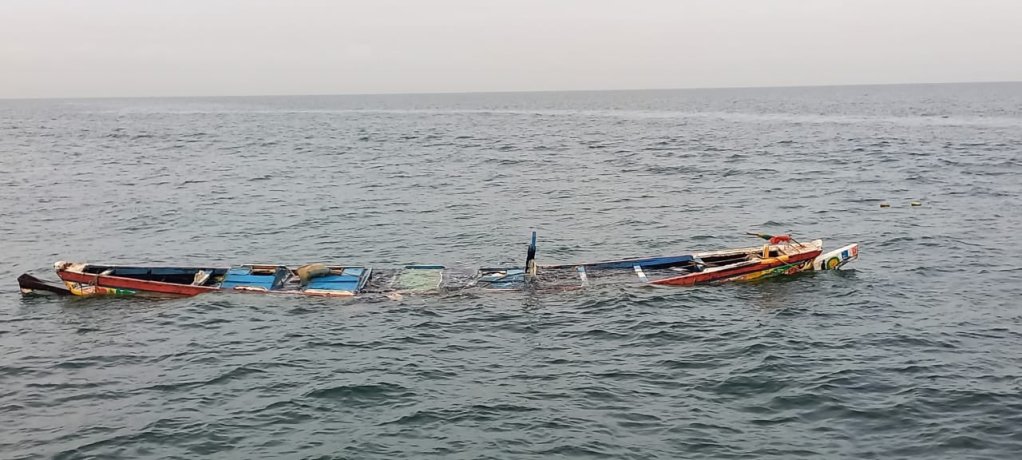
Senegal has vowed to intensify efforts to dismantle migrant-smuggling networks following the deaths of 39 people in a boat disaster off its coast, one of the country’s deadliest migration tragedies in recent years.
The death toll from the shipwreck, which occurred on Friday afternoon, November 6, rose to 39 on Monday, November 9, according to authorities.
The boat, a traditional wooden fishing vessel known as a pirogue, was carrying migrants attempting to reach Europe when it sank off the Senegalese coast.
Senegal’s Interior Minister, Mouhamadou Makhtar Cisse, visited the scene on Monday and paid his respects to the victims in front of the wreckage.
Speaking during the visit, Cisse acknowledged the economic and social pressures pushing young people to leave the country in search of better opportunities.
He said the government understood the difficulties facing young people, including their desire to improve their lives and support their families. However, he warned that risking death at sea should never be considered an option.
The minister described migrant smugglers as “modern day slave-traders” and called for them to be relentlessly tracked down and brought to justice.
He also advocated for awareness campaigns to discourage young people from taking dangerous journeys based on unrealistic promises of better opportunities abroad.
Cisse further suggested that Spain should consider introducing temporary work permits to allow migrants to travel legally for employment, offering an alternative to dangerous irregular migration routes.
Senegalese President Bassirou Diomaye Faye also expressed condolences to the victims’ families and pledged to strengthen action against the criminal networks organising dangerous sea crossings.
The latest tragedy comes amid continued concerns over deaths and disappearances along the Atlantic migration route linking West Africa to Spain’s Canary Islands.
According to the International Organization for Migration (IOM), at least 454 people had died or gone missing along the Atlantic route in 2026 as of October 26.
The organisation stressed that the actual number could be significantly higher because many boats disappear at sea without survivors, recovered bodies or witnesses to confirm what happened.
Thousands of people have lost their lives in recent years while attempting to reach the Canary Islands from West Africa, often travelling in overcrowded and poorly equipped wooden boats.
The latest disaster has renewed calls for stronger action against migrant-smuggling networks and greater access to safe and legal migration opportunities for people seeking employment and better living conditions abroad.