
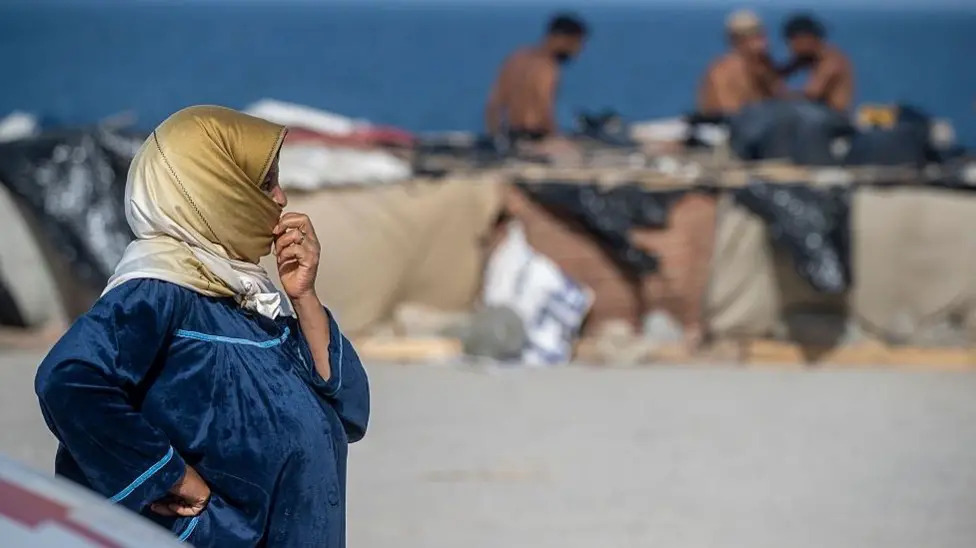
Spanish prosecutors have reported 23 suspected sexual assault cases in Ceuta since a major influx of migrants from Morocco reached the Spanish enclave at the end of July. Nine of the reported cases involved children, according to the territory’s chief prosecutor, Silvia Rojas.
Rojas said the number of reported incidents amounted to almost one case a day. She also warned that migrant girls could be especially vulnerable because of their irregular status and difficult circumstances in Ceuta.
The influx began on 30 and 31 July, when an estimated 72,000 people crossed from Morocco into the Spanish territory. Although the majority have since returned to Morocco, authorities estimate that about 5,000 migrants remain in Ceuta. Between 1,400 and 1,600 of those still there are believed to be children.
According to Spanish news agency Efe, those suspected in connection with the sexual assault cases include four Moroccan nationals, three Spaniards and one Belgian citizen.
Rojas said the sudden arrival of such a large number of migrants had resulted in a sharp rise in reported sexual violence. She added that the actual number of victims could be higher because some people were reluctant to report assaults, citing fear and uncertainty over their circumstances.
The Spanish Society of Epidemiology has also raised concerns about the difficulties involved in identifying and responding to violence against migrant women and girls during the continuing border crisis.
A 24-year-old Moroccan woman who spoke to the BBC said she had been sexually assaulted while sleeping in an area occupied by other migrants. She said she had not expected the dangers she encountered after making the journey to Ceuta.
Medical staff at Ceuta University Hospital have also treated several people following alleged sexual assaults. Emergency doctor Susana Ascaso previously said one of the patients was a 10-year-old child.
The situation has placed additional pressure on Spanish authorities, with Prime Minister Pedro Sánchez convening a national security council meeting as tensions continued to rise in the territory.
The government has approved a multi-million-euro support package intended to help Ceuta cope with the humanitarian situation. Economy Minister Carlos Cuerpo said the funding would support essential services and the care of unaccompanied minors.
The crisis has also fuelled political tensions in Spain. Ceuta’s conservative mayor, Juan Jesús Vivas, has called for demonstrations in support of the territory, while opposition parties have accused the Sánchez government of failing to adequately manage the situation.
Far-right party Vox has been particularly critical, accusing the government of losing control of Ceuta. Business leaders in the territory have likewise complained about uncertainty surrounding the screening and processing of the migrants who remain there.
Sánchez has rejected claims that Morocco deliberately organised the mass movement. He said Spanish intelligence services had found no evidence of direct involvement by Moroccan authorities.
Instead, the prime minister has pointed to the role of online disinformation, alleging that social media activity linked to international far-right networks and other actors helped amplify the crisis. Russia and Israel have rejected suggestions that they were involved.
Spanish fact-checking organisation Maldita reported that messages encouraging people in Morocco to attempt the crossing had circulated on social media before the mass arrival. The reports emerged amid political debate surrounding a Spanish Supreme Court ruling.
Morocco has continued to deny accusations that it orchestrated or participated in the mass movement of people into Ceuta.
The territory, located on North Africa’s coast, remains a longstanding point of tension between Spain and Morocco. Rabat claims sovereignty over Ceuta and neighbouring Melilla, although both territories remain under Spanish administration.
As authorities attempt to manage the humanitarian, security, and political consequences of the influx, concerns over the safety of vulnerable migrants, particularly women and children, remain at the centre of the crisis.