
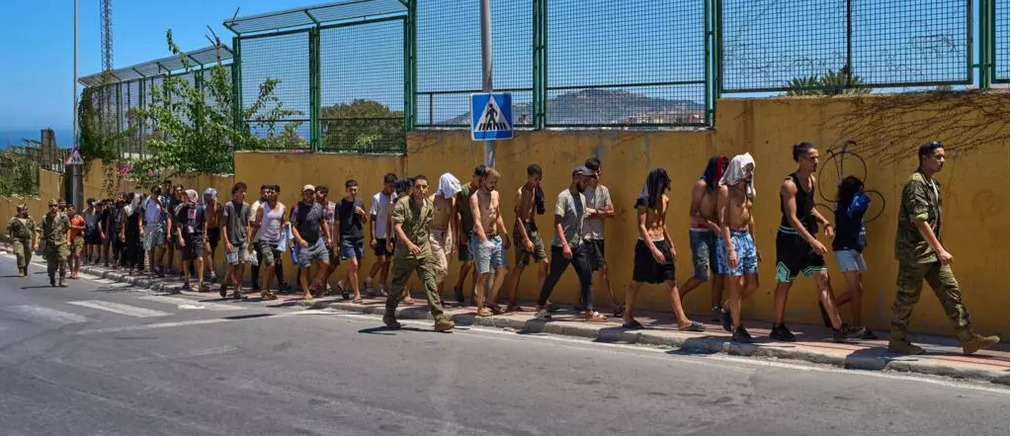
European Union interior ministers have expressed unanimous support for Spain following the recent migrant crisis in Ceuta, concluding that the Schengen Area was never under threat despite the unprecedented influx of migrants into the Spanish enclave from neighbouring Morocco.
The agreement was reached during an emergency meeting held on Tuesday after one of the deadliest migration incidents in recent years. Spanish Interior Minister Fernando Grande-Marlaska said all participating member states agreed that the Schengen free-travel zone remained fully intact throughout the crisis, stressing that there was no evidence of migrants moving beyond Ceuta into mainland Spain or other European Union countries.
The deadly surge into Ceuta claimed 75 lives, most of them due to drowning, according to updated figures released by Spanish authorities. The government also revised the number of arrivals, stating that approximately 72,000 migrants reached the enclave during the crisis. Grande-Marlaska confirmed that around 70,000 of those migrants have already been returned to Morocco as part of ongoing repatriation efforts coordinated between the two countries.
To address the humanitarian impact of the crisis, the Spanish government announced a €25 million emergency support package for the autonomous city of Ceuta. The funding will help local authorities provide shelter, healthcare and essential services to vulnerable migrants, particularly unaccompanied children. Humanitarian organisation Save the Children estimates that around 1,000 unaccompanied minors remain in the enclave and require immediate protection and assistance.
Despite concerns raised by some European governments before the meeting, officials described the discussions as constructive and focused on cooperation. In a joint statement, EU ministers praised Spain’s rapid response to the crisis, noting that authorities acted swiftly to prevent any onward movement of migrants into mainland Spain or other member states. The ministers also acknowledged that while communication during the emergency could be improved, Spain’s management of the situation helped preserve confidence in the Schengen system.
European Commissioner for Migration Magnus Brunner described the response as evidence that the European Union had successfully protected its external borders while resisting misinformation surrounding the crisis. French Interior Minister Laurent Nunez also reaffirmed that all member states stood in solidarity with Spain and agreed that the Schengen Area itself was not responsible for the migration emergency.
Although Spain received strong political backing, several countries argued that the crisis highlighted the need for stronger protection of the European Union’s external borders. Denmark welcomed Spain’s rapid deployment of police and military personnel but stressed that preventing irregular migration must remain a priority. Danish Immigration and Integration Minister Morten Bodskov called for additional investment in the European Border and Coast Guard Agency, Frontex, to improve border surveillance, forecasting and operational readiness across the bloc.
The migration emergency has once again exposed differences among European governments over how irregular migration should be managed. Spanish Prime Minister Pedro Sánchez has continued to defend a more inclusive migration policy and earlier this year launched a regularisation programme expected to grant legal status to around 500,000 undocumented migrants already living in Spain, many of whom originate from Latin America.
By contrast, Italy continues to advocate tougher migration measures. Although Italian Interior Minister Matteo Piantedosi began Tuesday’s meeting by expressing solidarity with Spain, he renewed calls for the European Union to establish migrant return centres outside its borders, following the model of Italy’s agreement with Albania. He also argued that the bloc should consider using trade relations as leverage to encourage greater cooperation from Morocco on migrant repatriation.
The discussions come as the European Union continues to tighten its migration policies in response to increasing irregular migration across the Mediterranean and other key routes. Recent reforms have allowed member states to establish return hubs outside the EU for failed asylum seekers, while efforts to strengthen cooperation with countries of origin and transit have intensified.
While the emergency meeting eased immediate concerns over the security of the Schengen Area, the events in Ceuta have reignited debate over the future of European migration policy. EU leaders are expected to continue discussions on strengthening external border security, improving cooperation with neighbouring countries and balancing humanitarian obligations with efforts to reduce dangerous irregular migration into Europe.