
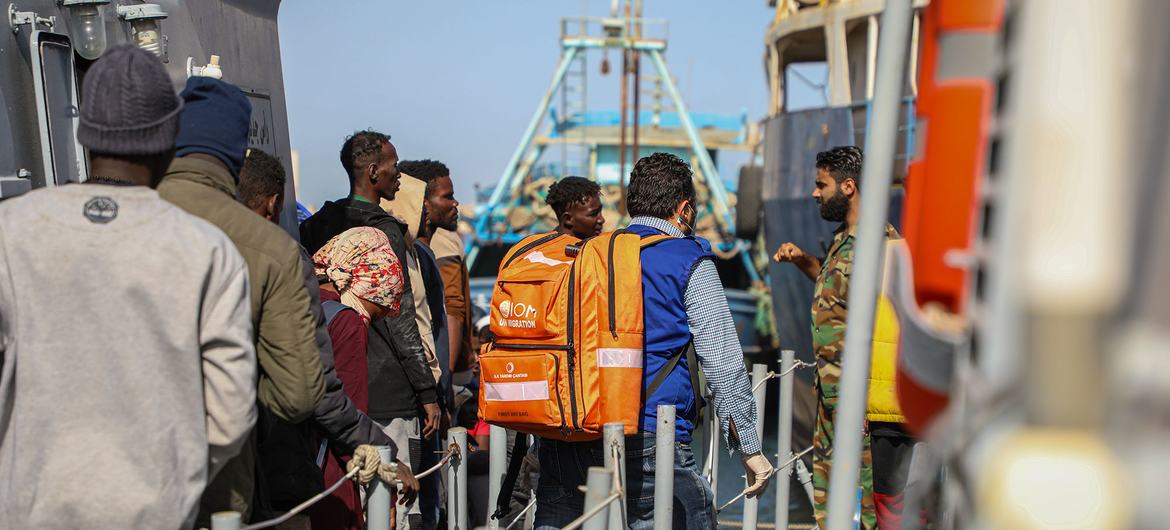
A new report by the International Organization for Migration (IOM) has warned that stricter border controls are not stopping migration but are instead forcing people to take more dangerous routes. The findings were published in the World Migration Report 2026 during the International Migration Review Forum held in New York City.
According to the report, limiting legal migration pathways often increases risks for migrants, raises costs for governments, and reduces the economic and social benefits migration can bring. Rather than stopping movement, restrictive policies are pushing migrants into unsafe and irregular journeys.
The report estimates that about 304 million international migrants were living outside their countries of origin by mid-2024, representing around 3.7 percent of the global population. It also noted a significant rise in migrant workers, with an increase of over 30 million people between 2013 and 2022.
IOM spokesperson Zoe Brennan explained that migrants play important roles in economies as workers, entrepreneurs, and consumers. The agency’s Director General, Amy Pope, added that migration supports job creation, economic growth, and social stability, even though migration policies remain the responsibility of individual countries.
Financial contributions from migrants remain a major global factor. The report projects that remittances could reach $905 billion in 2024, with $685 billion expected to go to low- and middle-income countries. These flows are said to be higher than both foreign direct investment and official development assistance combined.
However, the report highlights major inequalities in access to safe migration routes. Wealthier countries tend to offer more structured and legal pathways, while poorer regions often lack such systems, leaving migrants more exposed to exploitation and dangerous travel conditions.
The warning comes at a time when global displacement has reached record levels. By the end of 2024, more than 120 million people were displaced worldwide, including refugees, asylum seekers, and internally displaced persons. Of this number, about 83.4 million people were displaced within their own countries.
The IOM stressed that many of these crises now require long-term solutions that combine humanitarian aid with development planning, especially in areas affected by conflict, climate change, and economic challenges.
To address these issues, the agency is calling for practical actions such as expanding safe migration pathways, reducing remittance costs, improving skills mobility, strengthening regional cooperation, and using better data to guide policies.