
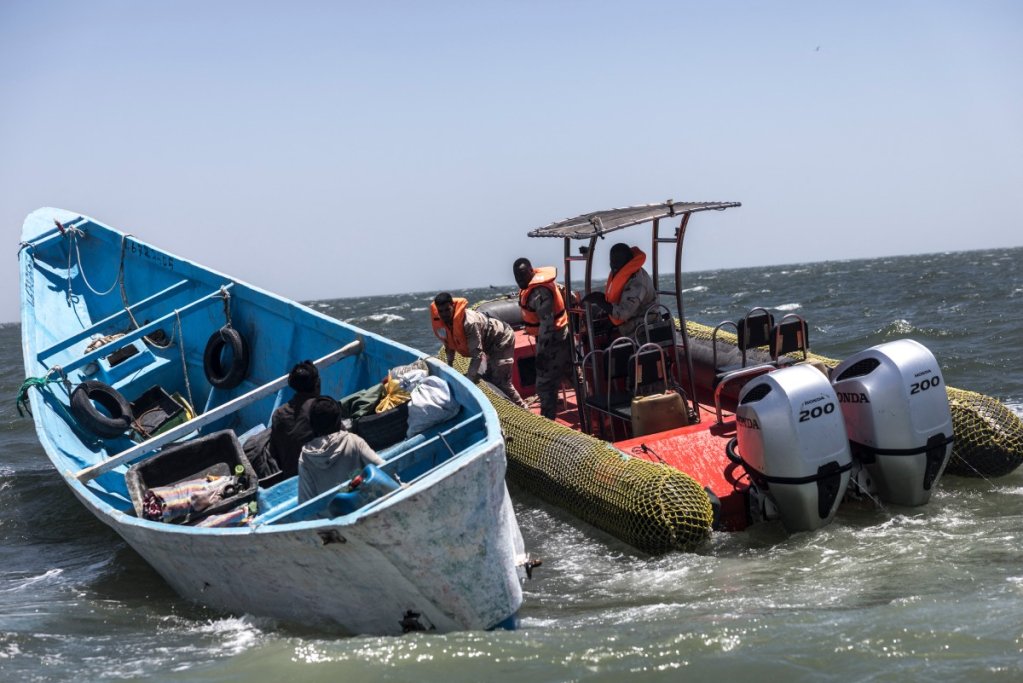
At least 144 migrants are feared dead or missing after two boats travelling from West Africa towards the Canary Islands encountered difficulties in the Atlantic, while Mauritanian authorities have rescued more than 200 people from separate vessels, according to the UN refugee agency, UNHCR.
The latest incidents have renewed concerns about the growing dangers of the Atlantic migration route from West Africa to Spain’s Canary Islands, one of the world’s most perilous migration corridors.
The first rescue operation began after Mauritanian authorities received an alert about a boat carrying approximately 160 people that had departed from Bufaloto in The Gambia.
The vessel reportedly suffered a technical failure and ran out of fuel, leaving it adrift in the Atlantic for around 25 days before reaching Mauritanian waters. Rescue teams recovered 37 survivors and at least one body after the boat was brought ashore on July 18.
Among those rescued were two children who had reportedly lost all their family members during the journey. The children were receiving medical treatment in hospital, according to UNHCR spokesperson Matt Saltmarsh.
A separate boat that arrived in Mauritania on July 14 also had one person who was found dead upon disembarkation.
In another rescue operation on July 18, authorities brought 179 people to safety. Across three rescue operations conducted between July 14 and 18, a total of 387 migrants were rescued, according to UNHCR.
So far this year, Mauritania has recorded 17 disembarkations in Nouadhibou and Nouakchott, with 2,147 people rescued in total.
UNHCR warned that the latest deaths and disappearances reflect a broader trend of increasingly deadly journeys across the Atlantic. Although the number of sea arrivals to Europe has fallen by more than a third compared with the same period in 2025, the agency said deaths and disappearances remain at alarming levels.
The UN agency called for greater access to education, employment and other opportunities in countries of origin and transit to reduce the pressure driving people to attempt dangerous sea crossings.
Mauritania has become a major departure and transit point along the route to the Canary Islands. The country’s coast guard and fishing authorities have conducted repeated rescue and interception operations as increasing numbers of migrants attempt to cross the Atlantic.
Many migrants are fleeing conflict, insecurity and economic hardship across West Africa. The conflict in Mali, involving jihadist groups, the military and Russian-backed forces, has displaced large numbers of people, with many seeking refuge in neighbouring Mauritania.
Mauritania is currently hosting more than 300,000 refugees from Mali, while also serving as a transit country for migrants attempting to reach Europe. Increased coastal controls linked to European migration agreements have reduced some departures but have also left migrants with limited safe and legal routes to continue their journeys.
The latest incidents come as Germany and Mauritania strengthen cooperation on migration, security and development.
German Foreign Minister Johann Wadephul visited Nouakchott this week to discuss bilateral relations, economic cooperation and investment. Berlin and the European Union have increasingly looked to African partners such as Mauritania to help manage irregular migration and strengthen regional security.
Germany has also identified opportunities for closer cooperation with Mauritania in areas including renewable energy, green hydrogen, infrastructure and trade.
Wadephul praised Mauritania’s role in promoting stability in the Sahel region and its hosting of hundreds of thousands of Malian refugees. He also met representatives of the UN Office on Drugs and Crime to discuss efforts to counter extremism and support deradicalisation initiatives.
For Spain’s Canary Islands, the latest rescue operations highlight the continuing humanitarian pressure created by the Atlantic migration route. For Mauritania, the incidents underscore the country’s growing role in Europe’s migration management efforts, even as increasingly dangerous sea journeys continue to cost migrants their lives.