
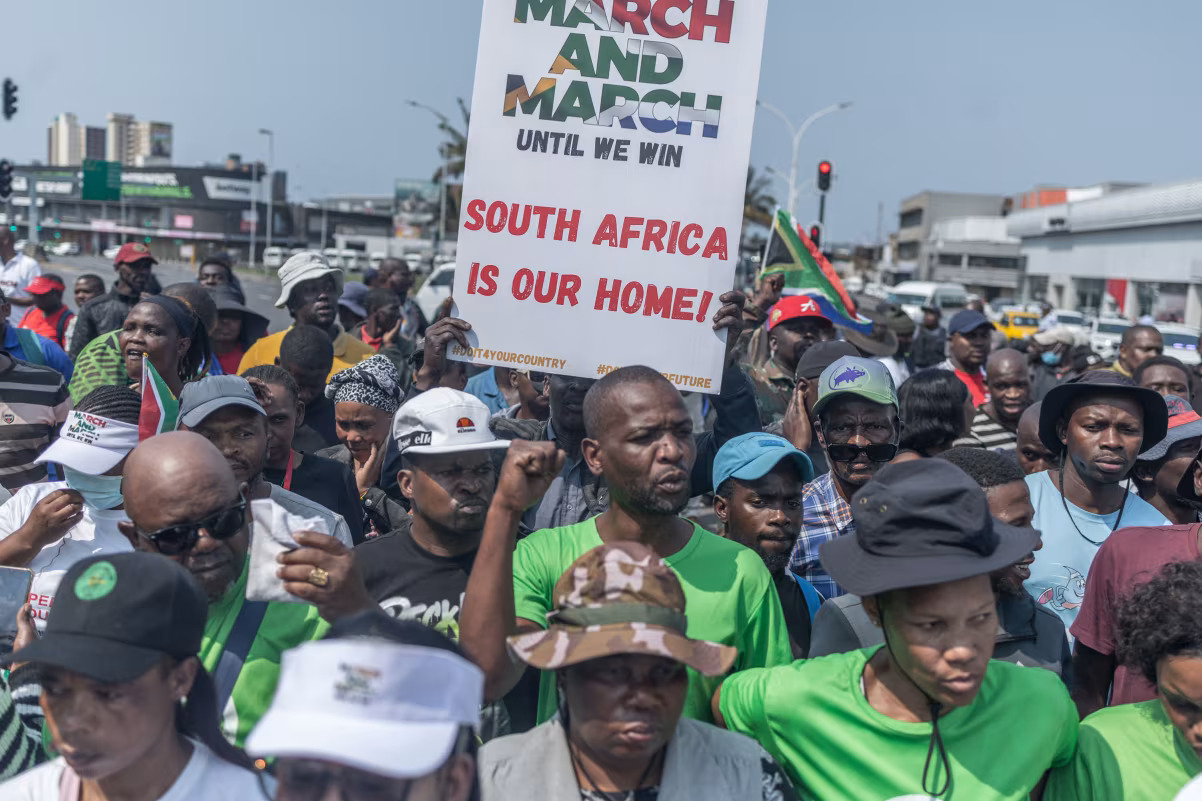
Tensions between Nigeria and South Africa have risen again after months of anti-migrant protests, fresh deaths involving Nigerians and renewed calls for undocumented migrants to leave the country.
The latest dispute comes only weeks after senior officials from both countries held talks in Abuja aimed at reducing tensions over migration, security and the treatment of foreign nationals.
In September, Nigeria’s parliament suspended official visits and legislative engagements with South Africa in response to continued concerns about attacks against Nigerians and other migrants. Reuters reported that Nigerian officials say 98 Nigerians have died in mob and hate-related incidents in South Africa since 2022. Nigeria also facilitated the voluntary evacuation of 1,695 Nigerians from South Africa during 2026.
The latest tensions follow anti-migrant campaigns in South Africa in which activists have called for undocumented foreigners to leave the country.
The campaigns have been driven partly by concerns over unemployment, crime and pressure on public services. Migrants from several African countries have been affected, although Nigerians have become one of the most visible communities caught up in the dispute.
South African officials have rejected violence against migrants while maintaining that immigration laws must be enforced by the state.
South African Foreign Minister Ronald Lamola said in June that migrants should not be targeted by vigilante groups and that responsibility for enforcing immigration law rests with government authorities. He also acknowledged concerns about unemployment, public services and poorly managed migration.
The government has also said concerns about the involvement of some foreign nationals, including Nigerians, in organised crime, drug trafficking and financial fraud need to be addressed through law enforcement rather than collective action against migrant communities. During talks with Nigeria in July, Lamola said more than 500 Nigerian nationals had been processed through South Africa’s criminal justice system for various offences as of July 7.
Nigerian officials, however, have repeatedly raised concerns about the safety of their citizens and the treatment of Nigerians by South African authorities.
The two governments attempted to address those concerns during Lamola’s July visit to Abuja. The talks focused on restoring mutual goodwill, migration management, law enforcement and regional security. Both sides also agreed on the need to prevent xenophobia and inflammatory rhetoric.
The renewed dispute shows how difficult it has been to maintain that progress.
Nigeria has reported deaths of its citizens in South Africa during the period of heightened anti-migrant tension. In July, Nigerian authorities said two Nigerians had been killed during a surge in anti-migrant violence, with one death involving allegations against police.
More recently, Nigerian authorities reported additional deaths and raised concerns about the circumstances surrounding them. The accounts surrounding individual cases have not always been the same.
South African authorities have disputed some Nigerian claims concerning deaths in police custody and said investigations were under way in relevant cases. The different accounts have added to concerns among Nigerian community representatives and officials.
Nigeria’s decision to suspend parliamentary engagements with South Africa does not amount to a complete breakdown in diplomatic relations. Reuters reported that the measure applies to legislative participation and official visits involving parliament, rather than ending government-to-government relations.
The two countries remain important economic and political powers on the continent and have longstanding diplomatic ties.
Their relationship has also been tested by previous outbreaks of xenophobic violence. Earlier disputes led to evacuations of Nigerians from South Africa and diplomatic protests, while retaliatory attacks against South African-owned businesses have also occurred in Nigeria.
The current dispute has also raised questions about the cost of repatriating migrants.
Nigeria has sought compensation for citizens who lost property and businesses during episodes of anti-migrant violence. South African authorities, meanwhile, have said they intend to seek reimbursement from other African governments for the costs associated with repatriating and deporting their nationals.
South Africa’s Home Affairs authorities have continued processing people for repatriation and deportation as part of the government’s wider migration-management programme. In a September 8 update, the government said implementation of its five-point migration plan had resulted in improvements and stressed the importance of peaceful protests and cooperation with law enforcement.
The government has also continued to publicly reject xenophobia.
President Cyril Ramaphosa has said South Africa rejects xenophobia, Afrophobia, vigilantism and discrimination against migrants.
For Nigerians living in South Africa, however, the renewed tensions have created uncertainty over their safety and businesses.
Community representatives have reported that some Nigerians have considered leaving the country, closing businesses or taking additional precautions because of fears surrounding anti-migrant activity.
The dispute is not limited to Nigerians. South Africa hosts migrant communities from across the continent, and recent government statements have acknowledged that migration, unemployment, public services and economic insecurity are closely connected to the country’s wider debate over immigration.
South African officials have argued that immigration enforcement must be carried out through lawful government processes rather than by private groups targeting migrants.
At the same time, Nigerian officials continue to press South Africa to improve the protection of Nigerians and to investigate deaths and alleged abuses involving its citizens.
The latest diplomatic dispute therefore reflects a wider challenge for both countries: managing irregular migration and criminal activity while protecting migrants from violence, discrimination and collective punishment.
With Nigeria’s parliamentary boycott now in place and both governments still engaged through diplomatic channels, the coming months could determine whether the July efforts to ease tensions can be sustained.