
Seven people have been arrested across Greece, Bulgaria and the Netherlands in a coordinated European operation targeting a suspected migrant smuggling network allegedly responsible for at least 12 incidents, according to Europol.
The European Union Agency for Law Enforcement Cooperation said five suspects were arrested in Greece, while one was detained in Bulgaria and another in the Netherlands during the operation on July 16.
Investigators allege that the criminal network transported migrants through the Balkans using a combination of rented, stolen and fraudulently registered vehicles.
Europol has linked the suspects to at least 12 migrant smuggling incidents between February and July 2026, while another four cases believed to be connected to the network remain under investigation.
The suspected group is reportedly made up primarily of Syrian and Egyptian nationals. Authorities allege that the network facilitated the irregular movement of mostly Egyptian, Iraqi and Syrian nationals from Greece through Bulgaria and Romania, with Italy as the intended final destination.
According to Europol, the network operated a sophisticated multi-stage transportation system. Migrants were initially moved in smaller vehicles through Greece, Bulgaria and Romania before being transferred to larger vehicles, including lorries, for onward journeys towards Italy.
Investigators said the vehicles used by the network were obtained through both legitimate and illegal means. Some were allegedly stolen in Greece, while others were registered or purchased through third parties and front companies.
The group also reportedly rented vehicles using genuine or forged identity documents before failing to return them to rental companies.
Authorities believe the network operated through separate cells in Greece, Bulgaria and Romania, with members frequently travelling across the Balkans to coordinate smuggling operations.
The arrests come as Europol warns that migrant smuggling networks are becoming increasingly decentralised, flexible and internationally connected.
According to the agency, criminal organisations are increasingly dividing smuggling operations among different actors, with key figures sometimes operating outside the European Union to reduce the risk of detection and arrest.
Digital platforms are also playing a growing role in the operations. Smuggling networks reportedly use social media and messaging applications to recruit migrants by advertising employment opportunities and travel assistance.
Once contact is established, smugglers may use digital tools to monitor and control migrants while they are being transported.
Europol has also warned that some criminal groups are adopting sophisticated digital marketing techniques, while using cryptocurrencies, cash couriers and legitimate businesses such as travel agencies and estate agencies to conceal and launder illicit profits.
However, experts warn that tougher border controls may have unintended consequences by increasing migrants’ dependence on smugglers.
Research by the Mixed Migration Centre found that intensified border controls in the Western Balkans have often pushed smuggling networks to change their routes while making journeys more expensive and dangerous for migrants.
Interviews with refugees and migrants suggested that tighter controls had increased reliance on smugglers and heightened the risks of exploitation and extortion.
The findings indicate that while increased enforcement can disrupt established smuggling routes, it may also encourage criminal networks to develop alternative routes and methods.
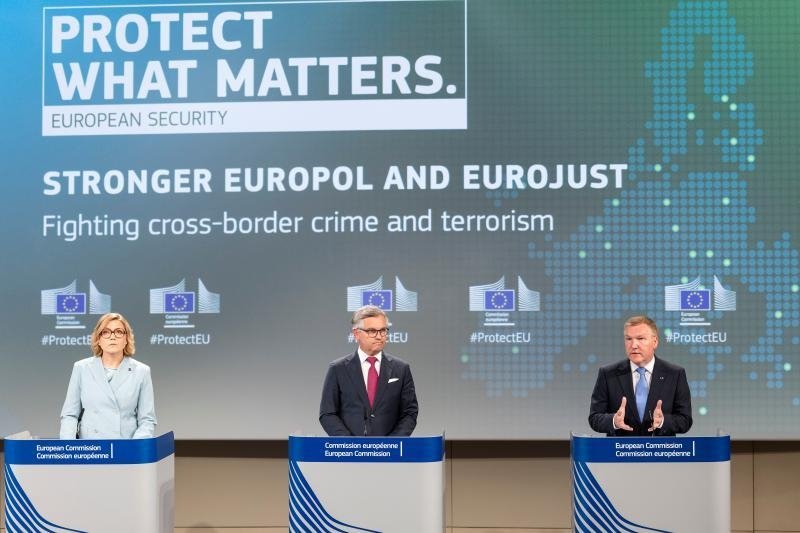
The European Union has been expanding its law enforcement response to organised migrant smuggling. In June, the European Commission proposed strengthening the mandates of Europol and Eurojust to improve cross-border investigations and cooperation between police, prosecutors and judges.
The Commission has also proposed increasing Europol’s budget to €3 billion under the EU’s 2028–2034 financial framework, with additional funding expected to support recruitment and advanced technological capabilities.
Europol has further established the European Centre Against Migrant Smuggling (ECAMS) to focus on the digital operations of smuggling networks. The centre aims to consolidate information from EU member states and international partners, helping authorities map criminal networks, identify key figures and expose the infrastructure supporting cross-border smuggling.
The latest arrests highlight the growing focus on dismantling organized migrant smuggling networks, as European authorities attempt to disrupt increasingly sophisticated criminal operations operating across multiple countries and migration routes.