
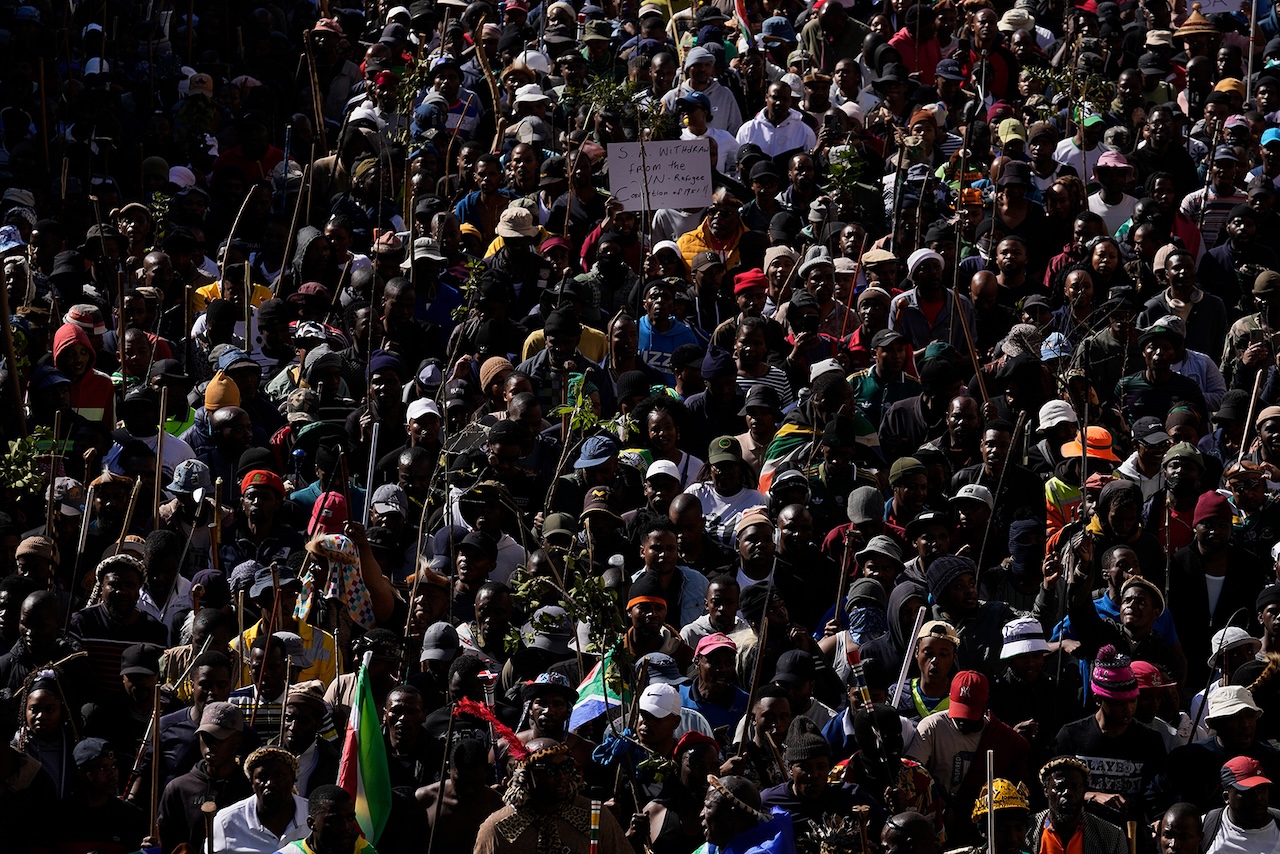
Christian leaders across South Africa are intensifying calls for peace, compassion and respect for the rule of law as anti-migrant violence continues into its second month, displacing thousands of foreign nationals and deepening concerns over the country’s growing social tensions.
The unrest, which has spread across several provinces over the past two months, has been marked by protests, intimidation and violent attacks targeting undocumented migrants. While some demonstrations have remained peaceful, others have turned deadly. According to figures compiled by AFP from governments repatriating their citizens, at least 12 people have been killed since the violence began.
The prolonged crisis has prompted churches and faith-based organisations to expand humanitarian efforts, offering temporary shelter, food, trauma counselling and spiritual support to displaced families who have lost their homes, businesses and livelihoods.
At a recent Global Day of Prayer event, Pastor Chris Oyakhilome, founder of Christ Embassy, urged South Africans to reject mob justice and allow law enforcement agencies to handle immigration-related concerns.
He acknowledged that frustrations over crime and undocumented migration have existed for years but warned that violence only worsens the country’s challenges.
“Don’t destroy your own country while you’re thinking that you’re trying to save it from these immigrants,” Oyakhilome said.
He stressed that individuals suspected of breaking the law should be handed over to the appropriate authorities rather than being subjected to attacks by vigilante groups.
Warning about the dangers of mob violence, Oyakhilome said once such actions become accepted, they can rapidly spiral out of control and devastate entire communities.
South Africa has experienced repeated outbreaks of xenophobic violence over the past two decades. Human rights organisations note that attacks on foreign nationals date back to at least 2008, when more than 60 people were killed and tens of thousands displaced. Similar incidents in 2015 and 2019 also resulted in widespread attacks on migrants and foreign-owned businesses.
As violence continues, churches have increasingly become frontline responders, opening their facilities to shelter displaced migrants while providing food, clothing, counselling and other emergency assistance.
The scale of the humanitarian crisis continues to grow. According to AFP’s compilation of figures released by governments organising repatriation efforts, Zimbabwe has received more than 108,000 returning citizens since mid-July, Malawi has welcomed over 46,000 returnees since early June, while Mozambique has recorded nearly 2,000 returnees. Other countries, including Ghana, Kenya, Nigeria, Uganda and Lesotho, have also assisted citizens leaving South Africa.
South Africa’s ongoing economic challenges have contributed significantly to public frustration. With unemployment remaining above 32 percent, alongside rising crime and pressure on public services, anti-immigration groups such as Operation Dudula and March and March argue that undocumented migrants compete with citizens for jobs, housing and government services.
However, church leaders and human rights advocates have repeatedly cautioned against blaming migrants for broader structural problems such as corruption, inequality, poor governance and unemployment.
Sithembele Sipuka, president of the South African Council of Churches, has consistently appealed for calm since the violence began.
In a pastoral message issued earlier in the crisis, Sipuka condemned attacks on foreign nationals, describing them as acts that undermine human dignity and social cohesion.
He said South Africa’s challenges stem from long-standing structural issues rather than the presence of migrants and urged Christians to view foreign nationals as fellow human beings deserving of dignity and compassion.
“We cannot continue to keep silent as other children of God continue to be discriminated against and dehumanized,” Sipuka said, adding that churches will continue promoting peace, unity and reconciliation.
The Southern African Catholic Bishops’ Conference has also repeatedly condemned the violence, describing attacks on migrants as violations of human dignity and warning political leaders against exploiting public frustration for political purposes.
In several affected communities, church leaders have facilitated dialogue between migrants, local residents and government officials in an effort to reduce tensions and prevent further violence.
Pastor Albert Nswadi of Goma International Pentecostal Church in the Democratic Republic of the Congo said the prolonged unrest reflects both genuine economic frustrations and the politicisation of migration.
Drawing from his previous ministry experience in South Africa, Nswadi said economic hardship and insecurity often result in migrants becoming scapegoats for wider societal problems.
“The government must fix the laws, but the church must heal the people,” he said, stressing that faith communities have an important role in rebuilding trust and promoting reconciliation.
Despite these appeals, some residents and anti-immigration activists argue that church leaders have failed to fully recognise public concerns surrounding undocumented migration, crime and national security.
Resident Bongani Sithole said communities have raised concerns about illegal immigration for years without sufficient government action, while another resident, Zanele Mthethwa, argued that authorities must enforce immigration laws more effectively.
Even so, Mthethwa urged undocumented migrants to respect the country’s laws.
As the unrest continues, Pastor Oyakhilome encouraged South Africans to express their concerns through peaceful protest, civic engagement and lawful channels rather than violence.
Religious leaders say they will continue working to prevent further bloodshed while supporting affected communities and promoting a message that justice, compassion and respect for human dignity must remain at the centre of South Africa’s response to the crisis.