
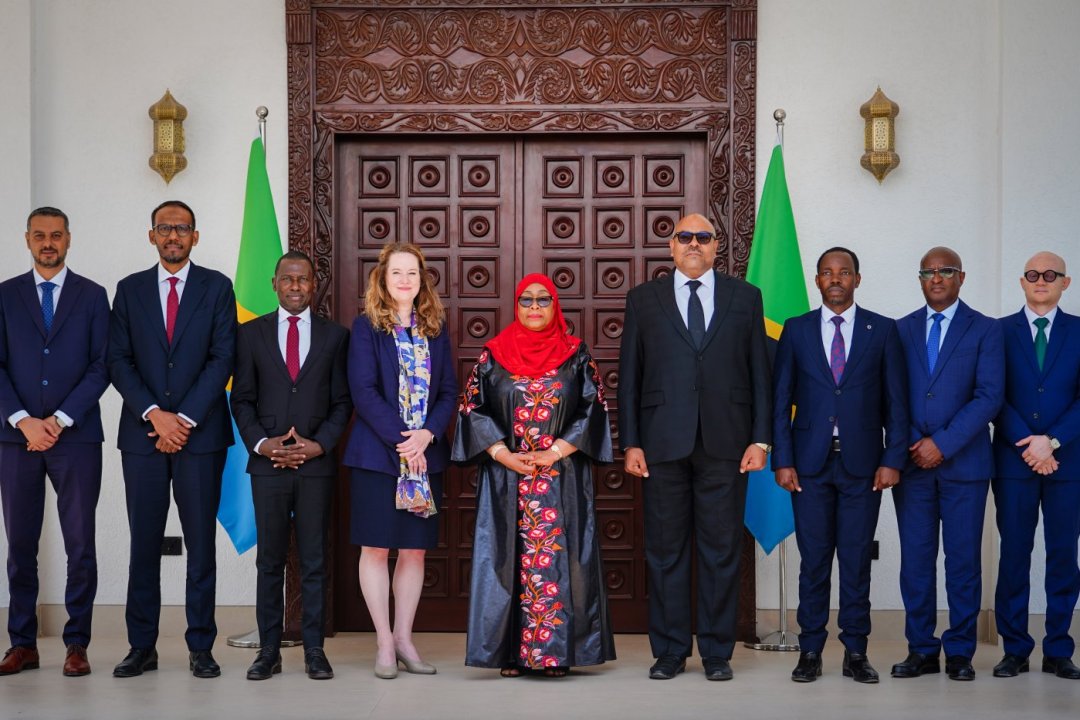
Tanzania is strengthening its role in efforts to address migration challenges and opportunities across East and Southern Africa, with the International Organization for Migration (IOM) calling for deeper regional cooperation on safe and regular migration, labour mobility, migrant protection and climate-related displacement.
The renewed focus followed a visit to Tanzania by IOM Director General Amy Pope, who met with President Samia Suluhu Hassan, government officials, United Nations partners and other migration stakeholders to discuss migration governance and regional cooperation.
Pope said Tanzania occupies an important position in Africa’s migration landscape because of its role as a country of origin, transit, destination and refuge for migrants and displaced populations.
“Tanzania is at the heart of some of the most important migration conversations taking place in Africa today,” Pope said, highlighting the country’s involvement in discussions on labour mobility, skills development, refugee protection and climate-related displacement.
Migration remains a major feature of East and Southern Africa, a region that hosts more than 12.7 million international migrants, over 16 million internally displaced people and approximately 5.4 million refugees.
Tanzania currently chairs the Regional Ministerial Forum on Migration and also hosts the IOM African Capacity Building Centre (ACBC), which supports migration governance, training and capacity development across the continent.
During her visit, Pope participated in discussions on advancing Tanzania’s National Migration Policy, improving migration coordination and strengthening border management and migration data systems.
The discussions also focused on supporting safer and more regular mobility across the region as governments face growing pressures linked to displacement, labour migration and climate change.
Pope joined the launch of Tanzania’s National Coordination Mechanism on Migration and took part in the handover of the chairpersonship of the Regional Ministerial Forum on Migration for East and the Horn of Africa.
The IOM chief also emphasised the growing impact of climate-related mobility, noting that climate-related movements across the region increased by 16% in 2024.
The increase has reinforced calls for stronger emergency preparedness, climate resilience and cross-border cooperation to help countries respond to displacement linked to environmental and climate pressures.
Tanzania’s role in migration capacity-building was also highlighted during the visit. Institutions including the African Capacity Building Centre in Moshi and the Tanzania Regional Immigration Training Academy continue to support professional training and the development of migration management systems.
According to Tanzania’s Migration and Urbanization Monograph, launched in 2026 using data from the 2022 Population and Housing Census, the country hosts more than 280,000 international migrants.
The figures underline the importance of evidence-based migration policies as Tanzania seeks to maximise the economic and social benefits of migration while addressing challenges associated with irregular migration, displacement and migrant protection.
IOM and the Tanzanian government have worked together for decades on migration governance, labour mobility, migrant protection, migration health and climate resilience.
The latest discussions reaffirmed their commitment to promoting safe, orderly and regular migration while strengthening regional stability, development and cooperation across East and Southern Africa.