
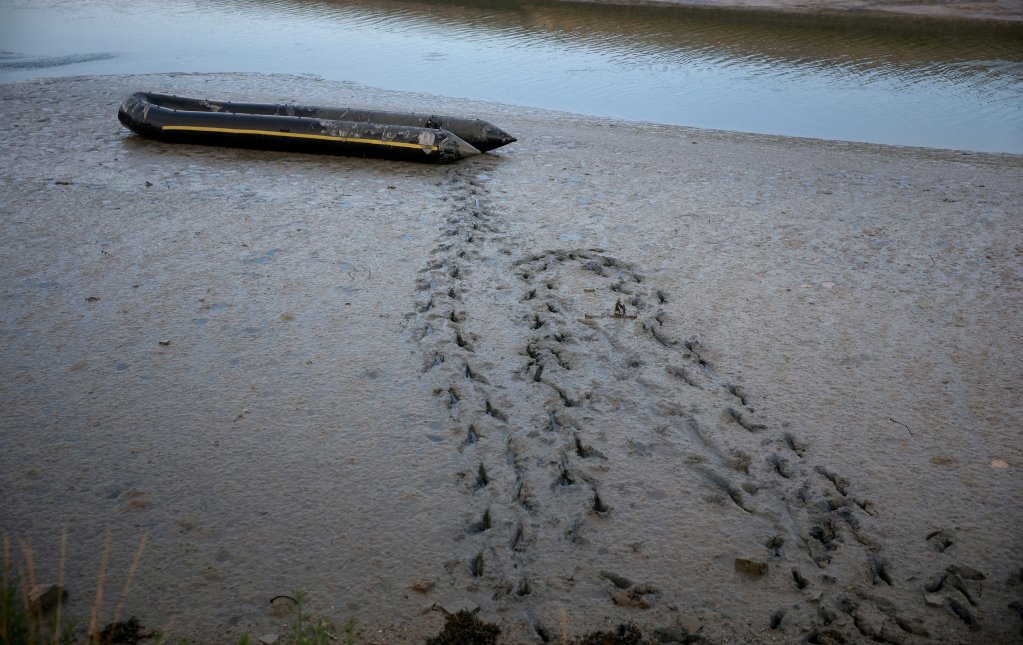
The United Kingdom and France are strengthening cooperation to tackle irregular migration across the English Channel, with the latest measures focused on increasing patrols, intelligence-sharing and investigations into the criminal networks organizing migrant journeys.
The British government considers Channel crossings a shared European challenge that requires sustained cooperation with French authorities. The expanded deployment is expected to support operations along France’s northern coastline and help authorities identify and disrupt organizations involved in arranging crossings.
However, increased policing may not address all of the factors pushing people to attempt the dangerous journey. Many migrants waiting in northern France live in informal settlements where access to accommodation, sanitation, healthcare and legal support remains limited.
A 2025 assessment by the Asylum Information Database found that more than 60,000 asylum seekers in France were not receiving formal reception conditions. Humanitarian organizations have also continued to report difficult living conditions among migrant communities around Calais and Dunkirk.
Stronger enforcement could prevent some boats from leaving French shores, but smugglers may respond by changing departure locations, putting more passengers on individual boats or increasing the fees charged to migrants. Aid organizations have warned that intensified enforcement, in the absence of sufficient safe and legal alternatives, could make migrants more reliant on criminal smuggling networks.
The effectiveness of the UK-France approach is therefore likely to depend on more than the number of attempted crossings stopped. Authorities will also need to assess whether investigations successfully weaken smuggling organizations, whether activity simply moves to different locations and whether increasingly restrictive measures make the journeys more dangerous.
A broader strategy could involve tackling some of the conditions that drive people to leave their countries, while expanding safe migration and legal protection pathways. Greater coordination over asylum procedures and international protection could also form part of a longer-term response.
Many people attempting to cross the Channel originate from countries affected by conflict, persecution and serious human-rights concerns. Afghanistan is one example. UK government guidance states that people with a well-founded fear of persecution by the Taliban may be unable to obtain adequate protection within Afghanistan.
That does not determine the outcome of an individual asylum application, but it highlights the limits of relying solely on deterrence and border enforcement to reduce Channel crossings.
The challenge for both governments is therefore to combine action against criminal smuggling networks with measures that address humanitarian needs and the circumstances driving people toward irregular routes. Without such measures, efforts to prevent crossings could reduce departures in some areas while pushing migrants and smugglers toward alternative routes and potentially more dangerous methods of travel.