
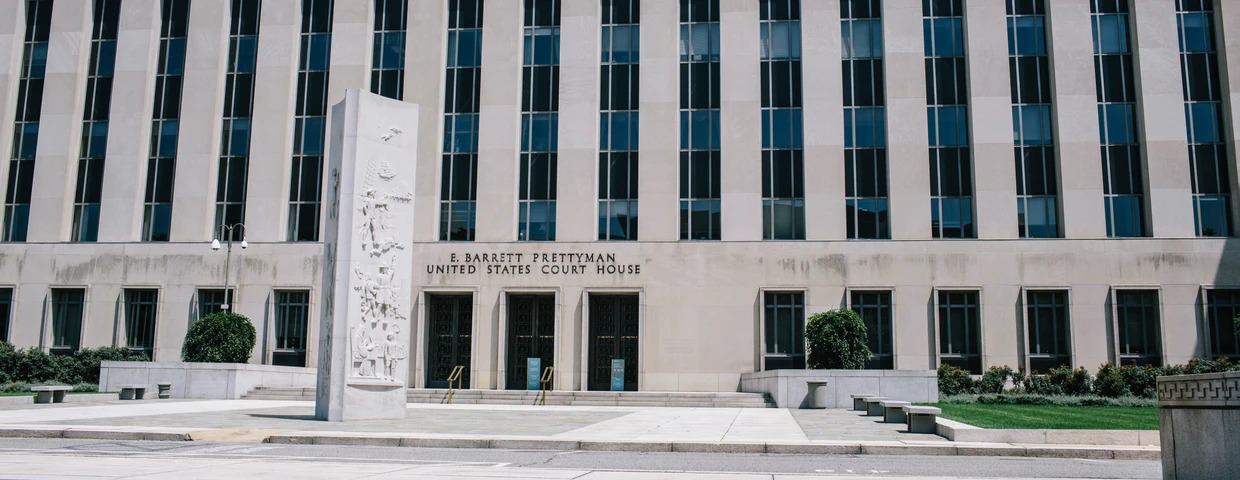
A federal appeals court has cleared the way for the Trump administration to revive directives that could place hundreds of thousands of migrants at risk of deportation through an expedited removal process.
A three-judge panel of the US Court of Appeals for the District of Columbia Circuit on Tuesday lifted a lower court order that had blocked the directives, which instruct immigration officers to consider expedited removal for certain migrants who entered the United States under humanitarian protections established during the Biden administration.
The affected migrants include nationals of Cuba, Haiti, Nicaragua and Venezuela who were allowed to enter the United States under a temporary humanitarian parole programme.
The appeals court did not rule on whether the Trump administration’s directives are lawful. Instead, the judges concluded that the immigration organisations challenging the policies did not have the legal standing required to bring the case because they could not demonstrate that a court ruling in their favour would necessarily protect their members from deportation.
The panel said existing immigration regulations dating back decades may already give federal officers authority to place some migrants who entered the country through parole into expedited removal proceedings.
“Plaintiffs cannot seek relief that changes nothing for them,” the judges wrote in their per curiam opinion.
The decision was issued by Chief Judge Sri Srinivasan, an appointee of former President Barack Obama, and Judges Neomi Rao and Justin Walker, both appointed by President Donald Trump.
The appeals court’s ruling therefore leaves open the central legal question of whether the administration’s directives themselves comply with immigration law.
Immigration organisations, including the Coalition for Humane Immigrant Rights, are separately challenging the legality of the underlying regulations in federal district court. That case remains pending, with the district judge yet to issue a ruling on the merits.
The regulations at issue were adopted in 1997 and classify certain migrants who entered the United States through parole, a temporary mechanism for allowing people to enter the country, as “arriving aliens” who can be subject to expedited removal.
The Trump administration has relied on those regulations as it seeks to accelerate deportation proceedings while litigation over its newer directives continues.
Hillary Li, counsel at Justice Action Center, said the appeals court decision should not be interpreted as a ruling that the administration’s 2025 expedited-removal policies are lawful.
She said the immigration groups’ separate challenge to the 1997 regulations remains fully briefed and awaiting a decision from the district court.
“Our challenge to those 1997 regulations is fully briefed and awaiting a decision from the district court, and we will continue fighting for full, permanent protections for parole beneficiaries,” Li said.
The ruling nevertheless represents a setback for immigrant advocacy organisations that had challenged the administration’s efforts to expand the use of expedited removal against migrants who had previously received humanitarian parole.
The Biden administration’s parole programme allowed eligible nationals of Cuba, Haiti, Nicaragua and Venezuela to enter the United States temporarily if they met specific requirements and had an eligible US-based sponsor.
The Trump administration moved shortly after taking office to terminate those protections and pursue the removal of migrants who had benefited from the programme.
The Supreme Court subsequently allowed the administration to proceed with ending the legal protections for hundreds of thousands of migrants while litigation continued.
Tuesday’s appeals court ruling also overturns an August 2025 decision by US District Judge Jia Cobb, who had blocked the deportation directives.
Cobb, a Biden appointee, had argued that the migrants affected by the policy had complied with the conditions imposed on them when they entered the United States and that the government subsequently changed the legal circumstances under which they had been admitted.
In her ruling, Cobb said the migrants had “played by the rules” before the government “changed the game.”
The appeals court had previously expressed doubts about whether Cobb’s decision could provide meaningful relief to the organisations challenging the administration’s directives.
During oral arguments in March, attorneys representing the immigrant groups argued that the newer directives had materially changed the situation for migrants who entered under humanitarian parole because relatively few of them had previously been exposed to expedited removal.
Esther Sung of Justice Action Center told the court that the administration’s policies had created a substantially different deportation environment for parole beneficiaries.
The appeals court, however, rejected the argument, finding what it described as a “fatal redressability problem.”
The judges reasoned that even if the administration’s challenged directives resulted in more migrants being placed in expedited removal proceedings, blocking those directives would not necessarily reverse that increase because existing regulations could independently provide the government with similar authority.
The distinction is important because expedited removal allows immigration authorities to deport certain noncitizens without the full immigration-court process normally available in standard removal proceedings.
The expanded use of expedited removal has become a central component of the Trump administration’s broader immigration enforcement strategy.
The administration has sought to increase the number of migrants who can be removed quickly, arguing that faster deportations are necessary to strengthen border enforcement and deter illegal immigration.
Immigrant advocacy organisations have challenged the policies, arguing that expanded expedited removal could deprive migrants of meaningful opportunities to present asylum claims or other legal protections.
Tuesday’s decision is the latest in a series of court victories for the administration’s deportation agenda.
In June, the DC Circuit upheld, at least temporarily, another administration policy expanding eligibility for expedited removal in a separate legal challenge.
The Supreme Court has also allowed the administration to end certain deportation protections, including Temporary Protected Status for Haitians, another form of immigration relief available to nationals of countries experiencing crises.
The latest case centres on the legal status of migrants who entered the United States through the Biden-era humanitarian parole programme and the extent to which the federal government can subject them to accelerated deportation proceedings.
For the migrants affected, the decision could increase uncertainty over their ability to remain in the United States while broader litigation continues.
However, Tuesday’s ruling does not provide the administration with a final judicial determination that its 2025 directives are lawful. The separate challenge to the underlying 1997 regulations remains before the district court and could produce another major ruling on the scope of expedited removal.
The case also illustrates the increasingly complex legal battle surrounding the Trump administration’s immigration policies, with federal courts weighing questions involving deportation authority, humanitarian parole and the procedural protections available to migrants facing removal.
As litigation continues, the administration is expected to maintain its efforts to expand expedited deportations, while immigrant-rights organisations are likely to continue challenging the policies in federal court.
The case is Coalition for Humane Immigrant Rights v. Markwayne Mullin, No. 25-05289, in the US Court of Appeals for the District of Columbia Circuit.