
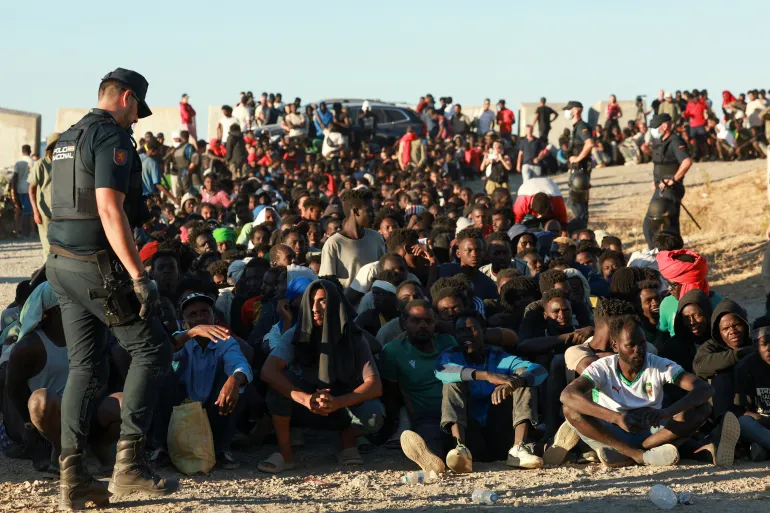
Spain is considering changes to its asylum and deportation procedures for migrants who remain in the Spanish enclave of Ceuta after the mass border crossing from Morocco in July.
A draft decree reviewed in a report by Reuters proposes faster processing of asylum applications from more than 10,000 people still in the enclave. The Spanish Interior Ministry has not commented on the draft.
The proposed measures could significantly change how asylum claims are handled for people who entered Ceuta during the mass crossings of July 30 and 31, when more than 70,000 people crossed into the Spanish territory by land and sea.
Under the draft rules, migrants whose asylum applications are rejected could be required to leave Spain before challenging the decision if the European Union considers their country of origin to be safe. The proposed requirement would apply regardless of an individual’s personal circumstances.
The draft would also allow Spain to use an accelerated procedure for processing the asylum claims of people affected by the July crossings. This could mean that applications are examined more quickly than under the country’s normal asylum system.
Another proposed change concerns the involvement of representatives of the United Nations refugee agency, UNHCR, in the asylum process. The draft reportedly allows authorities to depart from the usual procedure involving the agency when processing applications covered by the new measures.
The proposed decree also contains provisions that could affect migrants who are difficult for authorities to contact. Under the draft, an asylum application could be considered withdrawn if officials are unable to reach the applicant for five consecutive days.
The government is also considering rules that would immediately remove a person’s right to remain in Spain if authorities determine that the individual has behaved in a violent or threatening manner.
The measures have already prompted concern among lawyers and organisations working with refugees and migrants. Thirteen organisations, including the Spanish Commission for Refugee Aid and Oxfam, have warned that some of the proposed provisions could create serious problems for Spain’s obligations under international human rights and refugee protection agreements.
The concerns centre partly on the proposal requiring some rejected asylum seekers to appeal from outside Spain. Human rights and refugee organisations argue that asylum procedures must take account of individual circumstances and provide effective access to legal remedies.
Spain’s Minister for Territorial Policy, Ángel Víctor Torres, confirmed that the government was examining possible changes to the rules. He also acknowledged that any new measures would have to take international legal obligations into account.
The proposed changes come after an unprecedented migration emergency in Ceuta. More than 70,000 people crossed from Morocco into the enclave at the end of July, creating severe pressure on local authorities and accommodation facilities.
Most of those who entered subsequently left Ceuta, while thousands remained in the territory awaiting decisions about their status, asylum claims or possible return.
The situation has increased pressure on the Spanish government to find ways of processing cases more quickly while managing the humanitarian and legal responsibilities arising from the mass arrival.
The draft decree remains under consideration and could still be changed before any final decision is taken. Its most controversial provisions are likely to face further scrutiny from lawyers, humanitarian organisations and other groups concerned with Spain’s asylum obligations.