
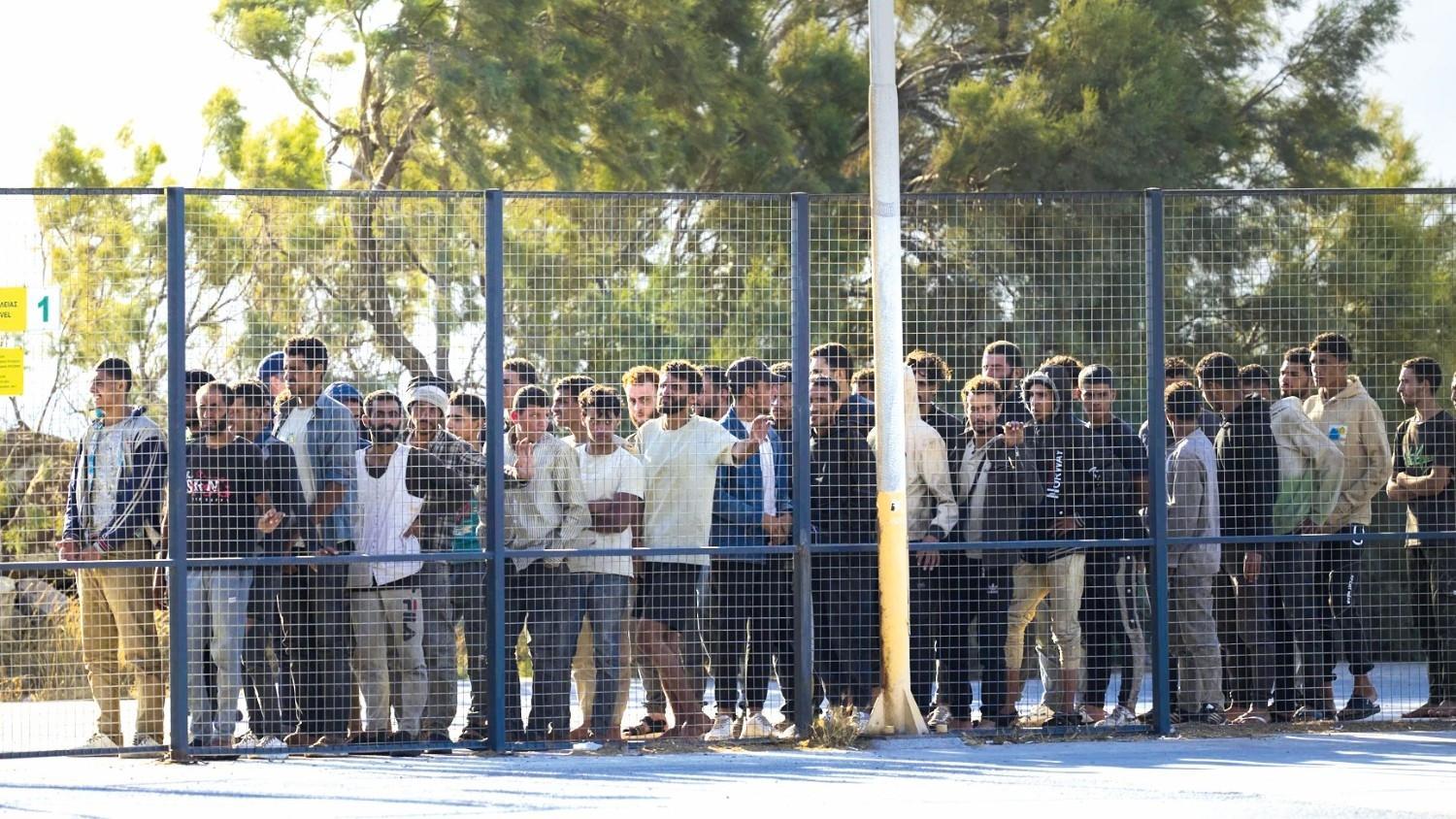
Greece says it plans to establish a migrant return hub in an African country when it takes over the rotating presidency of the European Union in 2027.
Greek Migration Minister Thanos Plevris said on September 28 that discussions were already underway with an African country, although he did not identify the country publicly.
“We believe that the framework is opening up under the Greek presidency for the return center to operate,” Plevris told Greek television channel ANT1.
He said the proposed facility would be located in an African country that Greece had already reached an agreement with, but added that the country could not yet be named.
Greece is scheduled to hold the EU’s rotating presidency during the second half of 2027.
Uganda and Rwanda have previously been mentioned as possible locations for the proposed return hub. Greece is working with Denmark, Austria, Germany and the Netherlands on the initiative.
Plevris said representatives of the five EU countries are expected to meet soon with the International Organization for Migration to discuss how the proposed system could operate.
The plan follows efforts at EU level to accelerate the return of migrants whose asylum applications have been rejected.
In June, the European Parliament approved new rules concerning the return of people without the right to remain in the EU. The rules include provisions allowing member states to establish agreements involving return facilities outside the bloc.
Supporters of the approach say such arrangements could make the return process more effective, while human rights organisations have raised concerns about detention conditions, legal safeguards and the protection of migrants transferred to countries outside the EU.
The Council of Europe, which is separate from the European Union, has also raised concerns. Its officials have sent letters to migration commissioners in the five countries involved in the initiative, recommending measures to prevent possible human rights violations.
Greece is also seeking changes to the EU’s response to sudden increases in migration.
Plevris said Athens intends to present a proposal at the EU Home Affairs Council meeting on October 1 for what he described as an exceptional mechanism that could be activated during a major migration influx.
He referred to the recent situation in Spain’s North African enclave of Ceuta, where Spanish authorities reported that tens of thousands of people crossed from Morocco in a short period.
Plevris argued that exceptional situations require measures outside the normal framework.
The proposed African return hub is part of a wider European debate over how rejected asylum seekers should be returned and whether countries outside the EU should play a greater role in the process. The initiative is expected to face continued scrutiny over its legal framework and the safeguards available to people sent outside the bloc.