Close Menu
Migrant Affairs
    Trending News

    UK Immigration Enforcement to Deploy Live Facial Recognition Across Public Hubs

    November 5, 2026

    EU Opens Contact with Taliban Over Migrant Returns

    October 20, 2025

    EU Strengthens Europol Role to Fight Migrant Smuggling and Trafficking

    September 26, 2025

    EU Border Policies Under Scrutiny After Deadly Migrant Shipwreck

    March 1, 2024

    EU Records Highest-Ever Number of Asylum Applications in 2023

    February 28, 2024

    Doctors Without Borders Condemn European Union Migration Policies

    February 24, 2024
    Facebook X (Twitter) Instagram
    Facebook X (Twitter) Instagram
    Migrant Affairs
    Subscribe
    • Home
    • About
    • News
    • Features
    • Contact
    • Privacy Policy
    • Terms and Conditions
    • Imprint
    Migrant Affairs
    Home » Germany Report Finds Migrant Students Less Likely to Attend University-Preparatory Schools
    Germany

    Germany Report Finds Migrant Students Less Likely to Attend University-Preparatory Schools

    November 16, 2026Updated:November 16, 20263 Mins Read
    Facebook Twitter LinkedIn Copy Link WhatsApp
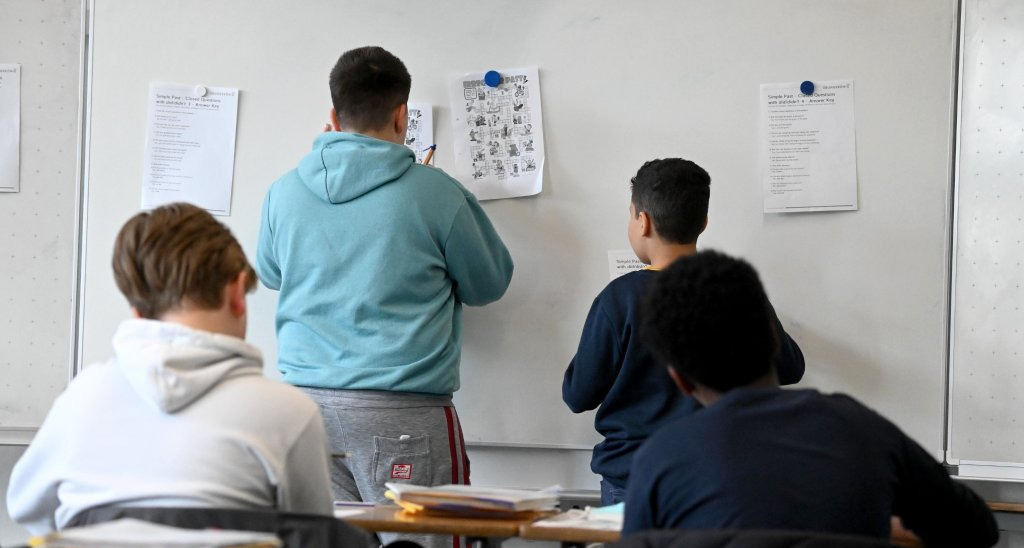
    Migrant students in Germany
    File photo used for illustration: Migrant children face risk factors that lower their chances of academic success | Photo: : Stephan Rumpf/SZ/picture-alliance. Source: Infomigrants.
    Share
    Facebook Twitter LinkedIn Copy Link WhatsApp

    Students from immigrant families in Germany remain less likely to attend academic-track secondary schools than their peers without a migration background, according to the country’s latest integration report.

    The findings highlight persistent inequalities in Germany’s education system, where family income, parents’ educational qualifications, employment status and access to early childhood education continue to influence the academic opportunities available to children from migrant backgrounds.

    The report shows that young people with an immigrant background are underrepresented in Gymnasien, the academic-track secondary schools that provide the main route to university education in Germany.

    The findings are also supported by an analysis from the Expert Council on Integration and Migration (SVR), which identifies socioeconomic disadvantages and differences in educational opportunities as major factors behind the gap.

    According to Germany’s 14th Integration Report, based on 2023 data analysed by the Federal Statistical Office, 67.8 per cent of children and young people who immigrated to Germany experienced at least one of three major socioeconomic disadvantages affecting educational success.

    These included growing up in a family experiencing poverty, having parents with low formal educational qualifications or having unemployed parents.

    The proportion was 52.8 per cent among young people born in Germany to immigrant parents, compared with 16 per cent among those without an immigration history.

    Such disadvantages can make it more difficult for children from migrant families to access educational resources, additional learning support and opportunities outside the classroom.

    The SVR also highlighted differences in access to early childhood education and the influence of family circumstances on the educational pathways available to young people.

    Results from the OECD’s 2025 PISA study further indicate that social background has a stronger influence on academic performance in Germany than in many other OECD countries.

    Although differences in language skills and family circumstances explain part of the educational performance gap, they do not completely account for the disadvantages experienced by students from migrant backgrounds.

    Other challenges include Germany’s early system of separating pupils into different secondary school pathways, insufficient support for multilingual students and experiences of discrimination in educational settings.

    Despite these difficulties, the latest integration report also highlights improvements in educational attainment among younger generations from immigrant families.

    According to the report, 46.6 per cent of young adults aged between 25 and 34 whose parents immigrated to Germany have achieved a higher level of education than their parents.

    The findings suggest that many young people from migrant families are making educational progress despite the structural barriers affecting their access to certain schools and academic opportunities.

    The Expert Council on Integration and Migration also identified improvements in early language support and the expansion of all-day schooling as developments that have contributed to better educational outcomes.

    However, progress remains uneven across Germany’s federal states, partly because education policies and school systems are administered at state level.

    Education experts and civil society organisations have called for further reforms to ensure that a child’s family background does not determine their academic opportunities.

    Among the recommendations are expanding early childhood language assessments and support so that children can develop the necessary language skills before starting primary school.

    Experts have also called for changes to the transition system between primary and secondary education to reduce the influence of socioeconomic background on decisions about which school pathway children follow.

    Additional investment in schools serving disadvantaged communities has also been recommended, including more teachers, social workers and financial resources.

    The findings renew attention to the educational challenges facing children from migrant families in Germany, while highlighting the importance of policies that promote equal access to education and improve opportunities for younger generations.

    education inequality education opportunities German integration report Germany migration immigrant children migrant integration migrant students
    Share. Facebook Twitter LinkedIn Copy Link WhatsApp

    Related Posts

    Amnesty Warns Migrant Workers at Amazon Warehouses in Saudi Arabia Remain at Risk of Exploitation

    November 16, 2026

    Spain’s Canary Islands Receive More Than 2,200 Migrants in Two Days as Government Declares Emergency

    November 16, 2026

    South Korea Donates Winter Clothes and Uniforms to Migrant Workers in Ulsan

    November 16, 2026
    Top Posts

    Organizations Supporting Migrants and Refugees Worldwide

    The Impact of Social Media on Migrant Advocacy and Awareness

    Germany’s National Election 2025: Political Party Ideologies on Migration and Migrants

    Top Scholarships and Educational Opportunities for Migrants and Refugees in 2026

    Don't Miss

    Germany Report Finds Migrant Students Less Likely to Attend University-Preparatory Schools

    November 16, 20263 Mins ReadBy RACHAEL ADEEGBE

    Students from immigrant families in Germany remain less likely to attend academic-track secondary schools than…

    Read More

    UK Immigration Enforcement to Deploy Live Facial Recognition Across Public Hubs

    November 5, 2026

    German Interior Minister Blames Left-Wing Groups and Migrant Communities for Gen Z Protest Violence

    November 2, 2026

    Germany and EU Partners Target Year-End Deal on Migrant Return Hubs

    October 31, 2026

    Germany Housing Project Brings Migrants and Locals Together to Support Integration

    October 16, 2026

    Workers with Migration Background Fill Critical Roles Across Germany

    September 29, 2026
    RSS News Around
    Stay In Touch
    • Facebook
    • Twitter
    • LinkedIn
    • WhatsApp
    RSS More News
    • Germany, EU states open talks on Rwanda deportation scheme
    • Klopp wants Infantino out as FIFA candidate deadline looms
    • AI in German classrooms: Fighting the great 'dumbing down'
    • Germany news: Germany holds national day of remembrance
    • Wael Mohya could make German football history at 17
    Recent posts
    • Amnesty Warns Migrant Workers at Amazon Warehouses in Saudi Arabia Remain at Risk of Exploitation
    • Spain’s Canary Islands Receive More Than 2,200 Migrants in Two Days as Government Declares Emergency
    • South Korea Donates Winter Clothes and Uniforms to Migrant Workers in Ulsan
    • Germany Report Finds Migrant Students Less Likely to Attend University-Preparatory Schools
    • Five European Countries Plan Rwanda Deportations for Rejected Asylum Seekers
    About Us

    A news and information site documenting and sharing relevant and helpful stories and resources for and about Migrants.

    Email Us: info@migrantaffairs.info

    Facebook X (Twitter) WhatsApp
    Top Stories

    Five European Countries Plan Rwanda Deportations for Rejected Asylum Seekers

    November 16, 2026

    Nigeria Signs Readmission Agreement with EU to Facilitate Return of Nigerians Without Legal Residency

    November 13, 2026

    EU and Nigeria Sign First-Ever Readmission Agreement to Facilitate Migrant Returns

    November 11, 2026
    RSS Business News
    • Is the AI bubble bursting just as Anthropic goes public?
    • Jensen Huang: Spy row, affairs leave Nvidia without its rockstar CEO
    • Is AIIB's complaint mechanism failing affected communities?
    • Megaspeed and the battle to go high-end Nvidia chips into China
    • Why Nvidia CEO's affair with alleged Chinese spy matters for AI race
    RSS Expat Jobs
    Migrant Affairs
    • Home
    • About
    • News
    • Features
    • Contact
    • Privacy Policy
    • Terms and Conditions
    • Imprint
    © 2026 Migrant Affairs

    Type above and press Enter to search. Press Esc to cancel.