
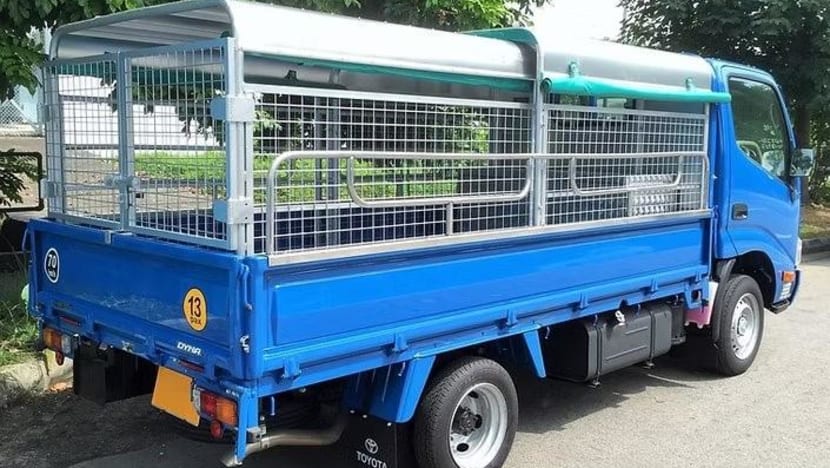
Singapore will ban the use of caged lorries to transport workers from 2027, marking a major policy shift after years of debate over road safety and migrant worker protection.
The announcement was made in parliament on March 4 by Senior Minister of State for Transport Sun Xueling during the Ministry of Transport’s budget debate. She said the decision was driven by safety concerns, particularly in cases where lorry cage doors are latched or locked from the outside, preventing workers from escaping during accidents or fires.
According to the Ministry of Transport (MOT) and the Land Transport Authority (LTA), between 500 and 1,000 of Singapore’s 50,000 lorries currently have caged decks. While these vehicles may still be used to transport goods, they will no longer be allowed to ferry workers once the ban takes effect.
Companies that fail to comply with the new rule will face penalties, though specific details will be announced closer to the 2027 deadline. In the meantime, firms must ensure safe access for workers getting on and off lorry decks. Businesses that wish to continue using such vehicles for worker transport can convert the rear deck to include a canopy and side railings instead of enclosed cages.
The Migrant Workers’ Centre (MWC), affiliated with the National Trades Union Congress (NTUC), welcomed the move. In a public statement, the group described the prohibition as an important step that addresses long-standing safety concerns for migrant workers on Singapore’s roads.
The issue of transporting workers on lorries has been debated for years. In 2025, advocacy group Humanitarian Organisation for Migration Economics (HOME) called for a complete ban, urging the government to provide subsidies so companies could charter buses instead. At the time, then-Transport Minister Chee Hong Tat said a full ban was not operationally feasible, warning it could impact small and medium enterprises, cause job losses, delay projects, and increase costs.
Official data previously showed that over the past decade, there was an average of one worker fatality per year linked to lorry transport. While the number of injured workers fell by more than 25 percent between 2015–2019 and 2020–2024, serious accidents have continued. In January, a collision along Orchard Road sent 13 people to the hospital, including 12 lorry passengers.
The new ban signals a stronger push toward improving transport safety standards for migrant workers in Singapore. Authorities say they will continue working with industry groups and civil society organisations to strengthen protection measures and ensure that every worker can travel safely to and from work.