
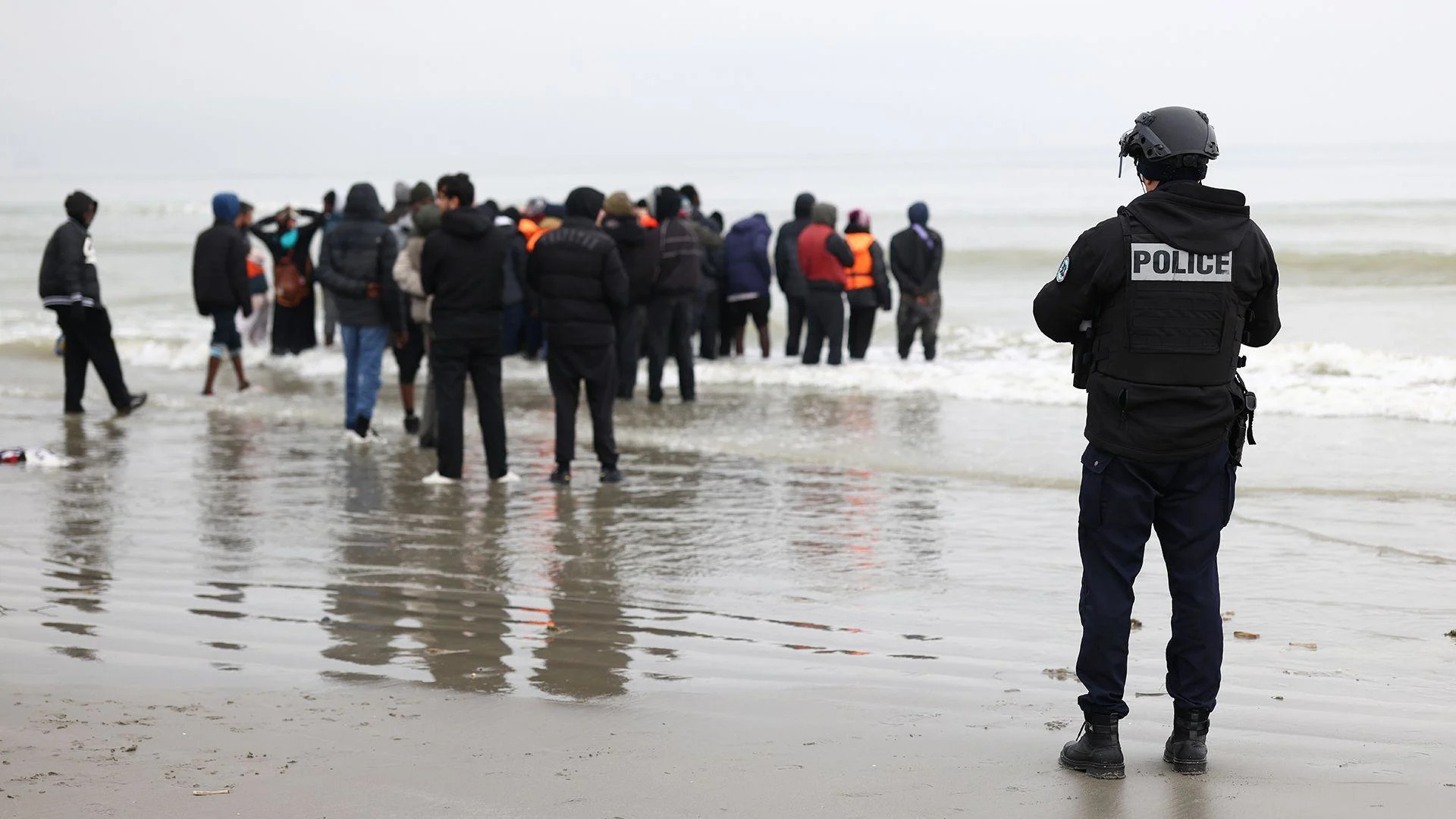
The United Kingdom and France have agreed on a new £662 million deal aimed at reducing illegal migrant crossings across the English Channel. The agreement introduces tougher enforcement measures, increased surveillance, and new funding conditions as both countries attempt to disrupt people-smuggling networks.
The deal was signed by UK Home Secretary Shabana Mahmood and French Interior Minister Laurent Nunez. It will run for three years and includes the deployment of riot-trained police officers to beaches in northern France, where many migrants attempt to board small boats bound for the UK.
Under the agreement, at least 50 officers trained in crowd control tactics will be sent to manage violence and prevent large groups from launching boats. French authorities will also use advanced tools such as drones, helicopters, and surveillance cameras to monitor and intercept crossings more effectively.
A key part of the deal is financial accountability. For the first time, around £100 million of the UK’s funding could be reduced or withdrawn after one year if the agreement does not significantly reduce crossings. However, the UK government has not clearly defined the targets France must meet to secure the full funding.
The plan also includes the construction of a migrant removal centre in Dunkirk. The facility, expected to be completed by the end of the year, will have space for 140 people and will be staffed by more than 200 officers. It is intended to process and deport migrants from countries such as Eritrea, Afghanistan, Iran, Sudan, Somalia, Ethiopia, Iraq, Syria, Vietnam, and Yemen — which are among the main origins of small boat arrivals.
The UK government hopes the agreement will lead to hundreds of migrants being stopped on French beaches and returned either to their home countries or to other European nations they passed through. Mahmood described the deal as a “landmark agreement” that would strengthen efforts to break the business model of smuggling gangs.
French officials have also defended the agreement, stating that it will improve safety along the coast and support ongoing efforts to prevent dangerous crossings. The number of enforcement officers in northern France is expected to rise by about 42%, bringing the total to nearly 1,100 personnel, including law enforcement, intelligence, and military teams.
Despite these measures, the deal has faced criticism in the UK. Opposition parties, including the Conservative Party and Reform UK, argue that the government is spending large sums of money without clear guarantees of success. Critics also say the UK should consider stronger legal changes to stop crossings.
Migration across the Channel has increased in recent years. In 2025, more than 41,000 people arrived in the UK via small boats, while over 6,000 arrivals have already been recorded in 2026. These numbers have intensified political pressure on both governments to act more decisively.
On the ground in northern France, migrants continue to face difficult conditions. Many are living in temporary camps while waiting for opportunities to cross. Some say they are motivated by the hope of better living conditions, safety, and access to support systems in the UK.
Humanitarian organizations, including the Refugee Council, have raised concerns about the focus on enforcement. They argue that stricter policing alone will not stop migration and warn that without safe and legal routes, migrants may continue to risk dangerous journeys.
Experts also question whether increased funding and tougher tactics will fully solve the problem. Analysts point out that French authorities must balance enforcement with safety concerns, as aggressive interventions at sea could lead to accidents or capsized boats.
The new agreement builds on previous cooperation between the two countries. A 2023 deal saw the UK provide £476 million to support patrols and enforcement efforts. More recently, a “one-in-one-out” arrangement has allowed the UK to return some migrants to France while accepting others through legal channels.
As both countries implement the new measures, the success of the deal will likely depend on whether it can significantly reduce crossings while addressing the humanitarian challenges faced by migrants. The issue remains one of the most complex and politically sensitive topics in Europe today.