
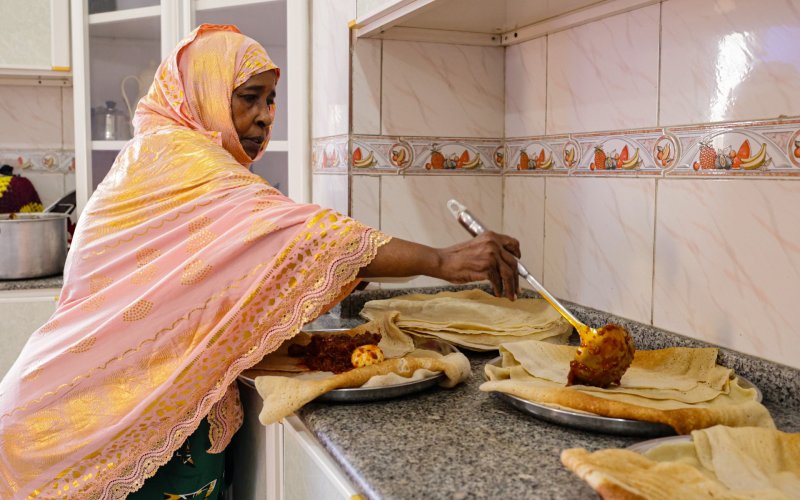
In a migrant support centre in Aden, the smell of traditional Ethiopian spices is doing more than filling the air—it is helping migrants reconnect with their identity, culture, and sense of belonging. For many displaced individuals, food has become a powerful source of comfort in the middle of uncertainty.
At the heart of this story is Kadra, a 30-year-old woman from Ethiopia, who found strength through cooking while staying at a migrant care facility in Yemen. Standing over a pot of simmering stew, she prepares zigni, a rich Ethiopian dish made with spices, onions, garlic, and chicken. For her, the meal represents much more than nourishment—it carries memories of home, family, and togetherness.
Kadra’s journey to Yemen was long and difficult. She left Ethiopia in search of better opportunities for her children, unaware she was pregnant at the time. Traveling with hundreds of migrants, she endured weeks of hardship, often without enough food or water. Like many migrants from the Horn of Africa, she hoped to continue towards Gulf countries but instead found herself stranded in Yemen.
After arriving in the capital, Sanaa, Kadra received support from the International Organization for Migration. The assistance included food, shelter, and medical care—resources she says were essential for her survival during a very uncertain time. It was also in Sanaa that she gave birth to her baby.
When her plans to move onward failed, Kadra travelled to Aden, where she faced even more challenges, including homelessness. After spending days on the streets, she eventually reached an IOM migrant response centre, where she was given basic support and a safe place to stay. Later, she moved into a community-based care centre, where she began to rebuild her life.
It was here that cooking became an important part of her daily routine. Preparing traditional meals like zigni and serving it with injera, a soft fermented flatbread, allowed her to reconnect with her roots. More importantly, it created a shared space for other migrant women to come together, exchange stories, and support one another.
Food, in this setting, goes beyond survival. It becomes a way for migrants to preserve their culture and maintain dignity despite the hardships they face. Around shared meals, women talk about their families, their journeys, and their hopes for the future. These moments provide emotional relief and a sense of community that many have lost along the way.
The situation reflects a wider migration trend. Every year, thousands of people from the Horn of Africa travel to Yemen, often facing dangerous conditions, exploitation, and limited opportunities. Many do not reach their intended destinations and instead rely on humanitarian support to survive.
Through its programmes, the International Organization for Migration continues to provide life-saving assistance to migrants in Yemen, including shelter, healthcare, and voluntary return options. These efforts aim to restore dignity and offer migrants a chance to rebuild their lives.
For Kadra, that opportunity eventually came. After her time in Aden, she returned to Ethiopia through IOM’s voluntary return programme. She was reunited with her children and began a new chapter focused on safety and stability.
Her story highlights how small acts—like cooking a familiar meal—can have a deep impact. In the middle of displacement and uncertainty, something as simple as sharing food can help people feel human again, reconnect with their past, and find hope for the future.