
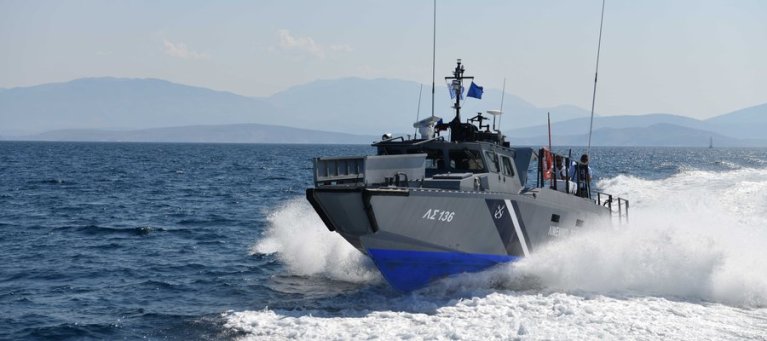
Greek authorities and rescue teams have rescued and intercepted hundreds of migrants near the islands of Crete and Gavdos over the last two days as the migration route from Libya toward southern Greece becomes increasingly active.
According to reports from the Greek Coast Guard, several boats carrying migrants were discovered south of Crete and Gavdos during multiple rescue operations carried out over the weekend. Many of the migrants said they had departed from Tobruk in eastern Libya just one or two days earlier.
A vessel operated by Frontex rescued 56 migrants southeast of Kaloi Limenes, while Greek rescue crews picked up another 44 people from a boat near Psari Forada. Reports suggest that at least 281 migrants have arrived in the area since Saturday.
The Greek Coast Guard said one of the largest rescue operations took place early Sunday when 85 migrants, mostly men, were found around 26 nautical miles south of Gavdos. Authorities arrested a 27-year-old South Sudanese man accused of organizing the journey.
In another incident, 44 migrants, including minors, were rescued near southern Crete. Two South Sudanese nationals were later arrested after other passengers allegedly identified them as smugglers who transported the group from Tobruk in exchange for money.
The rescued migrants reportedly told Greek officials that they paid between 13,000 and 14,000 Libyan dinars, equal to roughly 1,700 to 1,900 euros, for the dangerous sea crossing. Many of the migrants said they departed Libya on May 9.
Authorities also rescued another boat carrying 43 migrants south of Crete. A 19-year-old South Sudanese national was arrested in connection with suspected migrant smuggling activities.
On Saturday, Greek authorities intercepted a separate high-speed boat heading toward the island of Kos carrying eight migrants, including women and children. A 37-year-old Iranian national was arrested after passengers allegedly identified him as the trafficker.
Meanwhile, officers on Gavdos discovered another 40 migrants stranded on a beach. The group included men, women, and a minor, all reported to be in good health before being transferred to Crete.
The increase in arrivals highlights growing concerns over the Libya-to-Greece migration route, which has become more active following tighter controls on crossings from western Libya to Italy.
According to data from the United Nations High Commissioner for Refugees, more than 5,600 migrants have already arrived in Greece by sea this year, with most arrivals recorded on Crete and Gavdos.
Greek Migration Minister Thanos Plevris recently claimed that around 550,000 migrants and refugees are currently in Libya waiting for an opportunity to cross into Europe. He said Greek authorities are working closely with Frontex and Libyan officials to target smuggling networks and reduce departures from the Libyan coast.
The route remains extremely dangerous. Humanitarian groups warn that many of the boats used by smugglers are overcrowded, poorly equipped, and unsafe for long sea journeys. Thousands of migrants are believed to have died on Mediterranean migration routes in recent years.
Migrants traveling through Libya often face detention, extortion, violence, and abuse before eventually attempting the sea crossing toward Europe. Many departures happen at night, making rescue operations even more difficult for authorities.