
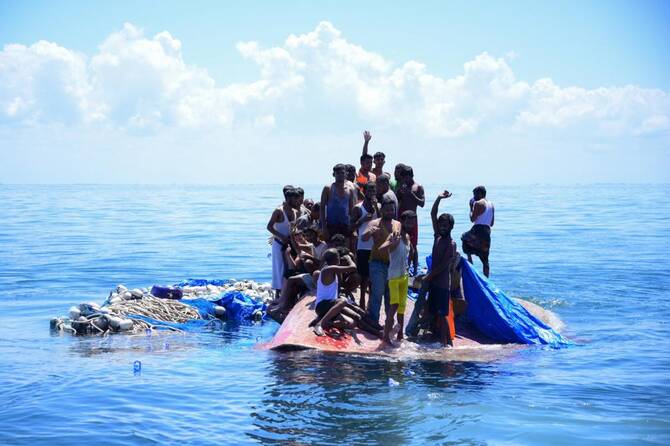
More than 500 people are feared dead after two boats carrying mostly Rohingya refugees reportedly capsized off Myanmar’s coast, prompting the International Organization for Migration (IOM) and the UN Refugee Agency (UNHCR) to call for urgent regional action to prevent further maritime tragedies.
In a joint statement issued on 16 July, the UN agencies said preliminary information indicates the vessels departed Myanmar’s Rakhine State in late June, carrying predominantly Rohingya passengers. Some of those on board are believed to have travelled from refugee camps in Cox’s Bazar, Bangladesh.
According to the agencies, one boat carrying about 250 people lost contact shortly after setting sail, while a second vessel, reportedly carrying around 280 passengers, is believed to have sunk off Myanmar’s Ayeyarwady coast on 8 July.
Although the incidents and casualty figures have not yet been officially confirmed, IOM and UNHCR said they are deeply concerned about the potentially devastating loss of life.
The agencies noted that the voyages took place outside the regular sailing season, when rougher sea conditions make travel significantly more dangerous. Heavy rainfall and widespread flooding across the region have further increased the risks of maritime crossings.
If confirmed, the latest incidents would bring the number of people reported dead or missing in the Andaman Sea and Bay of Bengal this year to nearly 800, including Rohingya refugees and Bangladeshi nationals.
IOM and UNHCR said the suspected disasters highlight the worsening humanitarian situation facing Rohingya communities. Ongoing conflict in Myanmar, combined with limited opportunities and assistance in refugee camps in Bangladesh, continues to drive desperate people to undertake dangerous sea journeys in search of safety.
The agencies also warned that migrant smuggling and human trafficking networks continue to exploit vulnerable people seeking protection, exposing them to life-threatening risks.
They called for stronger regional and international cooperation, including enhanced search and rescue operations, improved access to asylum and protection, and intensified efforts to dismantle smuggling and trafficking networks operating along one of the world’s deadliest migration routes.
While acknowledging Bangladesh’s long-standing role in hosting Rohingya refugees, IOM and UNHCR urged the international community to maintain support for both refugees and host communities, while addressing the root causes of forced displacement.
The two agencies said they will continue working with governments across South and Southeast Asia to strengthen protection for refugees, migrants and stateless people through a route-based approach aimed at saving lives, reducing harm and supporting safe migration management.