
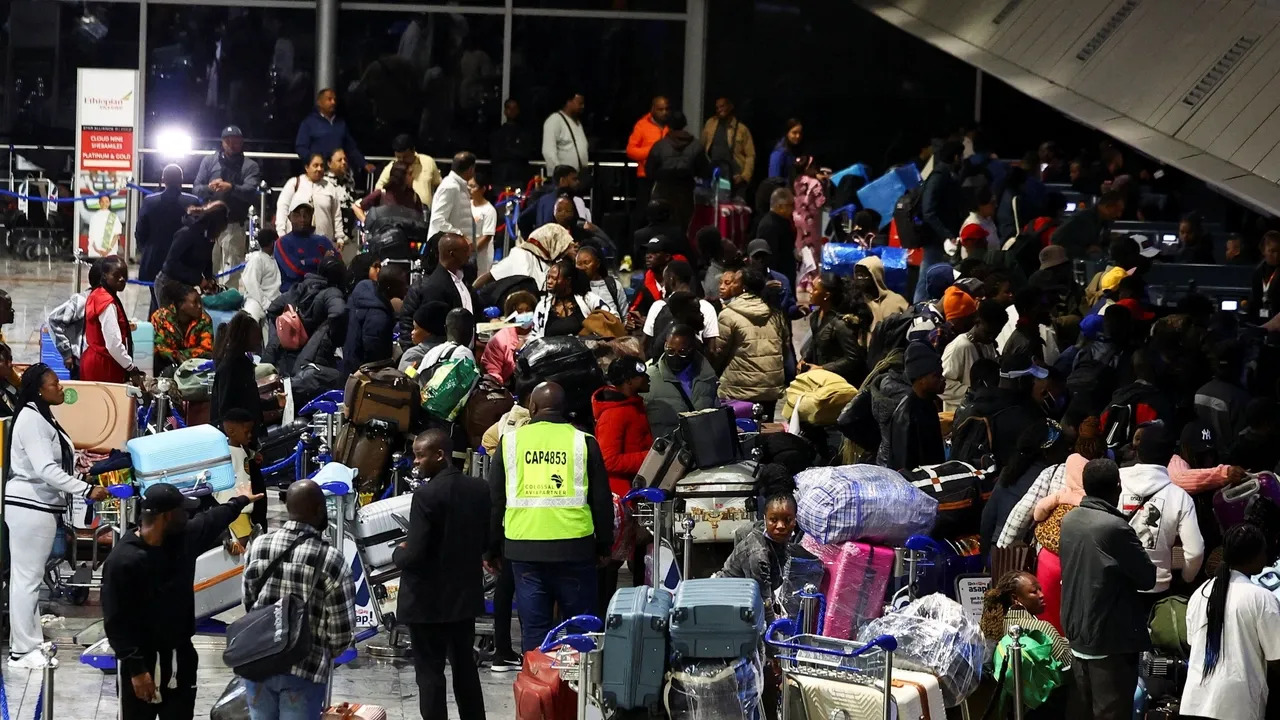
Ghana has begun arrangements to bring another 1,000 of its nationals home from South Africa as concerns continue to grow over anti-migrant sentiment and violence targeting foreign nationals in the country.
The repatriation exercise is being carried out through special flights scheduled to arrive in Ghana on Sunday and Monday. Authorities in Accra described the operation as the final stage of efforts to evacuate Ghanaian citizens affected by the worsening security situation.
The latest group follows the return of more than 900 Ghanaians repatriated from South Africa. Ghanaian authorities have also indicated that they intend to seek compensation from the South African government over property and other assets allegedly lost by nationals affected by the unrest.
The Ghanaian government has further taken the issue to the international level, petitioning the International Criminal Court to investigate attacks against foreign nationals in South Africa. Ghana has argued that the violence could potentially meet the threshold for crimes against humanity.
The situation has also prompted closer cooperation between Ghana and Nigeria, with both countries calling on the African Union to address the treatment of foreign nationals in South Africa at its next summit.
South Africa has historically been a major destination for migrants from across Africa, attracted by its comparatively stronger economy and employment opportunities. However, persistent unemployment and economic hardship have increasingly contributed to resentment towards foreign workers, with migrants sometimes blamed for taking jobs and placing additional pressure on already limited resources.
The tensions have periodically escalated into violent anti-immigrant protests, prompting concerns among African governments about the safety and welfare of their citizens living and working in South Africa.
Recent unrest has reportedly led more than 160,000 foreign nationals to leave South Africa since May, highlighting the scale of the migration crisis and the growing pressure on governments to protect their citizens abroad.
Ghana’s latest repatriation effort reflects the country’s increasing concern over the safety of its nationals and the broader implications of anti-migrant violence in South Africa. The government’s demand for compensation and appeal for an international investigation also signal growing diplomatic pressure on Pretoria to address attacks against foreign nationals and strengthen protections for migrant communities.
As the final phase of Ghana’s evacuation operation gets underway, attention is likely to remain focused on whether South African authorities can contain the violence and address the underlying economic and social tensions driving hostility towards migrants.