
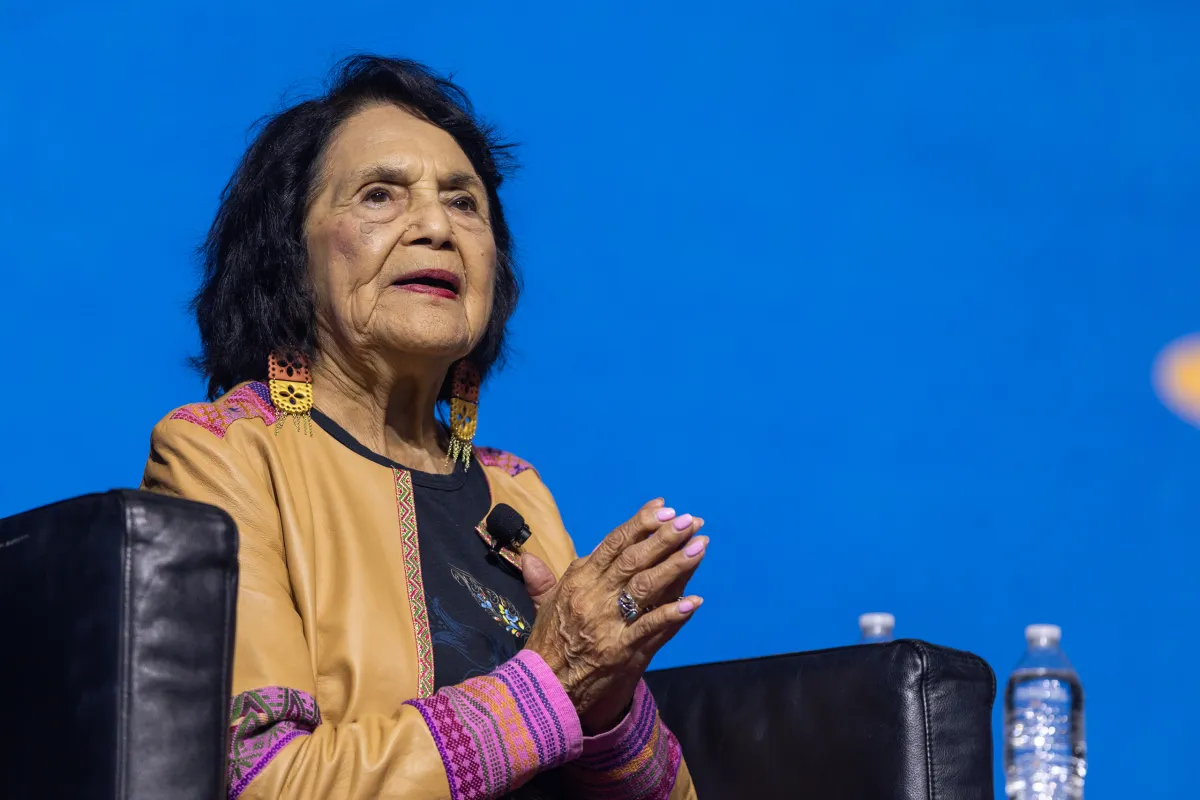
Dolores Huerta, the prominent US labour leader who championed migrant farmworkers’ rights and helped transform the American labour movement, has died at the age of 96, her family announced on October 28, 2026.
Huerta became a leading voice in the fight for better wages, safer working conditions and an end to discrimination against farmworkers. She was widely known for popularizing the rallying cry “¡Sí, se puede!” meaning “Yes, we can!”, which became a lasting symbol of labour and civil rights activism.
Born in New Mexico in 1930, Huerta rose to national prominence during the Delano grape strike in California, which began in 1965 and continued until 1970. Working alongside fellow labour leader César Chávez, she helped organize farmworkers seeking better pay and improved working conditions. Their efforts contributed to the growth of the United Farm Workers union.
Huerta remained active in the labour movement for decades, supporting farmworkers and advocating for social justice. She was arrested 22 times during protests and continued campaigning well into her 90s. In 1988, she suffered serious injuries after being beaten by a police officer during a protest, requiring hospital treatment and the removal of her spleen.
Her influence extended beyond the labour movement. Former US President Barack Obama acknowledged the significance of her slogan when he told her, “I stole your slogan,” referring to his use of “Yes, we can” during his political campaigns.
In July 2026, Huerta met Pope Leo XIV at the Vatican. Days before her death, she continued to encourage collective action, writing that “¡Sí, se puede!” represented the power of individuals and communities to achieve what might seem impossible.
Her legacy has also been shaped by revelations about Chávez. In March 2026, Huerta publicly disclosed that he had sexually abused and raped her when she was in her 30s. She said she had remained silent for years because she did not want to harm the movement they had helped build. The allegations prompted calls to reconsider public tributes to Chávez.
Huerta’s death marks the loss of a major figure in the struggle for farmworkers’ rights in the United States. Her decades of organizing helped bring migrant workers’ experiences into the national debate over wages, workplace protections and equal treatment.
Her family announced her death in a statement shared on Instagram, asking for privacy as they grieved and saying plans would follow to recognize and celebrate her life and legacy.