
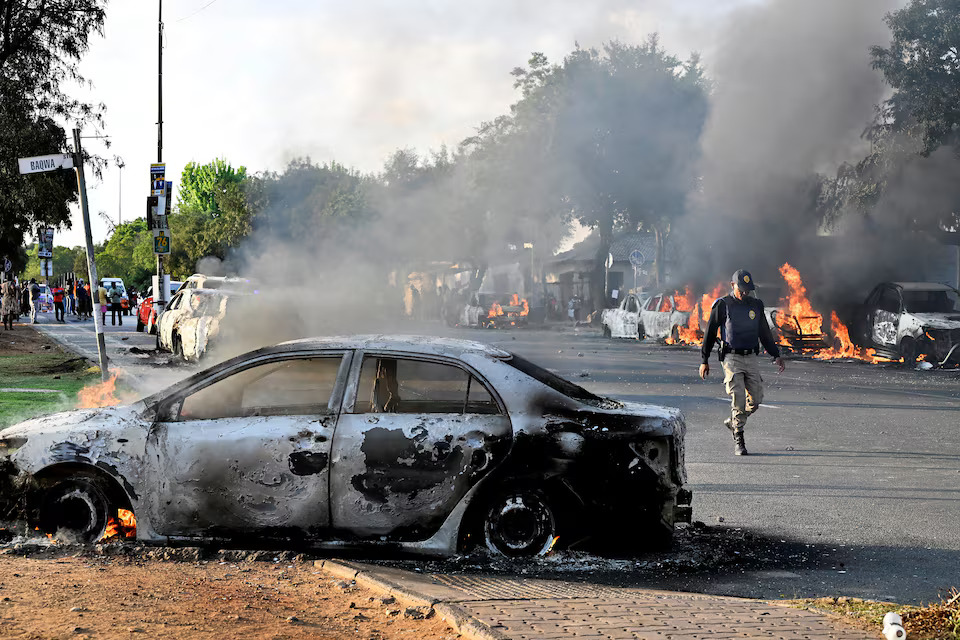
South Africa has withdrawn a directive governing access to its asylum application system following violent anti-migrant protests in Johannesburg and Durban that left vehicles burned and foreign-owned businesses looted.
The Department of Home Affairs announced the decision on Friday, October 9, a day after clashes erupted in several areas, including Soweto in Johannesburg. The department said the directive had been introduced to implement a Constitutional Court ruling but was withdrawn after its implementation placed significant pressure on refugee reception offices and raised concerns about public safety.
The directive followed a July 7 Constitutional Court judgment stating that asylum seekers could not be denied access to South Africa’s asylum system solely because of procedural issues, including entering the country irregularly.
Home Affairs said the directive was intended as an operational measure but that refugee reception offices became overwhelmed within days of its introduction. The department also reported risks to officials and threats to public order.
Authorities have sought to clarify that the court ruling does not automatically grant refugee status, permanent residence or other immigration rights to undocumented migrants. Instead, the judgment addressed access to the asylum application process.
The withdrawal comes amid continuing anti-migrant demonstrations in South Africa, where foreign nationals have faced hostility and accusations that they contribute to unemployment, crime and pressure on public services. Social scientists have said these accusations are not supported by evidence.
During Thursday’s unrest, rioters set fire to 14 vehicles in Durban and another 10 in Soweto, according to Reuters. Foreign-owned shops were also looted.
Lieutenant General Puleng Dimpane, a senior police official, said on Friday that calm had returned to the affected area in Soweto. In Durban, police spokesperson Robert Netshiunda said the situation had stabilised and that a rapid police response had prevented further damage.
South Africa, the continent’s largest economy, has experienced repeated anti-immigrant demonstrations that have strained relations with other African countries. The unrest has also contributed to concerns about the safety of foreign nationals living and working in the country.
The latest developments leave questions about how South Africa will implement the Constitutional Court’s ruling while managing pressure on its asylum system. The judgment requires authorities to consider asylum claims rather than reject applicants solely on procedural grounds, while the government says the directive’s implementation created operational and security difficulties.