
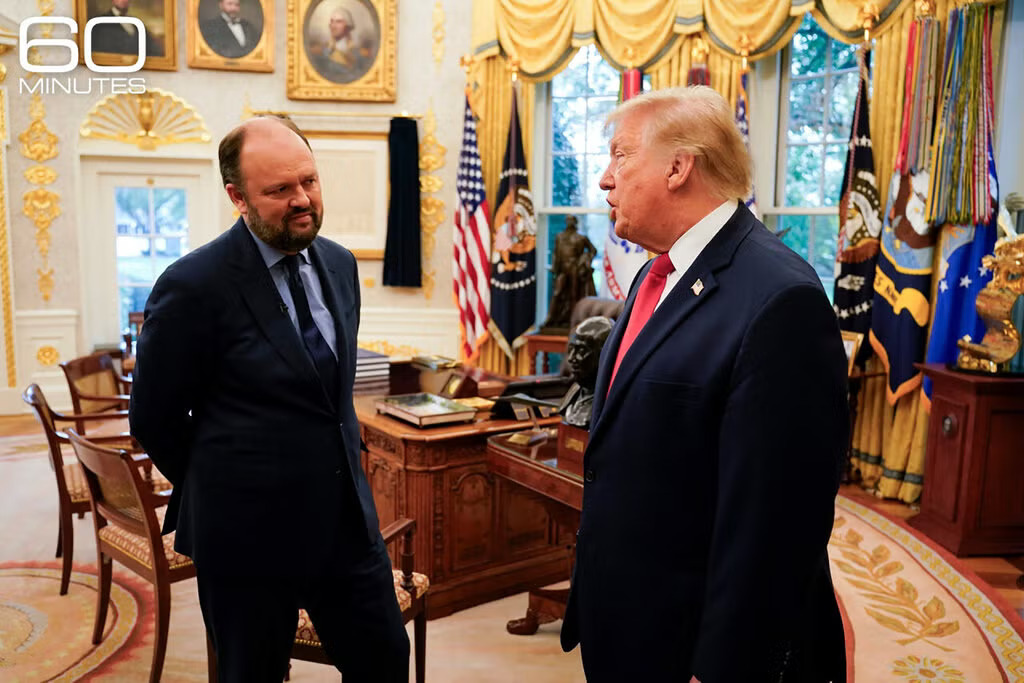
US President Donald Trump has acknowledged that his administration’s tough deportation policy may have gone too far, suggesting that undocumented migrants who have lived and worked in the country for many years could be allowed to stay under a possible agreement.
In an interview with CBS News’ 60 Minutes on November 8, Trump admitted that removing migrants with established jobs had created difficulties for his administration, despite his claims of success in securing the US border and deporting criminals.
The comments mark a possible shift in tone from a president who made mass deportations a major promise of his election campaign. They also come after the Republican Party suffered a major defeat in the midterm elections, losing control of both chambers of Congress and several statewide contests in traditionally Republican areas.
Trump said his immigration policies had produced both positive and negative political consequences, particularly because enforcement operations had also affected migrants who were working and contributing to the American economy.
“I think it both helped and hurt,” he said. “I think I got an A+ for closing up the border. I get very high marks for getting the bad ones out. But I got hurt because we also took people that had good jobs.”
He acknowledged that Americans were divided over whether undocumented migrants who had established themselves in the country should be deported or allowed to remain.
“There is a large part of the country that thinks that they should be put out. And there’s a large part of the country that thinks that they should be allowed to stay if they’re good people working in a landscaping company, or working in a hotel, or doing something, right? And in some cases, paying taxes,” he said.
When asked directly whether his deportation campaign had become too harsh, Trump replied: “Too tough,” before adding, “I think it might be too tough, yeah.”
His response is significant because the administration’s immigration crackdown has targeted undocumented migrants across different sectors of the economy, including hospitality, landscaping and other service industries.
Trump pointed to hotel employees as an example, explaining that removing people who had worked for years as cleaners, housekeepers and waitresses could create difficulties for businesses.
“When you go into a hotel and you have a woman that’s worked there as, you know, as a maid, as a cleaner, as a this, as a that, as a waitress, a lotta good things, great jobs, and all of a sudden, they’re being taken outta the country, it’s tough. It’s a tough thing,” he said.
The removal of experienced workers can leave businesses struggling to fill vacancies, increase recruitment and training costs and disrupt their daily operations. Employers that depend on migrant labour may find it particularly difficult to replace workers who have spent years developing experience in their jobs.
Trump did not provide figures on how many businesses had been affected by the deportations or the overall economic cost of the enforcement campaign. However, his comments recognise the challenges of removing workers from industries that depend on their labour.
The president also suggested that undocumented migrants who have lived and worked in the United States for 10 to 15 years could be considered for an arrangement that would allow them to remain in the country.
He maintained that people involved in serious crimes should be deported but argued that long-term workers should be treated differently.
“Get the killers out. Get all the rough ones out. Get the drug dealers out. But let the people that are here, and in some cases here for ten and 15 years, work a deal for them,” he said.
The suggestion could open the door to a different approach to immigration enforcement, particularly for migrants who have spent many years working and building their lives in the United States.
However, Trump did not explain what form the proposed arrangement would take, who would qualify or whether it could lead to temporary work permits or permanent residency. No formal policy or legal agreement has been announced.
Trump also expressed interest in working with Democrats to find a compromise on immigration, suggesting that the issue could provide an opportunity for cooperation between the two political parties.
“I’d love to do something on immigration,” he said.
He described an agreement as achievable, claiming that Democratic politicians had already approached him about the possibility.
“I think that’s something that’s actually doable,” he added.
The comments suggest that the president may be open to discussions about legal protections for some undocumented migrants who have spent years working in the country. However, it remains unclear whether Democrats and Republicans can agree on the conditions for such an arrangement.
Trump’s remarks come as Republicans face growing political pressure following their midterm election losses. The results have raised questions about whether the administration’s aggressive immigration policies have affected its support among voters who may favour border security but oppose the deportation of established workers.
A possible move towards compromise could also face resistance from immigration hardliners who support the removal of all undocumented migrants, regardless of how long they have lived in the country or whether they have jobs.
The uncertainty surrounding the administration’s direction has also been highlighted by changes among Trump’s senior staff. CBS reported that Susie Wiles was replaced as chief of staff by Stephen Miller, the deputy chief of staff widely associated with the administration’s mass deportation policy.
The development has raised further questions about whether Trump’s latest comments will lead to changes in enforcement priorities.
For undocumented migrants who have lived in the United States for many years, the possibility of a legal arrangement could offer hope of greater security. It could also provide some relief to employers concerned about losing experienced workers.
However, Trump’s comments do not change existing immigration laws or guarantee that any undocumented migrant will be allowed to remain in the country.
The president must still provide details of any proposed arrangement and determine how it could be implemented. Whether he follows through on his willingness to negotiate with Democrats will show if his remarks signal a genuine change in immigration policy or a response to growing political pressure.