
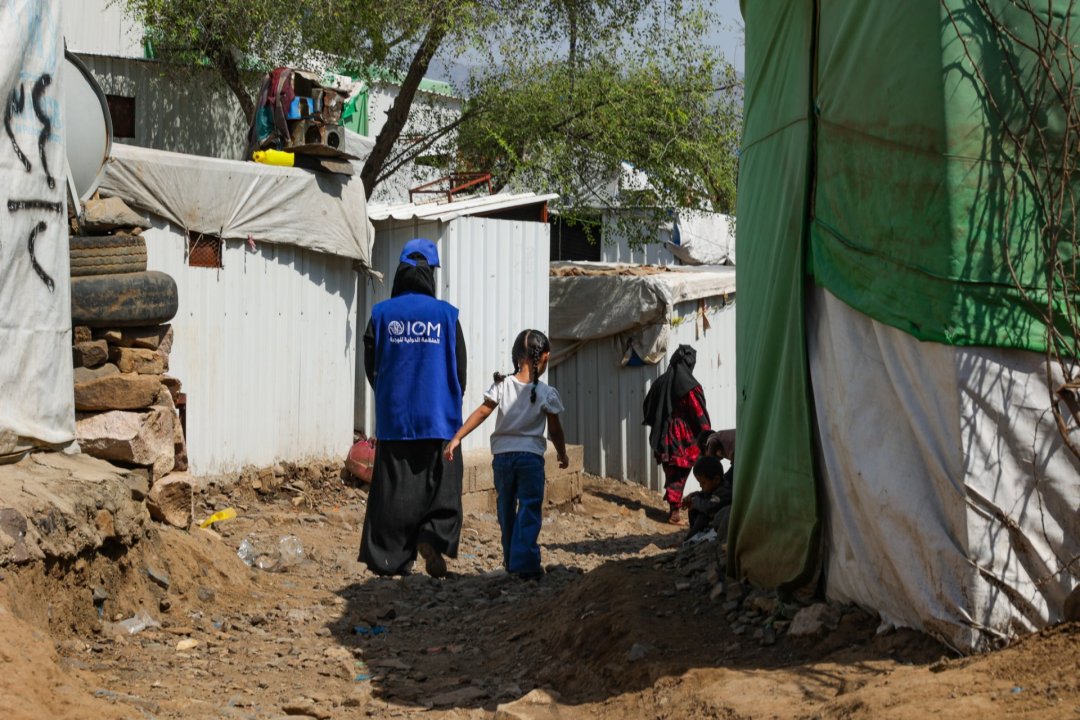
More than 300,000 people have been forced to flee their homes in western Yemen as fighting intensifies, leaving thousands of families struggling to find shelter, food, clean water and medical care, according to the International Organization for Migration (IOM).
In new figures released on November 1, 2026, the UN migration agency said almost all the displacement had occurred within the previous two months as violence continued to spread across parts of the country.
The growing crisis has left families with few resources to rebuild their lives, while restrictions on humanitarian access are making it increasingly difficult for aid organisations to reach people in need.
Abdusattor Esoev, IOM’s Chief of Mission in Yemen, said many families had been forced to flee repeatedly after years of conflict, often leaving their homes with very few belongings.
He warned that displaced people urgently needed shelter, food, safe drinking water and healthcare, adding that a lack of funding could leave thousands of families without essential assistance.
The fighting has also caused sharp increases in the prices of basic goods, making life even more difficult for families who have lost their homes and sources of income.
In Ta’iz city, the cost of essential items has increased between three and five times as fighting disrupts access to surrounding areas. The rising prices have made even basic food supplies unaffordable for many households.
Displacement has been particularly severe in parts of Lahj Governorate. Since the beginning of October, more than 43,000 people have fled Al Madaribah Wa Al Aarah district, making it the district with the highest recorded number of displaced people in Yemen.
The number of people fleeing Ta’iz Governorate is also increasing, with many families moving south to Aden in search of safety. The city is now hosting more than 56,000 displaced people, placing additional pressure on its already limited resources and services.
To support communities affected by the crisis, IOM is operating five Mobile Medical Teams across Marib, Lahj, Aden and Ta’iz governorates. The teams provide essential healthcare services to displaced families and other vulnerable communities who struggle to access medical facilities.
Their services include general medical consultations, reproductive healthcare, malnutrition screening, vaccination support, emergency treatment, mental health assistance and referrals for patients requiring further care.
The teams also provide protection services and health information to communities affected by the conflict. During the previous week alone, they carried out almost 1,000 medical consultations.
Despite receiving contributions from donors to expand its humanitarian response, IOM said the needs of displaced families continued to grow.
The organisation is seeking $45 million over the next six months to provide emergency assistance, including temporary shelter, cash support, essential household items, healthcare, clean water and sanitation services.
The funding will also support protection programmes, the management of displacement sites and the tracking of population movements to help humanitarian organisations identify communities requiring urgent assistance.
IOM has called on all parties involved in the conflict to protect civilians and humanitarian workers and allow aid organisations to reach affected communities safely and without unnecessary restrictions.
The agency particularly highlighted the need for improved humanitarian access to hard-to-reach areas of Ta’iz, where ongoing fighting and access restrictions are preventing vulnerable families from receiving essential support.
As displacement continues to rise, thousands of families remain dependent on humanitarian assistance to meet their most basic needs, with limited resources threatening efforts to provide shelter, food and medical care.