
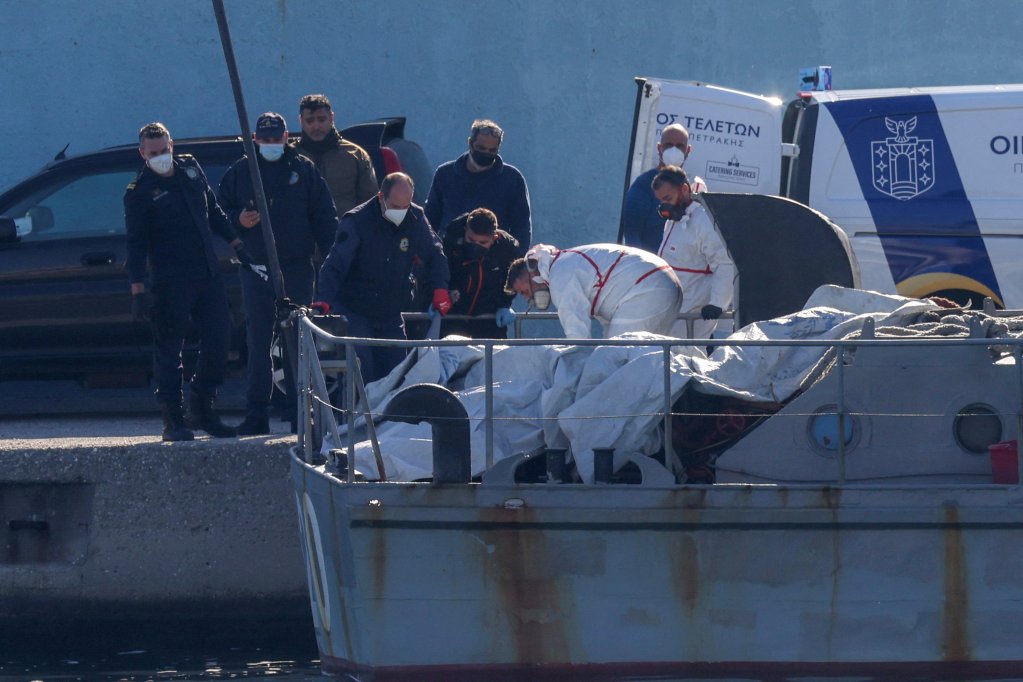
At least 21 migrants have died in separate boat emergencies off the Greek island of Crete, while more than 100 others have been rescued amid strong winds and dangerous sea conditions. The incidents highlight the growing risks faced by people attempting to reach Europe from Libya through the central Mediterranean.
The Greek coast guard said a Morocco-flagged container ship spotted a migrant boat about 15 nautical miles (28 kilometres) south of Kaloi Limenes port early on Monday, November 9. A coast guard vessel later rescued 18 people and recovered the bodies of 12 others.
The death toll from that boat subsequently increased after one of four survivors taken to hospital died, bringing the confirmed number of deaths in the incident to 13. Some media outlets reported a higher figure, but Greek authorities had not confirmed those reports.
The identities of the victims and the exact circumstances surrounding their deaths were not immediately known. Authorities said autopsies would be carried out.
Survivors were reportedly suffering from exposure after spending several days at sea. A local coast guard official told Reuters that the rescued migrants were shivering from the cold when they were found.
Four survivors were taken to hospital, including a toddler, while the others were expected to be transferred to a migrant reception facility on Crete.
The latest incident followed another deadly rescue operation that began late on Saturday, November 7, after a migrant boat sent an alarm signal south of the island.
Greek authorities said a nearby vessel initially rescued 28 Sudanese nationals and recovered one body. The survivors were transferred to a police vessel and taken to Crete on Sunday.
The coast guard later located the migrant boat about 10 nautical miles south of the island and found seven more bodies on board. Two people remained missing.
Strong winds made the rescue operation particularly difficult. The coast guard said towing the vessel had been extremely dangerous and practically impossible because of the severe weather.
Two Sudanese nationals, including a 16-year-old, were arrested after survivors identified them as suspected people smugglers. They face charges including illegal entry, facilitating illegal entry, participation in a criminal organisation and causing deaths through exposure.
Meanwhile, Greek coast guard crews and the European Union border agency Frontex responded to several other migrant boats south of Crete on Monday.
A Frontex aircraft spotted one boat carrying about 47 people, while a drone located another with approximately 40 passengers. The people on both vessels were rescued and were being taken to the southern coast of Crete.
A third boat carrying around 100 people was later detected by a Frontex drone approximately 47 nautical miles south of the island. Greek authorities said those on board would also be brought to Crete.
According to accounts provided to Greek authorities, passengers on the boat involved in Monday’s deadly incident had departed Libya on November 3 or 4. Their journey lasted several days before the vessel was discovered.
The latest deaths come after another deadly incident last month, when 12 people, including an infant, died after two boats capsized while travelling from Turkey towards the Greek islands of Lesbos and Samos.
Crete has increasingly become a major arrival point for migrants leaving Libya and attempting to enter the European Union. Thousands of people have used the route in recent months, often travelling in overcrowded and unsafe boats.
Greece is one of the main entry points into the EU for people fleeing conflict, poverty and insecurity in Africa, the Middle East and Asia. Arrivals from Libya, including people from Sudan and Bangladesh, have increased in recent years.
Frontex reported in October that the eastern Mediterranean was the busiest migration route into the EU during the first nine months of 2026. The agency recorded approximately 31,800 attempted irregular crossings along the route, a 15 per cent decrease compared with the same period in 2025. The Libya-to-Crete corridor was identified as its busiest section.
The UN refugee agency said more than 37,000 migrants had arrived in Greece during 2026 as of November 9, with more than 22,000 reaching Crete.
The increase has placed growing pressure on the island’s reception facilities. Between November 1 and 3 alone, 1,326 people arrived on Crete and the nearby island of Gavdos, according to coast guard figures reported by Greek media. More than 850 people reached Greek shores on November 2.
Local reports said hundreds of newly arrived migrants were being accommodated in overcrowded temporary locations, including a site normally used for parking garbage trucks. About 835 people were reportedly at Heraklion port, while approximately 500 were in Chania.
Arrivals on Crete and nearby Gavdos had already exceeded the previous year’s total by late October. Figures from the UN refugee agency showed that nearly 21,000 people had reached the islands by October 25, compared with 20,187 arrivals recorded throughout 2025 by Refugee Support Aegean.
Greek authorities have announced plans to expand temporary accommodation on the island. Migration Minister Thanos Plevris said on November 4 that the government would operate only two migrant facilities on Crete, ruling out plans for a third centre in Ierapetra.
The facility in Chania was already operating, while another centre in Heraklion was expected to open in the following days.
The repeated boat emergencies and rising arrivals have intensified concerns about the dangers of the Libya-to-Crete route and the ability of local authorities to provide safe reception conditions for people reaching the island.