
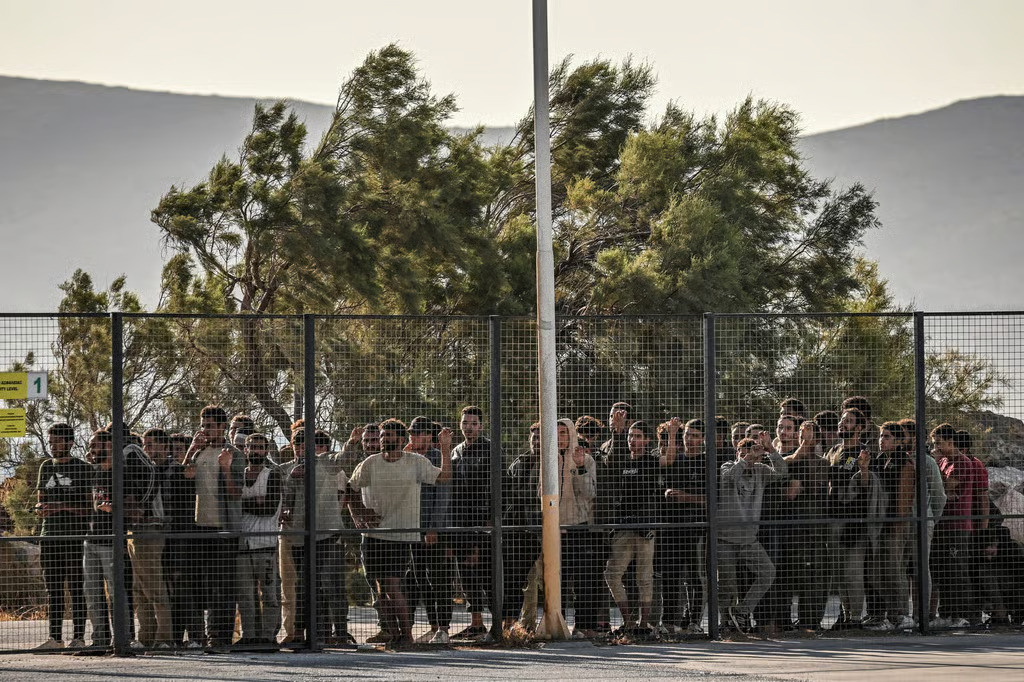
Several European Union countries are considering Rwanda and Uzbekistan as possible locations for migrant return hubs under the EU’s newly approved migration returns policy. The proposal is part of broader efforts to improve deportation procedures for migrants who have been denied permission to remain in the bloc.
According to reports, countries including Denmark, Austria, Greece, Germany, and the Netherlands have strongly supported the initiative. These governments believe that establishing return centers outside the European Union could help address the bloc’s long-standing challenge of low migrant return rates.
The new legislation would allow EU member states to transfer migrants who have received final return orders and exhausted all legal options to stay in Europe to designated return hubs in non-EU countries while arrangements for their deportation are completed.
Greek Prime Minister Kyriakos Mitsotakis said participating countries hope to finalize the first agreements during 2026, with the facilities expected to become operational in 2027.
Reports indicate that Rwanda and Uzbekistan have emerged as leading candidates for hosting the centers. Uganda has also reportedly been discussed during confidential talks between governments involved in the project. However, countries closer to Europe, including Libya and Egypt, have reportedly been excluded due to concerns that such facilities could encourage people-smuggling activities.
The European Commission is not directly involved in choosing host countries. Instead, individual EU member states will be responsible for negotiating agreements. However, other EU countries and institutions must be informed before any return hubs become operational.
The proposal represents the latest attempt by European governments to manage migration beyond the EU’s borders. Similar efforts in recent years have faced significant challenges. The United Kingdom’s plan to transfer asylum seekers to Rwanda was eventually abandoned after legal and political opposition, while Italy’s migrant processing centers in Albania have faced repeated court disputes.
Human rights organizations and some political leaders have expressed concerns about the plan. French President Emmanuel Macron recently questioned whether such facilities can effectively manage migration, stating that he has not seen evidence that third-country return centers work successfully.
Concerns have also been raised by the United Nations refugee agency. Jean-Nicolas Beuze, the agency’s representative in Brussels, warned that migrants could face risks if they are transferred to countries where adequate legal protections and safeguards are not guaranteed.
Under the new policy, the return hubs would not be used for newly arrived asylum seekers. Instead, they would only accommodate migrants who have already received final deportation orders and are awaiting their return to their countries of origin. Supporters argue that the centers could improve the efficiency of migration management, while critics fear they may raise legal, humanitarian, and human rights concerns.