
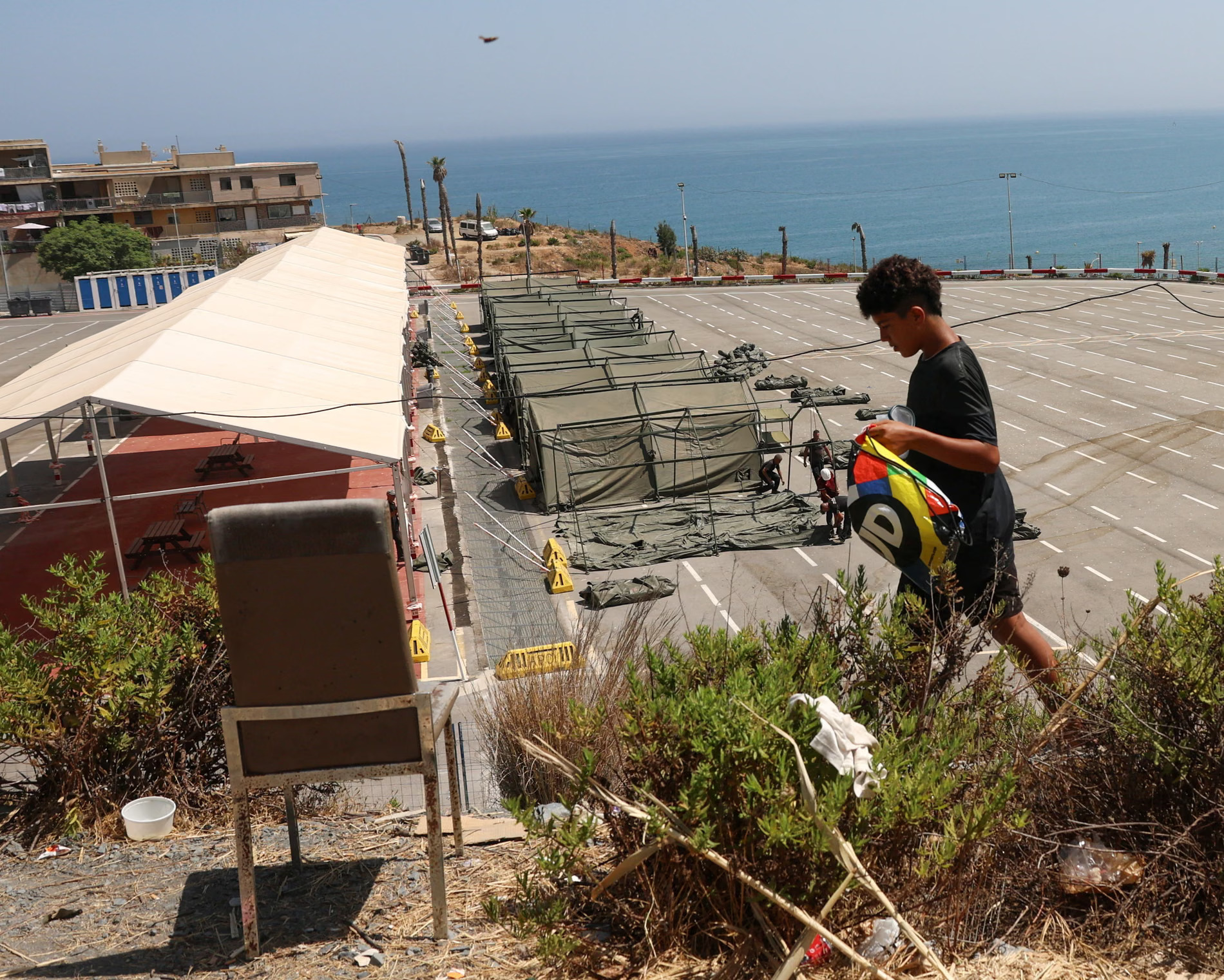
The Spanish government has approved the transfer of around 500 unaccompanied migrant children from Ceuta to mainland Spain, reversing an earlier position that migrants who entered the Spanish enclave irregularly would be returned to Morocco.
The decision follows growing concern over the conditions facing children who remain in Ceuta nearly three weeks after an estimated 70,000 people crossed into the Spanish territory from Morocco on July 30.
Although the vast majority of those who entered Ceuta have since returned to Morocco, hundreds of unaccompanied minors remain in the enclave. Under Spanish law, authorities have a duty to protect unaccompanied children until they reach adulthood.
The government’s decision represents a significant shift from comments made by Interior Minister Fernando Grande-Marlaska on August 13. He said people who entered Ceuta or the neighbouring Spanish enclave of Melilla illegally should expect to be returned to Morocco under the two countries’ cooperation arrangements.
Grande-Marlaska also said such migrants would not be permitted to travel to mainland Spain or remain indefinitely in the Spanish territories in North Africa.
The planned transfer of the children has become politically sensitive, particularly because several Spanish regions governed by the conservative People’s Party and the far-right Vox have resisted or opposed accepting their share of unaccompanied migrant minors.
To reduce political tensions, Spain’s Youth Ministry is working with the Ceuta authorities on an emergency arrangement that would involve non-governmental organisations and child-protection agencies taking responsibility for the most vulnerable children.
Girls and other particularly vulnerable minors are expected to receive priority under the proposed arrangement. Their guardianship would not immediately be transferred to Spain’s regional governments, potentially avoiding a dispute over regional quotas for migrant children.
Rubén Pérez Correa, Spain’s secretary of state for children, has been in Ceuta since Sunday to help address the situation. Officials are facing mounting concerns over reports that hundreds of children are living in precarious conditions and relying on assistance from local residents.
The government’s announcement came shortly after the European Commission appeared to take a different position on the treatment of migrants remaining in Ceuta.
Markus Lammert, the European Commission’s spokesperson for internal affairs, said EU rules require irregular migrants remaining in the enclave to be returned to Morocco, including unaccompanied minors.
The contrasting positions have intensified the debate over Spain’s legal responsibilities towards migrant children and its obligations under the European Union’s evolving migration framework.
Spain’s People’s Party has rejected the government’s relocation plan, arguing that the children should instead be reunited with their families.
Juan Bravo, the party’s deputy finance spokesperson, questioned why Madrid would transfer the children to mainland Spain when Morocco had reportedly requested their return and the European Commission had indicated that irregular migrants should be returned.
The disagreement is partly linked to the fact that the EU’s new migration and asylum pact has not yet been fully incorporated into Spanish national law.
As a result, Spain’s existing legislation concerning the protection and guardianship of unaccompanied migrant children remains applicable, creating additional complexity for authorities attempting to respond to the Ceuta crisis.
The situation has also highlighted the broader challenges Spain faces in caring for unaccompanied minors.
According to figures from Spain’s Ministry of Inclusion and Migration, more than 21,000 people aged between 16 and 23 were under state guardianship as of March. Around 3,500 were younger than 17, while approximately half were Moroccan nationals.
Girls accounted for about 8% of those under state protection.
The planned relocation of the 500 children could provide them with access to more stable accommodation, education, healthcare and child-protection services on the Spanish mainland.
However, the decision is likely to remain politically contentious as Madrid attempts to balance immigration enforcement, relations with Morocco, EU migration rules and its legal responsibility to protect children who arrive without parents or guardians.
The developments also come amid heightened security along the Spain-Morocco border, following the unprecedented mass crossing into Ceuta and concerns that further attempts could take place.
For the children still in the enclave, the government’s latest decision could mark a major change in their circumstances after weeks of uncertainty.