
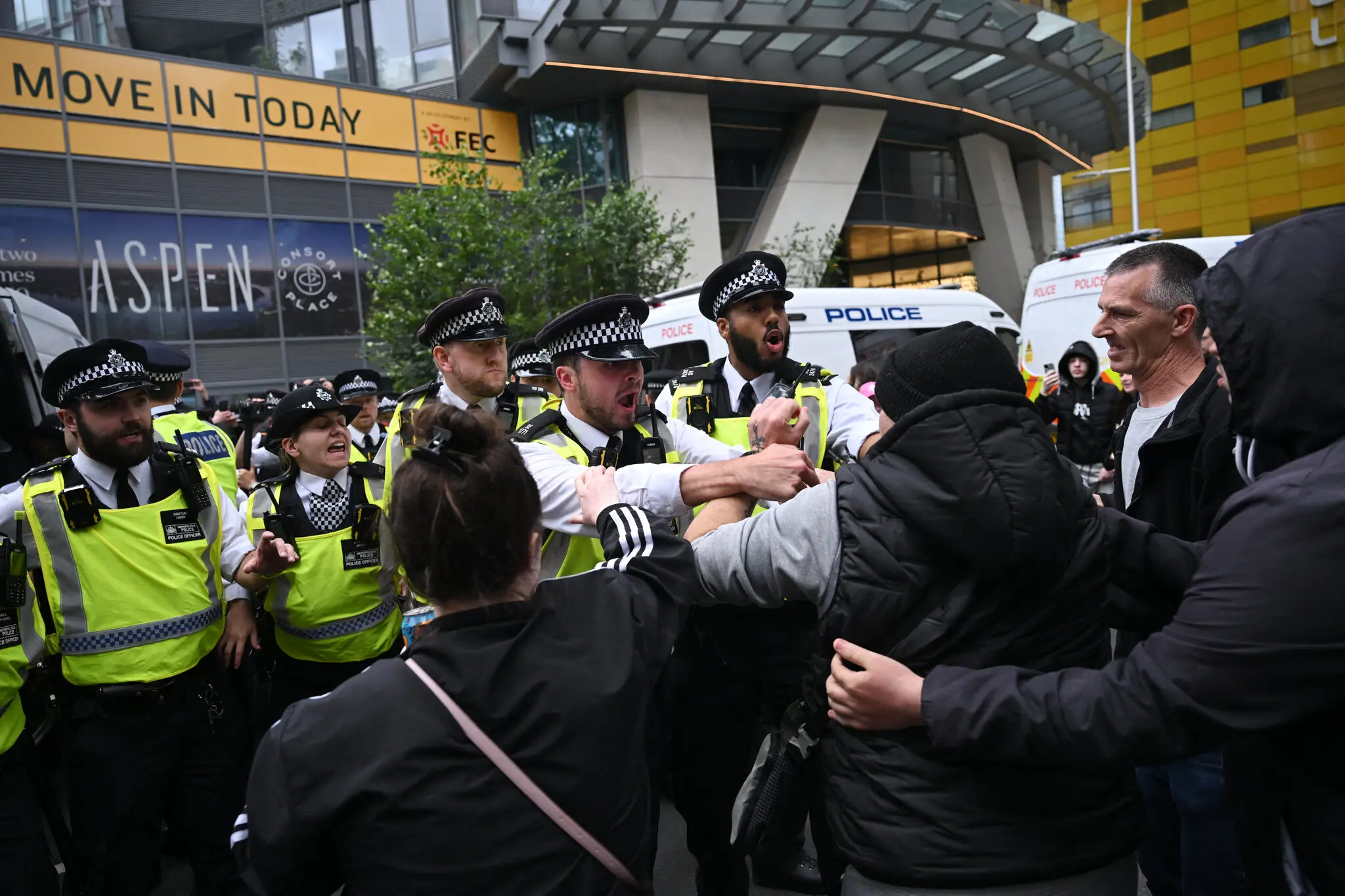
A British far-right anti-migrant group says it could mobilise thousands of supporters to protest against plans to house asylum seekers at a former military site in Oxfordshire.
Daniel Thomas, founder of the Patriot Platform, has called for a large demonstration at the proposed accommodation centre in Piddington, where the UK government plans to house up to 1,250 male asylum seekers.
Thomas recently appeared on the YouTube channel of far-right activist Tommy Robinson, where he suggested that thousands of protesters could gather around the site and remain there for several days.
He said the group could potentially bring supporters from northern England, Scotland and Ireland, while insisting that any demonstration would be peaceful.
The proposed accommodation has become a source of tension in Piddington, with some local residents strongly opposing the government’s plans. Last week, 133 women from the village sent an open letter to female members of Parliament, saying they were concerned about safety and would not feel comfortable walking through their community.
Residents are also holding a symbolic referendum over whether the village should leave the United Kingdom, reflecting the intensity of opposition to the accommodation plans.
The Patriot Platform has already organised anti-migrant demonstrations in other parts of the country. The group was involved in protests in Portsmouth following the arrival of more than 140 asylum seekers aboard a crowded boat crossing the English Channel.
Around 300 of its supporters also took part in a demonstration in Dover, where masked protesters wearing black clothing blocked roads and chanted slogans calling for an end to small-boat crossings.
Thomas is known to be associated with Tommy Robinson, whose real name is Stephen Yaxley-Lennon. Robinson is a prominent figure in Britain’s far-right movement.
There have also been reports that some Patriot Platform supporters are considering taking a boat into the English Channel to confront migrant boats attempting to reach the UK. The idea is reportedly still at an early stage and could involve activists sailing into international waters.
There is no indication that Thomas himself is involved in plans for such action.
The prospect of increasingly organised activity by far-right groups has raised concerns among experts who monitor extremism and political violence.
Dr William Allchorn, an expert on the far right at Anglia Ruskin University, said groups such as Patriot Platform and Raise the Colours were becoming increasingly organised. He also pointed to their use of masks and coordinated tactics as signs of a more organised and intimidating approach to street protests.
According to Allchorn, far-right groups have increasingly attached themselves to local protests about migration, sometimes taking on a more confrontational role.
He said the development could create a greater sense of fear among migrants and minority communities, even when demonstrations themselves remain within the boundaries of the law.
Earlier this year, French authorities banned 10 British far-right activists associated with Raise the Colours from entering France. The activists had reportedly shared footage of themselves confronting asylum seekers waiting to cross the English Channel.
Despite the growing anti-migrant protests, the number of people reaching the UK by small boat has fallen significantly compared with last year.
A total of 17,281 migrants have crossed the English Channel so far in 2026, according to the figures cited in the report. That is almost 45 per cent lower than the number recorded during the same period in 2025.
The British government has attributed the decline partly to increased co-operation with France, including efforts to prevent migrant boats from leaving French beaches.
The UK’s National Crime Agency said law enforcement operations targeting people-smuggling networks and the supply chains that support them have also contributed to the decline.
A joint report by the National Crime Agency and Home Office concluded that sustained pressure on smuggling networks had very likely played an important role in reducing the number of attempted crossings and arrivals during the first six months of the year.
Officials also said disruptions to the supply of small boats and equipment, including delays linked to the conflict in the Middle East, had further affected smuggling operations.
In July, British authorities seized 25 inflatable boats and their engines at Felixstowe port. The equipment was allegedly destined for people-smuggling networks operating in France.
However, smugglers have responded to tighter enforcement by placing larger numbers of migrants on individual boats. One boat intercepted recently was reported to have carried as many as 230 people.
The UK government is also increasing efforts to target organised crime and people-smuggling networks financially.
Home Secretary Shabana Mahmood said 500 additional officers would be recruited as part of a £500 million programme targeting money laundering and organised crime.
The Home Office says almost £1 million has been taken from people smugglers and immigration offenders over the past year.
While the government points to falling Channel arrivals as evidence that its strategy is working, the growing presence of far-right groups at anti-migration demonstrations is creating a separate challenge for communities and law enforcement.
The planned protest in Piddington could become another test of how authorities manage opposition to asylum accommodation while preventing intimidation and disorder.