
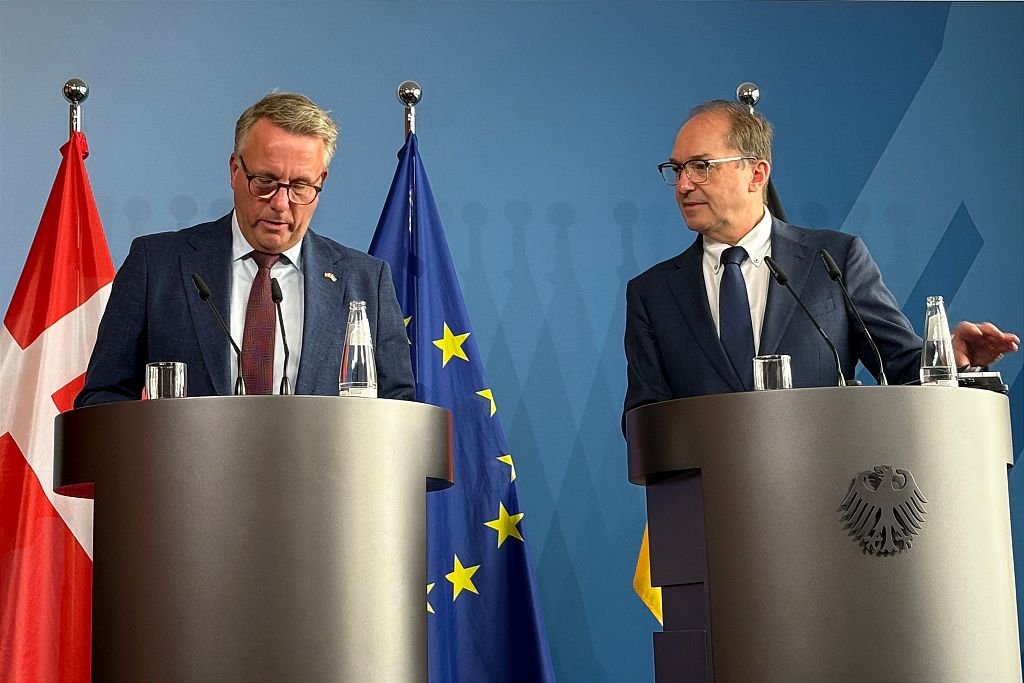
Five European Union countries are working toward launching so-called “return hubs” outside the bloc by 2027, under a plan designed to facilitate the deportation of migrants who do not have the right to remain in Europe.
Germany, Austria, Denmark, Greece and the Netherlands agreed on a timetable for developing the facilities during a meeting of their migration ministers in Copenhagen on Friday.
Danish Migration Minister Morten Bødskov said the countries aim to reach an agreement with a partner nation next year and begin transferring irregular migrants to an approved facility outside the EU.
“We expect to be ready to transfer the first irregular migrants to a partner country outside the EU within 2027,” Bødskov said.
The ministers did not identify the countries currently being considered to host the facilities, although Rwanda and Uganda have emerged as potential partners. Officials from the five countries reportedly travelled to Rwanda recently as discussions over the proposed arrangements continued.
The initiative has attracted significant criticism from human rights organisations and some political groups, which have raised concerns about the treatment of migrants and whether transferring people to facilities outside the EU would comply with international legal and human rights standards.
The participating governments have rejected descriptions of the facilities as migrant camps. Instead, they say the proposed centres would operate as open facilities for people whose deportation cannot immediately be carried out.
Dutch Migration Minister Bart van den Brink described the arrangement as providing migrants with “a new chance” when returning them directly to their countries of origin is not possible.
The proposal forms part of the EU’s updated return framework, which allows member states to establish arrangements with countries outside the bloc for facilities where rejected asylum seekers and other migrants awaiting removal could be transferred.
The five countries said they have now agreed on a roadmap covering the legal framework and national preparations required to implement the scheme.
Greek Migration Minister Thanos Plevris said the agreement demonstrated that European countries were capable of developing new approaches to tackling irregular migration.
The ministers are expected to continue their discussions at another meeting scheduled for September in Munich.
Bødskov acknowledged that the return-hub proposal had previously been viewed by some as unrealistic and potentially incompatible with international obligations. He said the initiative had nevertheless moved forward despite the earlier scepticism.
The five-country group is not the only European initiative examining offshore migration arrangements. Several Nordic countries have been coordinating their own discussions, while another group of European states is considering a separate pilot scheme involving reception centres.
The plans come as EU governments continue searching for ways to increase the number of rejected asylum seekers who are successfully returned, while facing legal, political and humanitarian questions over how such returns should be carried out.