
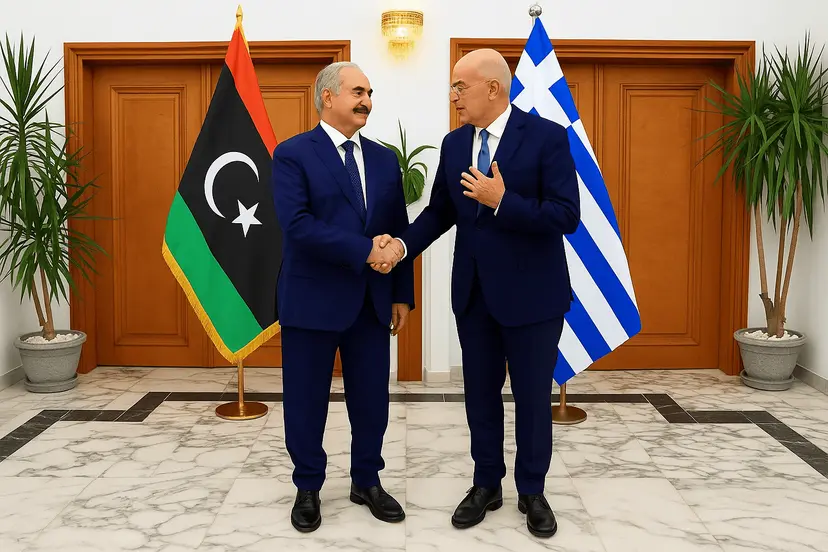
A new round of high-level talks between Greece and Libya is highlighting how migration, economic interests, and regional stability are becoming increasingly interconnected across the Mediterranean.
Greek Foreign Minister Giorgos Gerapetritis visited Tripoli, where he held discussions with his Libyan counterpart Taher al-Baour. The meeting reflects growing urgency on both sides to address rising migration flows and deepen bilateral cooperation.
Migration pressures were at the centre of the discussions. Greek authorities have raised concerns about an increase in migrants arriving from eastern Libya, a route that has become more active in recent months. Both countries acknowledged the need for a coordinated response that includes stronger border security, shared responsibility, and capacity-building efforts.
Libyan officials emphasised that tackling migration effectively requires more than enforcement alone. Proposed measures include improved security cooperation, training initiatives, and better coordination between institutions. These steps aim to manage migration flows while addressing the broader challenges linked to instability and limited state capacity.
Beyond migration, the talks also focused on expanding economic cooperation. Key sectors discussed included energy, infrastructure, and maritime transport—areas seen as critical for long-term development and regional integration. Both sides signalled interest in strengthening trade ties and encouraging private-sector partnerships.
As part of this effort, Libya confirmed plans to facilitate exchanges between Greek and Libyan business communities. These engagements are expected to promote investment opportunities and create more sustainable economic links beyond government-level agreements.
During the visit, Gerapetritis also met Abdul Hamid Dbeibeh, head of Libya’s Government of National Unity. This engagement highlights Greece’s intention to work directly with Libya’s recognized authorities as it navigates both migration management and broader regional interests.
However, the relationship between the two countries is not without challenges. Maritime boundary disputes remain unresolved, particularly in waters near Crete, which are believed to be rich in energy resources. These disagreements have implications for offshore exploration, exclusive economic zones, and regional geopolitics.
The situation is further complicated by Libya’s internal political divisions, including the influence of eastern factions led by Khalifa Haftar. This fragmented landscape continues to shape diplomatic efforts and makes long-term agreements more complex.
Despite these challenges, both Greece and Libya have reaffirmed their commitment to dialogue and cooperation based on international law. While no final agreement has been reached on maritime issues, maintaining open communication channels is seen as a positive step toward stability.
The latest talks signal a broader shift in how migration is being addressed—not just as a border issue, but as part of a wider framework that includes economic development, regional cooperation, and political engagement.
As discussions continue, the key challenge will be turning diplomatic commitments into real outcomes, particularly in managing migration flows while strengthening economic partnerships and maintaining regional balance.