
Italy has rejected Spain’s demand to end temporary border checks and said the measures will remain in place until at least August 15, deepening a diplomatic dispute between the two European Union members following the mass migrant influx into Spain’s North African enclave of Ceuta.
The Italian government said on Friday that it would not respond to what it described as “ultimatums or impositions” from Madrid, despite Spain giving Rome until Sunday, August 9, to withdraw the border controls.
Spain has warned that it could introduce “proportional measures” to protect the interests and dignity of Spanish citizens if Italy fails to reverse the checks.
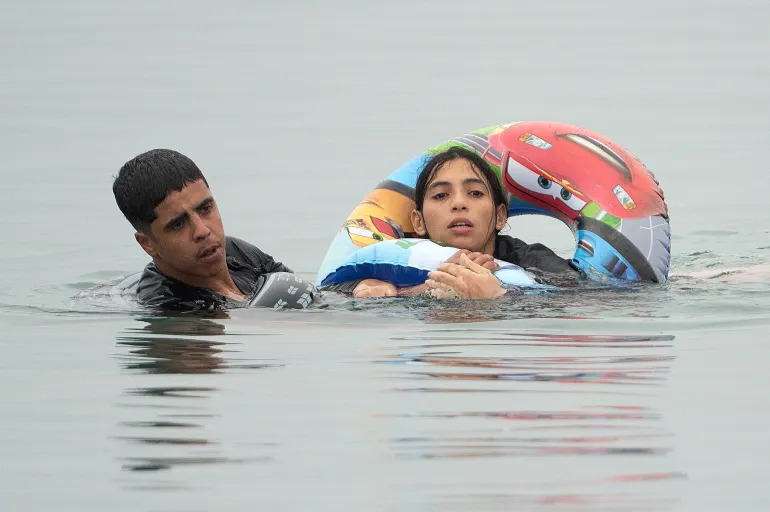
The dispute follows the arrival of around 72,000 migrants in Ceuta from neighbouring Morocco last week. The unprecedented influx has triggered a wider debate across the EU over migration, border security and the future of the Schengen free-movement area.
Italy, led by Prime Minister Giorgia Meloni, announced that it would temporarily restore border checks with Spain from August 1. Rome described the measure as an extraordinary step intended to protect national security and prevent possible consequences from the Ceuta crisis.
However, the decision has been criticised by migration experts and rights groups, who question its practical value. Italy and Spain do not share a land border, meaning people travelling from Ceuta would face significant obstacles before reaching Italy. Critics have therefore argued that the decision is largely political rather than an operational response to the migrant arrivals.
The move has nevertheless received support from 22 EU member states, which signed a joint letter accusing Spain of policies that could create “pull factors” and contribute to pressure on the bloc’s external borders.
Spain continues to deal with the humanitarian consequences of the Ceuta influx. Most of the migrants who entered the enclave have since returned to Morocco, while authorities have reported at least 100 deaths during the mass crossing.
Thousands of people remain in Ceuta, including a large number of unaccompanied children. Spain’s Youth Minister Sira Rego said on Friday that at least 1,342 children remained among the migrants in the enclave, with hundreds believed to be without parents or other adult guardians.
The situation has placed significant pressure on Ceuta’s already limited reception facilities. Local authorities reportedly have capacity for only around 90 people, while more than 1,100 children require assistance.
Spanish authorities have opened additional facilities, including schools, to provide temporary accommodation while officials assess options for transferring children to mainland Spain.
Humanitarian organisations have warned that vulnerable children remaining on the streets face serious risks of exploitation, abuse and violence. Some children are reportedly under the age of 14 and have already suffered assaults.
The Spanish government has approved €25 million to help Ceuta manage the humanitarian emergency and support unaccompanied migrant children.
The issue has also intensified political divisions within Spain. The far-right Vox party has opposed government assistance for migrant children and criticised plans to transfer some of them to mainland Spain.
Meanwhile, Spanish police announced that they had dismantled a suspected people-smuggling network believed to have facilitated the arrival of around 2,000 migrants through Spain’s southeastern coast and Ibiza.
The escalating dispute between Italy and Spain comes at a sensitive time for the EU, where governments remain divided over how to manage irregular migration while preserving freedom of movement within the Schengen area. Italy’s decision to maintain its checks could further fuel concerns about the growing use of temporary internal border controls across Europe.