
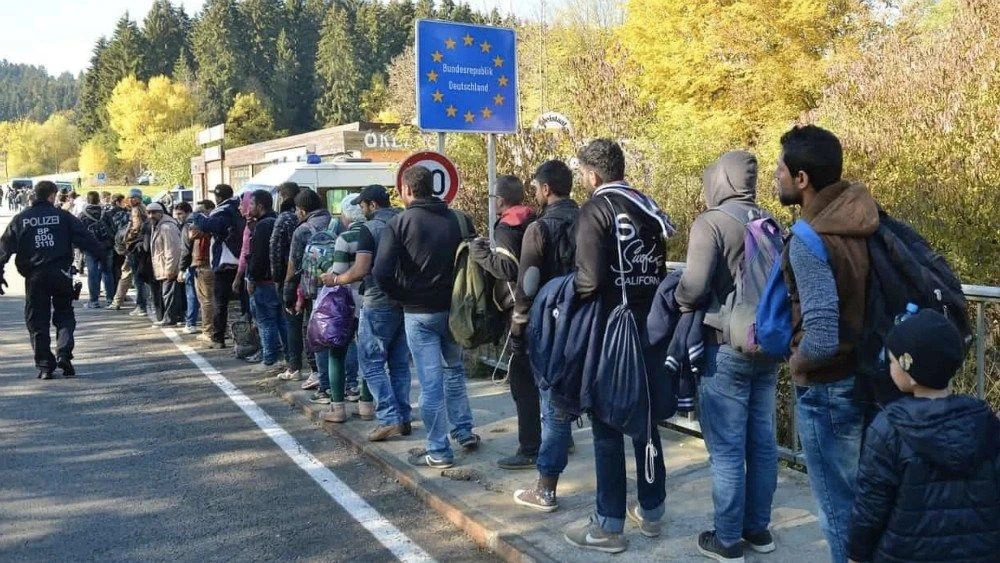
Kyrgyzstan has rejected proposals from several European countries to accept migrants from Afghanistan and African nations in exchange for employment opportunities for skilled Kyrgyz workers, the country’s foreign minister has said.
Foreign Minister Jeenbek Kulubaev made the statement on October 13, saying the government would not negotiate under those conditions. He did not identify the European countries involved or disclose how many migrants Kyrgyzstan had been asked to receive. No European government has publicly confirmed the proposals.
The reported offers come as the European Union expands its efforts to return people who do not have the legal right to remain in its member states. On October 1, the Council of the European Union approved new rules allowing member states to establish return hubs outside the bloc through agreements with non-EU countries. Such arrangements must respect international human rights standards and the principle of non-refoulement, which prohibits returning people to places where they face persecution or serious harm.
Kyrgyzstan’s reported rejection follows other discussions in Central Asia about cooperation with European countries on migration and employment. In May, Austria and Uzbekistan signed an agreement covering cooperation on deportations, including a possible transit role for Uzbekistan in the return of Afghan nationals from Austria. The arrangement also included cooperation on legal employment opportunities for skilled Uzbek workers.
However, the proposed arrangement involving Kyrgyzstan, as described by Kulubaev, would link access to European jobs for Kyrgyz citizens with the reception of migrants from other countries.
Kulubaev also spoke about changing patterns in Kyrgyzstan’s labour migration. He said more citizens were choosing Turkey and the United States as destinations for work, while South Korea and Japan had expressed interest in recruiting Kyrgyz workers, particularly for elderly care roles in hospitals.
The government has reduced organised placement programmes for citizens seeking long-term employment abroad while continuing to facilitate seasonal work. According to the minister, Kyrgyzstan must also consider labour shortages within its own economy.
Figures from the country’s Ministry of Labour, Social Security and Migration indicate that 736,600 Kyrgyz citizens had worked abroad so far in 2026. This compares with 798,400 recorded over the whole of 2025.
Russia remains the main destination for Kyrgyz migrant workers. More than 472,000 Kyrgyz citizens were living there in March, according to the figures cited in the report. Other destinations included Kazakhstan, with around 70,000; the United States, with 60,000; Turkey, with 35,000; and Germany, with approximately 20,000.
Kyrgyzstan’s position highlights the tensions that can arise when labour migration opportunities are linked to cooperation on receiving or transferring migrants from other regions. For Bishkek, expanding overseas employment remains important, but the government has indicated that it will not accept the reported European proposals on the terms described by its foreign minister.