
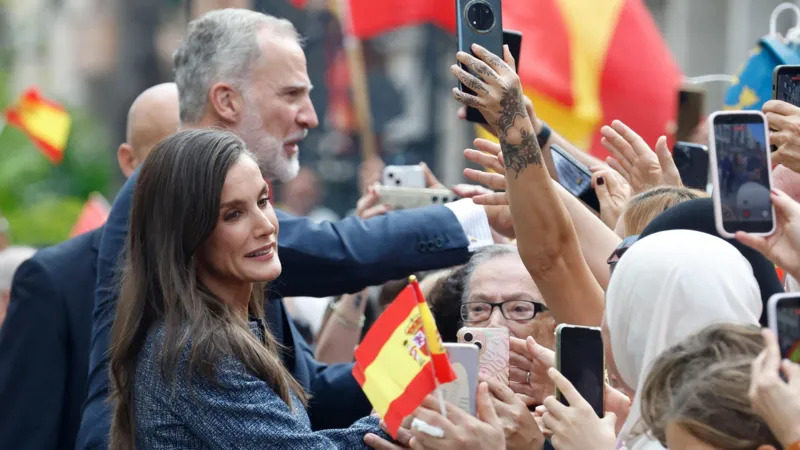
Spain’s King Felipe VI and Queen Letizia have visited Ceuta for the first time in nearly 20 years, as the North African territory continues to face the consequences of a major migrant influx from Morocco in July.
The royal visit on Tuesday, October 13, comes after more than 70,000 people crossed into the Spanish exclave during the summer crisis. Thousands are believed to remain in the city, while the arrivals have placed pressure on local services and intensified political debate over immigration.
The king and queen were welcomed by crowds waving Spanish flags when they arrived at Ceuta’s city hall. They met local officials to discuss the impact of the crisis and expressed their support for the territory and its residents.
In a message recorded in the city’s book of honour, the royal couple described their visit as long awaited. They said they wanted to demonstrate Spain’s commitment to Ceuta and its future.
The visit is the first by a Spanish monarch since King Felipe’s father, Juan Carlos I, travelled to Ceuta in 2007. The royals are also scheduled to visit Melilla, Spain’s other North African exclave, on Wednesday. Morocco claims sovereignty over both territories.
During their stay in Ceuta, the royal couple are due to attend an interfaith ceremony at Sidi Embarek cemetery to remember people who died during the crossings in late July. More than 140 deaths have been reported in connection with the mass influx.
The migration crisis has created growing concern among residents about public safety, housing and pressure on essential services. Some people have also damaged temporary shelters and obstructed aid intended for migrants.
Ceuta Mayor Juan Jesús Vivas described the situation as extremely serious, warning that the influx had put social cohesion, public services and security under strain. He has estimated that as many as 15,000 migrants could still be in the territory, although central government figures suggest a lower number.
Many of those who arrived initially slept outdoors on beaches and other public spaces. Spanish authorities later established temporary accommodation while officials worked to identify arrivals and assess whether they could remain in the territory.
The situation has also become a major political issue in Spain ahead of elections expected next month. Opposition parties have criticised Prime Minister Pedro Sánchez’s government over its handling of the crisis, while demonstrations on the mainland have highlighted concerns about the impact on Ceuta.
Relations with Morocco have also come under scrutiny. Some critics accused Rabat of allowing the mass crossing to happen, but Sánchez has said there is no evidence that Moroccan authorities deliberately organised or encouraged the influx.
The Spanish prime minister recently confirmed reports that Moroccan military vessels entered Spanish waters near Ceuta during the crisis, although he played down the significance of the incident.
Morocco has continued to assert its historical and geographical claims over Ceuta and Melilla. In August, Moroccan Justice Minister Abdellatif Ouahbi called for bilateral discussions on the territories’ status, but the Spanish government rejected the proposal.
Alberto Núñez Feijóo, leader of Spain’s conservative People’s Party, has accused Sánchez of failing to take a sufficiently firm position towards Morocco. He said Spain should maintain good relations with its neighbour while defending its own interests.
The royal visit is intended to show support for Ceuta’s residents and institutions at a time when migration, border management and relations with Morocco remain politically sensitive issues. It also brings renewed attention to the humanitarian consequences of the July crossings, including the deaths of people attempting to reach Spanish territory.