
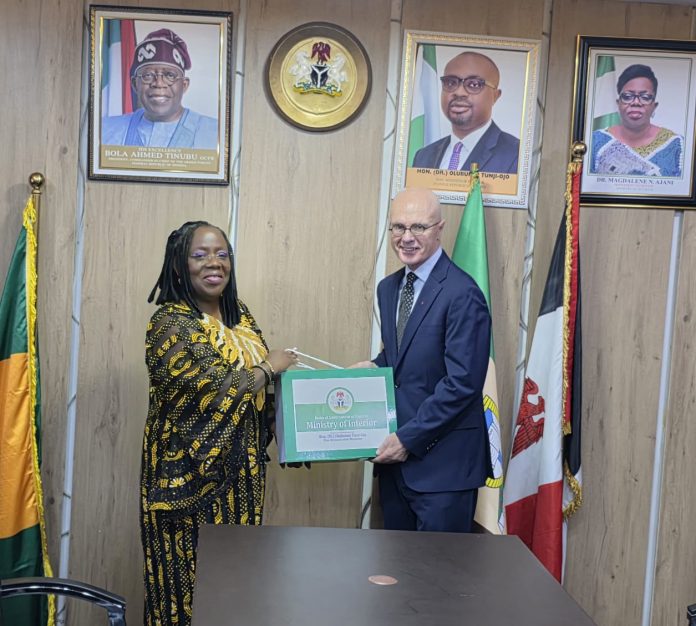
Nigeria and Canada have agreed to establish a joint technical working group to address delays affecting Canadian visa and study permit applications from Nigerians and improve cooperation on the return of people who no longer have legal status in Canada.
The agreement followed a meeting between Magdalene Ajani, Permanent Secretary of Nigeria’s Ministry of Interior, and David Sproule, Chargé d’Affaires of the Canadian High Commission.
The discussions covered prolonged visa processing times, migration management, travel facilitation and cooperation on border administration.
Ajani, representing Interior Minister Olubunmi Tunji-Ojo, said delays in processing Canadian applications had become a significant concern for Nigerians, particularly students planning to begin academic programmes in Canada.
The minister said some Nigerian students had been unable to travel as planned because their study permits were delayed, even in cases where their visa applications had already been approved.
He called for continued engagement between both governments and stronger cooperation between their relevant institutions to address the difficulties faced by Nigerian applicants.
Tunji-Ojo also urged Canadian authorities to give greater and faster attention to applications from Nigerians, stressing the importance of improving the visa application experience.
The proposed working group will provide a platform for officials from both countries to examine the visa-processing concerns and maintain regular discussions on migration-related issues.
The two governments also discussed cooperation on the removal of people who do not have legal status in Canada. Nigerian authorities are expected to work with the Canada Border Services Agency on developing a Standard Operating Procedure to guide such removals.
Tunji-Ojo assured the Canadian delegation that Nigeria would appoint appropriate officials to work with their Canadian counterparts and support the establishment of the technical group.
Sproule acknowledged Nigeria’s concerns about visa delays and described the issue as an important pressure point in relations between the two countries.
He said the concerns would be passed on to the relevant Canadian immigration authorities with the aim of improving processing times and ensuring that Nigerian applicants receive appropriate consideration within the visa system.
The meeting also examined the expansion of the Nigeria-Canada Air Transport Agreement, which could eventually support the introduction of direct flights between the two countries.
Direct air links would allow passengers travelling between Nigeria and Canada to avoid connections through Europe or the United States, potentially making travel easier and strengthening commercial ties.
Both sides expressed support for expanding the air transport arrangement and said improved connectivity could contribute to closer economic and bilateral relations.
The latest discussions reflect efforts by Nigeria and Canada to deepen cooperation on immigration, travel and border management while addressing concerns that have increasingly affected Nigerians seeking to study, work, or travel to Canada.