
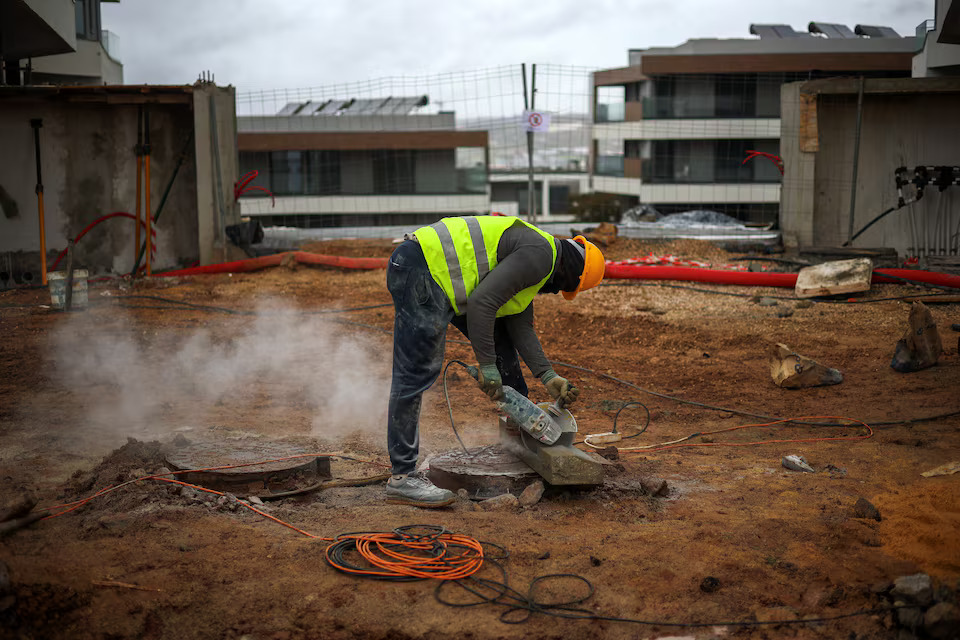
Portugal’s stricter immigration policies are intensifying labour shortages in the construction industry, threatening efforts to address the country’s severe housing shortage and complete major infrastructure projects.
Construction companies and industry groups say recent immigration restrictions have significantly reduced the flow of foreign workers, who make up about 30% of the sector’s workforce. The shortage comes as Portugal pushes to build 150,000 affordable homes by 2030 under a €9 billion European Union-backed housing programme.
One worker affected by the policy changes is Angolan bricklayer Jose Simao, who moved to Portugal in 2022 under the country’s previous immigration rules. Although he is legally employed, he fears he may be forced to leave when his residence permit expires because new regulations require proof of a formal rental contract, which he cannot obtain from his landlord despite paying rent.
The centre-right government says the tougher immigration measures are intended to curb what it describes as uncontrolled migration while ensuring better living conditions for migrants already in the country. The policy shift follows growing political pressure from the anti-immigration Chega party.
However, economists and construction industry leaders argue that the restrictions are creating unintended economic consequences. Oscar Afonso, an economics professor at the University of Porto, said the government had tightened immigration too rapidly despite the country’s dependence on migrant labour.
Portugal experienced a sharp rise in foreign residents after previous governments allowed migrants to enter without work visas before applying for residency after securing employment. Between 2021 and 2025, the foreign resident population more than doubled to 1.6 million people, accounting for approximately 14% of the country’s population.
According to the Bank of Portugal, net immigration fell by about half in 2025 following the introduction of stricter rules, with experts expecting further declines.
The labour shortage comes at a critical time for Portugal’s housing market. Rental costs have nearly doubled since 2017, while the central bank estimates the country faces a shortage of around 300,000 homes.
Portugal’s largest construction association estimates the industry currently requires at least 80,000 additional workers to keep existing projects on schedule. Trade unions warn the gap could eventually reach 120,000 workers as major projects, including Lisbon’s new airport, move forward.
To address labour shortages, the government introduced a fast-track visa programme for construction workers. However, companies must provide employment contracts and accommodation before workers arrive. So far, only about 5,000 construction visas have been approved.
Developers say the accommodation requirement presents a significant challenge, particularly when the country’s housing shortage already makes it difficult to find homes for existing residents.
Industry leaders argue that while higher wages and better training could encourage more Portuguese workers to join the sector, migrant labour will remain essential if Portugal is to meet its housing and infrastructure goals. They are urging the government to adopt additional measures to attract and retain foreign workers, similar to policies being pursued in countries such as Spain and Italy.