
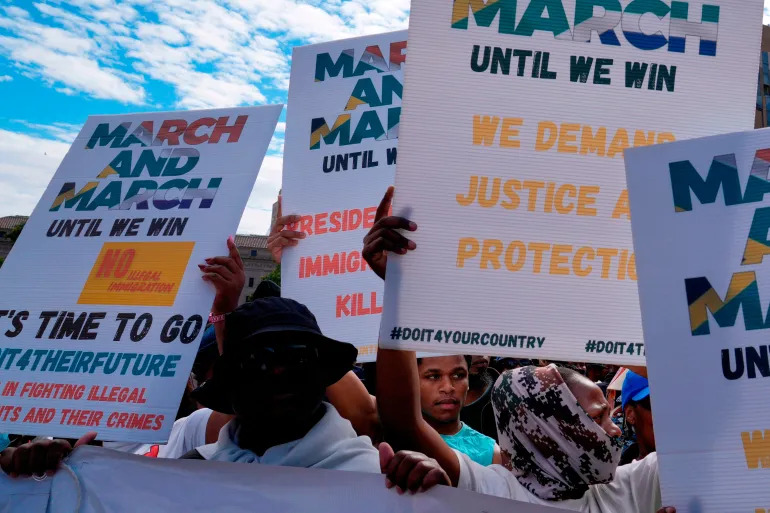
South Africa is facing a worrying rise in anti-migrant sentiment as migrants are increasingly blamed for many of the country’s economic and social challenges. In recent months, vigilante groups have targeted foreign nationals, while businesses linked to migrants have come under attack. Many people have accused migrants of contributing to crime, unemployment, and pressure on public services.
However, according to labour leader Zwelinzima Vavi, this anger is being directed at the wrong people. While many South Africans are struggling with poverty, unemployment, and poor public services, migrants are not responsible for creating these problems.
South Africa continues to face one of the highest unemployment rates in the world. Many communities are dealing with rising living costs, limited job opportunities, and failing public services. Young people, in particular, are finding it difficult to secure stable employment. These hardships have created frustration and disappointment among citizens who feel abandoned by political leaders.
Vavi argues that the country’s challenges are rooted in much deeper historical and economic issues. He points to the lasting effects of colonialism, apartheid, and economic inequality. Although apartheid officially ended in 1994, much of the country’s wealth, land, and economic power remains concentrated in the hands of a small minority.
Economic growth has remained weak for years, while industries such as manufacturing have declined. Stable jobs have been replaced by temporary and insecure forms of work, leaving millions of people struggling to earn a living. According to Vavi, these conditions create an environment where vulnerable groups, including migrants, are often used as scapegoats.
He notes that this trend is not unique to South Africa. Similar patterns have emerged across Europe, the United States, and Latin America, where political groups have blamed migrants for economic difficulties instead of addressing deeper structural problems. Such approaches often divide working-class communities while allowing those in positions of power to avoid accountability.
At the same time, Vavi acknowledges that immigration policies and border management remain important issues. He says South Africa has the right to regulate migration and improve its immigration system. He also calls for stronger action against corruption, human trafficking networks, and employers who exploit undocumented workers to avoid labour laws.
However, he warns that xenophobic violence, vigilantism, and attacks on migrants will not solve unemployment or improve living conditions. He argues that replacing the rule of law with intimidation and mob justice only creates more instability and fear within communities.
Vavi believes that South Africa’s labour movement has a key role to play in promoting unity among workers, regardless of nationality. He says workers share common goals, including decent jobs, fair wages, safe workplaces, and social justice. He also urges the government to focus on job creation, industrial development, quality public services, fighting corruption, and reducing inequality.
As anti-migrant tensions continue to grow, South Africans face an important choice. They can either continue down a path of division and blame or focus on addressing the deeper economic and political issues affecting the country. Vavi argues that only through solidarity, fairness, and meaningful reforms can South Africa achieve lasting social peace and economic progress.