
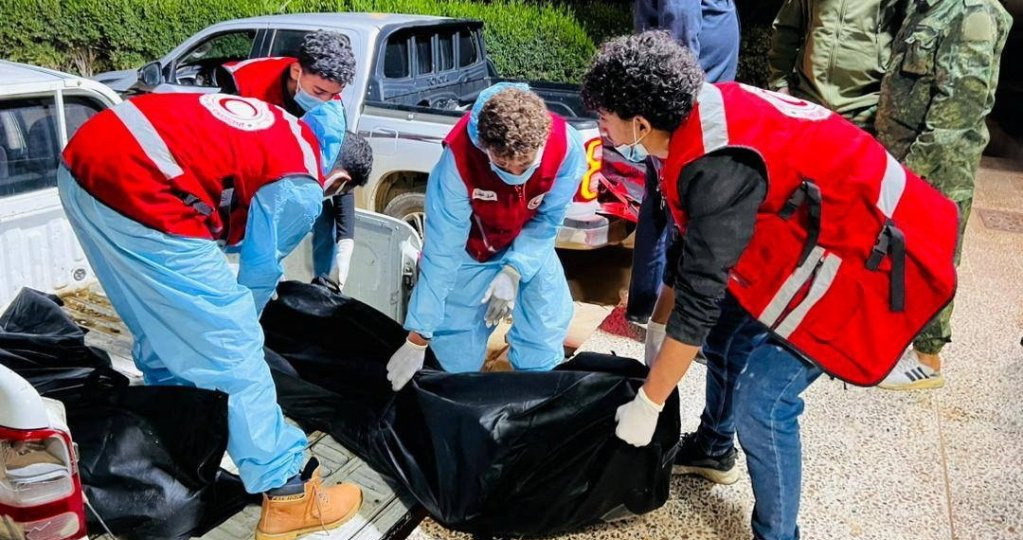
At least 17 migrants have died after their boat broke down and left them stranded for more than a week in the Mediterranean Sea near Tobruk, highlighting once again the deadly risks faced by those attempting to reach Europe through one of the world’s most dangerous migration routes.
The tragedy occurred off the coast of Libya, where a group of migrants drifted helplessly at sea for eight days after their vessel reportedly developed mechanical problems. According to the Libyan Red Crescent, only seven people were rescued alive, while 17 others lost their lives during the ordeal.
Rescue operations were carried out by naval forces and coast guards linked to the Libyan National Army, working alongside Red Crescent teams. The search and recovery mission lasted several hours, with responders retrieving bodies and assisting survivors near the eastern Libyan coastline, close to the border with Egypt.
Although the nationalities of those on board have not been officially disclosed, humanitarian officials confirmed that survivors received emergency support in coordination with the UNHCR, indicating that those involved were migrants attempting the dangerous journey across the Mediterranean.
The incident adds to the growing death toll on the central Mediterranean migration route, which remains one of the most perilous in the world. According to the International Organization for Migration, more than 26,700 people have died attempting to cross this route since 2014. Many of these journeys begin in Libya, where migrants from across Africa gather in hopes of reaching Europe, particularly Italy.
Experts warn that the situation has become even more dangerous in recent years. Stricter border policies in Europe and limitations on private rescue missions at sea have reduced the chances of timely intervention when boats encounter trouble. As a result, migrants are increasingly exposed to longer periods of distress at sea, often with fatal consequences.
Despite the risks, thousands continue to attempt the crossing each year. So far in 2026, more than 7,000 migrants have arrived in Italy from Libya, according to UNHCR data. This marks a significant drop compared to nearly 14,000 arrivals during the same period last year, suggesting shifting migration patterns but not necessarily safer conditions.
Libya remains a key transit hub for migrants from north-central and northeastern Africa seeking entry into Europe. However, ongoing instability, limited protection systems, and the increasing dangers of sea crossings continue to put lives at risk.
This latest tragedy serves as a serious reminder of the human cost of irregular migration and the urgent need for safer, more coordinated international responses to protect vulnerable people on the move.